
 E-submission
Current issue
- Page Path
- HOME > Articles and issues > Current issue
- Volume 60(5); September 2026
-


Review Articles
- Spread through air spaces as a marker of nonlinear evolutionary trajectories in lung cancer: implications for the 9th edition TNM classification
- Jin-Haeng Chung
- J Pathol Transl Med. 2026;60(5):463-475. Published online September 15, 2026
- DOI: https://doi.org/10.4132/jptm.2026.06.16

- 1,494 View
- 16 Download
-
 Abstract
 PDF
PDF - Recent advancements in the diagnosis and therapeutic management of lung cancer have contributed to an evolution in pathological reporting standards. The 8th edition of the TNM classification of lung tumors has introduced the invasive size of adenocarcinoma—rather than total tumor size—as the primary determinant for staging. Concurrently, histological grading criteria proposed by the International Association for the Study of Lung Cancer (IASLC), based on predominant and highest-grade architectural patterns, appear to offer improved clinical utility over legacy systems. In addition, tumor spread through air spaces (STAS) has emerged as an actively investigated pattern of invasion, characterized by the presence of neoplastic cells beyond the main tumor mass within the adjacent pulmonary parenchyma. STAS is frequently observed in advanced-stage and node-positive non–small cell lung cancer and often correlates with distant metastasis. Recognizing its clinical relevance, the IASLC Staging Project recently recommended incorporating STAS as a histologic T descriptor in the 9th edition of the TNM classification. Expanding upon this framework, this review explores STAS not merely as a prognostic indicator, but as a potential reflection of divergent evolutionary trajectories influenced by underlying driver mutations. Accordingly, this review aims to comprehensively synthesize the prevailing controversies and recent academic milestones regarding STAS, the current limitations in preoperative STAS risk prediction, the logistical hurdles of intraoperative diagnosis, and critically evaluates the need for prospective clinical trials to validate STAS as a predictive biomarker for adjuvant systemic therapy.
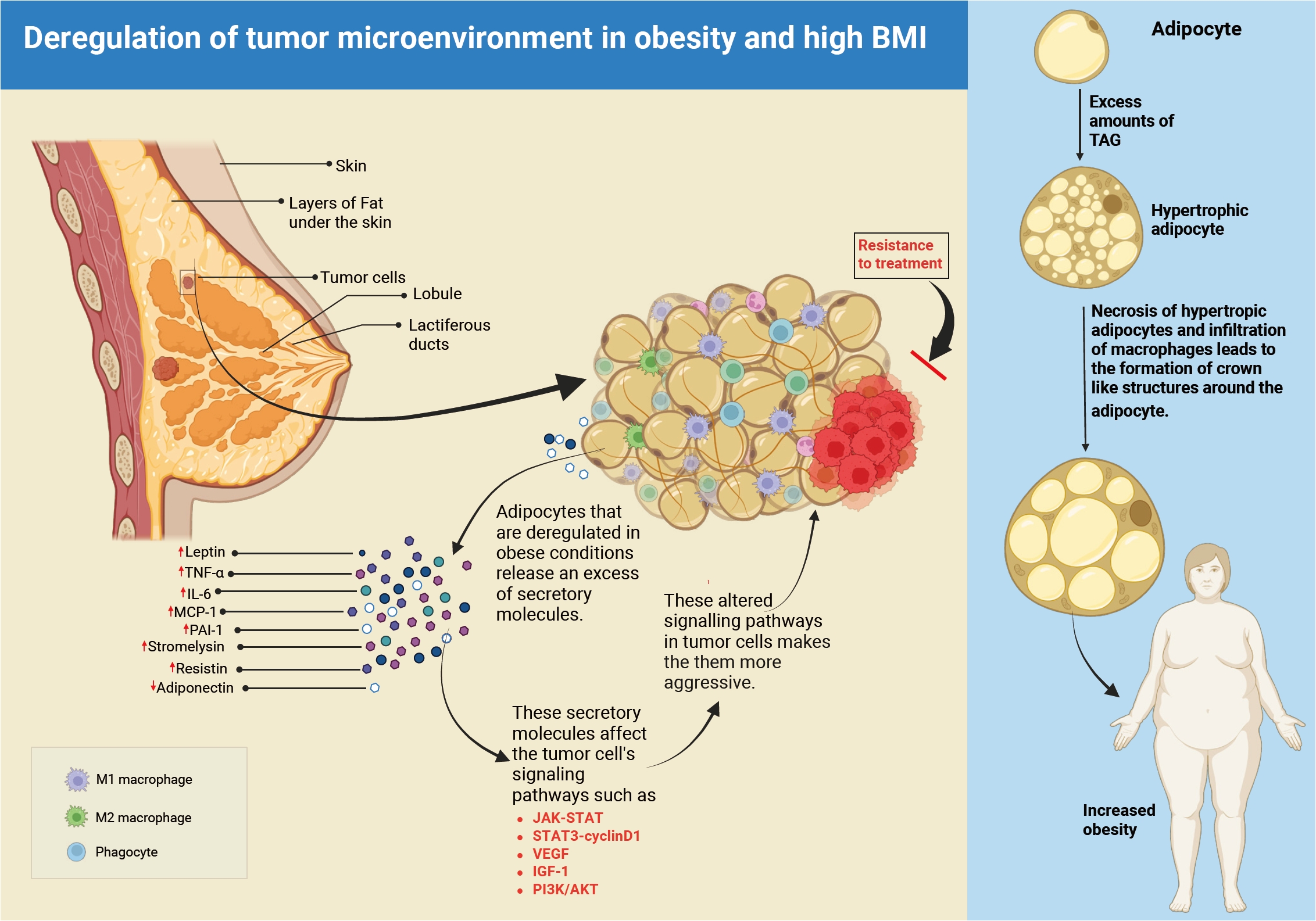
- Obesity-driven adipokine signaling in breast cancer: mechanistic insights, therapeutic challenges, and opportunities for precision oncology
- Vadakke Kunnumma Soonu, Praveen Kumar Shenoy, Valiyaparampil Gopi Deepak Roshan, Vipin Gopinath, Krishnan Sreejith
- J Pathol Transl Med. 2026;60(5):476-492. Published online September 9, 2026
- DOI: https://doi.org/10.4132/jptm.2026.06.30
- 1,410 View
- 20 Download
-
Abstract
PDF
- Breast cancer is the leading cause of illness and death among women worldwide, with more than 2.3 million new cases diagnosed each year. The incidence and fatality rates are steadily increasing, notably in Asian countries. Obesity has been established as a major and growing risk factor for breast cancer progression. The World Health Organization reports that adult obesity rates have doubled since 1990. Obesity promotes tumor growth by inhibiting adipokine production and activating cancer-promoting pathways. In obese people, the microenvironment surrounding breast cancer cells is drastically altered. This is mostly due to the malfunctioning of adipocytes (fat cells) and macrophages. These defective cells' adipokines alter signaling pathways required for cancer cell proliferation, survival, and inflammation. This dysregulation has a significant role in tumor development, metastasis, and resistance to traditional cancer treatments, particularly in obese patients. This review highlights the role of adipokines in breast cancer, with a focus on disease progression, therapeutic challenges, and knowledge gaps. Clarifying how obesity alters tumor biology is key to advancing personalized and effective treatments for obese patients.
- Sentinel lymph node biopsy in melanoma: pathologic evaluation and diagnostic considerations
- Dre Barnachea, Bonnie Lee
- J Pathol Transl Med. 2026;60(5):493-501. Published online September 1, 2026
- DOI: https://doi.org/10.4132/jptm.2026.07.01

- 1,537 View
- 38 Download
-
Abstract
PDF
- Sentinel lymph node biopsy (SLNB) is a widely used staging procedure in melanoma that provides important prognostic information and guides clinical management. The sentinel lymph node (SLN), defined as the first lymph node in the lymphatic drainage pathway from a primary tumor, represents the most likely site of early regional metastasis. Accordingly, identification of metastatic melanoma within SLNs has significant implications for staging and risk stratification and is associated with worse clinical outcomes. The SLNB procedure involves preoperative and intraoperative lymphatic mapping techniques, including radiotracer localization with or without blue dye injection, which allow identification of SLNs. Histopathologic evaluation includes careful gross examination, serial sectioning, and immunohistochemical analysis using melanocytic markers such as SOX10, Melan-A, HMB45, and occasionally PRAME to detect metastatic disease. In addition, prognostic features such as tumor burden, extranodal extension, and microanatomic location of metastases within the lymph node further refine risk assessment. This review provides an overview of SLNB in melanoma, with emphasis on clinical indications, histopathologic evaluation, and key diagnostic and prognostic considerations.
- T-lymphoblastic leukemia/lymphoma: a comprehensive review of pathology, molecular features, and differential diagnosis
- David Danielson, Ian T. Lagerstrom, Max Rogers, Kyle Simon, Nadine S. Aguilera, Aaron Auerbach
- J Pathol Transl Med. 2026;60(5):502-515. Published online September 15, 2026
- DOI: https://doi.org/10.4132/jptm.2026.08.01

- 1,304 View
- 21 Download
-
Abstract
PDF
- T-lymphoblastic leukemia/lymphoma (T-ALL/LBL) is an aggressive neoplasm of immature T-lymphoid precursors that is classified as T-cell acute lymphoblastic leukemia when the primary site of involvement is the bone marrow and peripheral blood and as T-cell lymphoblastic lymphoma when it presents as a solid mass, most commonly in the anterior mediastinum. The neoplastic cells are defined by expression of T-lineage antigens (cytoplasmic or surface CD3) together with one or more markers of immaturity (terminal deoxynucleotidyl transferase, CD1a, CD34, CD99, or CD117) and must not fulfill criteria for early T-cell precursor acute lymphoblastic leukemia (ALL). This entity shows a marked male predominance (male:female ≈ 2:1) and predominantly affects children, adolescents, and young adults, accounting for approximately 15% of childhood ALL and 20%–25% of adult ALL cases. Pathologic diagnosis increasingly relies on recurrent molecular alterations such as activating NOTCH1 mutations (>60% of cases), transcription factor rearrangements, and cell-cycle regulator inactivation. Although intensive multiagent chemotherapy regimens have substantially improved outcomes, particularly in pediatric patients, adults and high-risk molecular subgroups continue to experience inferior survival. This review provides a practical, pathology-oriented update on the epidemiology, pathogenesis, diagnostic criteria, differential diagnosis, prognostic factors, and current treatment approaches for T-ALL/LBL.
Original Articles
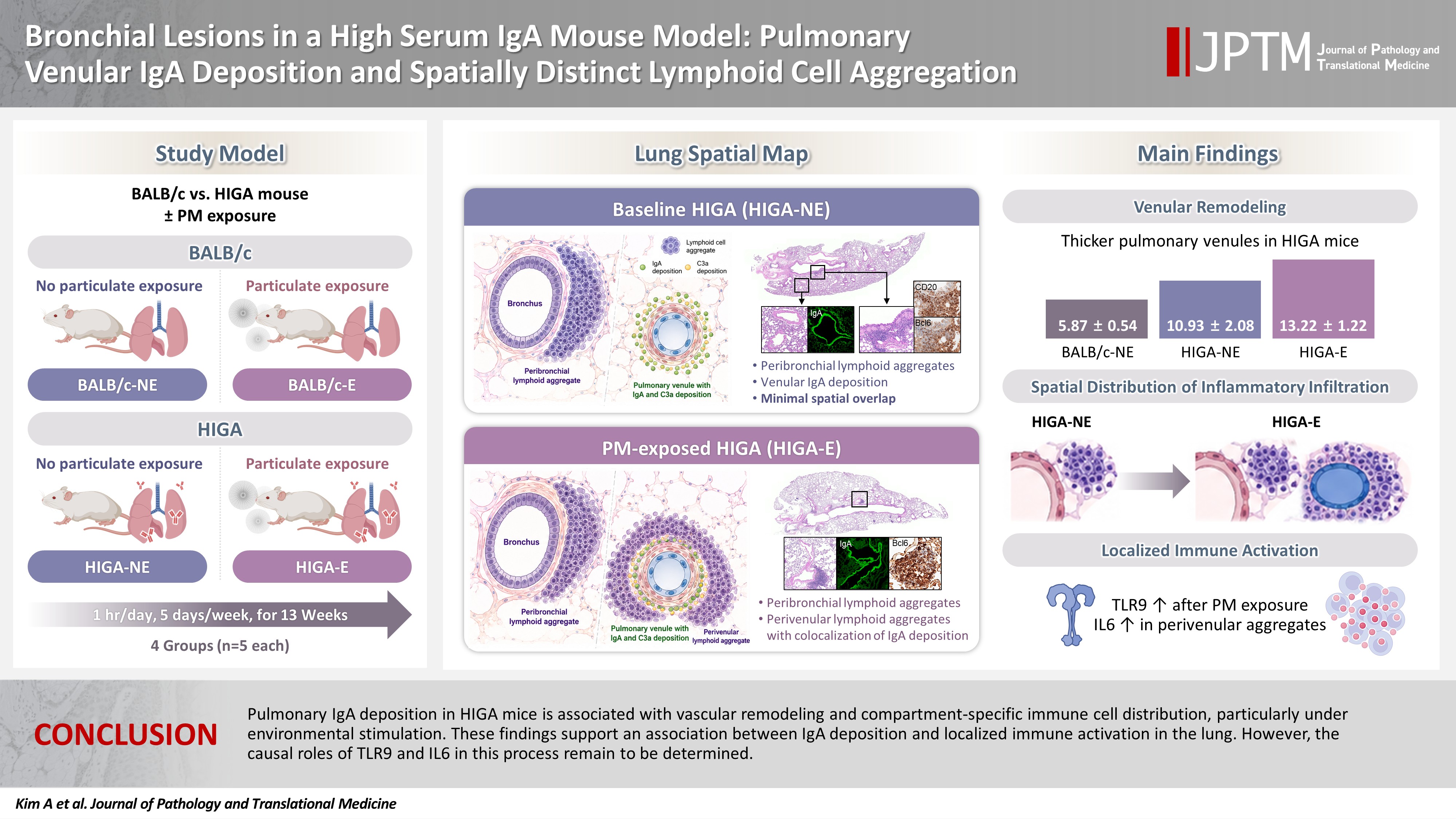
- Bronchial lesions in a high serum IgA mouse model: pulmonary venular IgA deposition and spatially distinct lymphoid cell aggregation
- Areum Kim, Minhyeok Lee, Yohan Park, Wan Jin Hwang, Hyeseung Lee, Joo Heon Kim, Jin Man Kim, Yong Min Kim, Jin Sun Park, Junguee Lee
- J Pathol Transl Med. 2026;60(5):516-526. Published online July 16, 2026
- DOI: https://doi.org/10.4132/jptm.2026.06.01
- 1,672 View
- 25 Download
-
Abstract
PDF
- Background
Immunoglobulin A (IgA) nephropathy is a systemic immune complex–mediated disease primarily affecting the kidneys, yet pulmonary involvement remains poorly characterized. This study investigated pulmonary structural alterations, IgA deposition, immune cell distribution, and the impact of chronic environmental immune stimulation. Methods: High-IgA (HIGA) mice and BALB/c controls were examined under baseline conditions and following chronic particulate matter (PM) exposure. Histopathology, immunofluorescence, immunohistochemistry, and lectin-based assays were used to assess pulmonary IgA deposition, lymphoid cell aggregation, and immune activation. Results: Compared with BALB/c controls, HIGA mice exhibited pulmonary venular remodeling characterized by thickening of the venular tunica media and IgA deposition within the smooth muscle layer. Under baseline conditions, lymphoid cell aggregation in HIGA mice was predominantly localized to peribronchial regions, whereas IgA deposition and C3a deposition were confined to pulmonary venules with minimal spatial overlap. Following PM exposure, HIGA mice developed additional perivenular lymphoid cell aggregation that spatially corresponded with IgA deposition, whereas BALB/c mice showed predominantly peribronchial aggregation. PM exposure was associated with increased pulmonary Toll-like receptor 9 (TLR9) expression in both strains. In HIGA mice, TLR9-positive immune cells and interleukin-6 (IL6) expression were enriched in perivenular lymphoid cell aggregates. Conclusions: Pulmonary IgA deposition in HIGA mice is associated with vascular remodeling and compartment-specific immune cell distribution, particularly under environmental stimulation. These findings support an association between IgA deposition and localized immune activation in the lung. However, the causal roles of TLR9 and IL6 in this process remain to be determined.
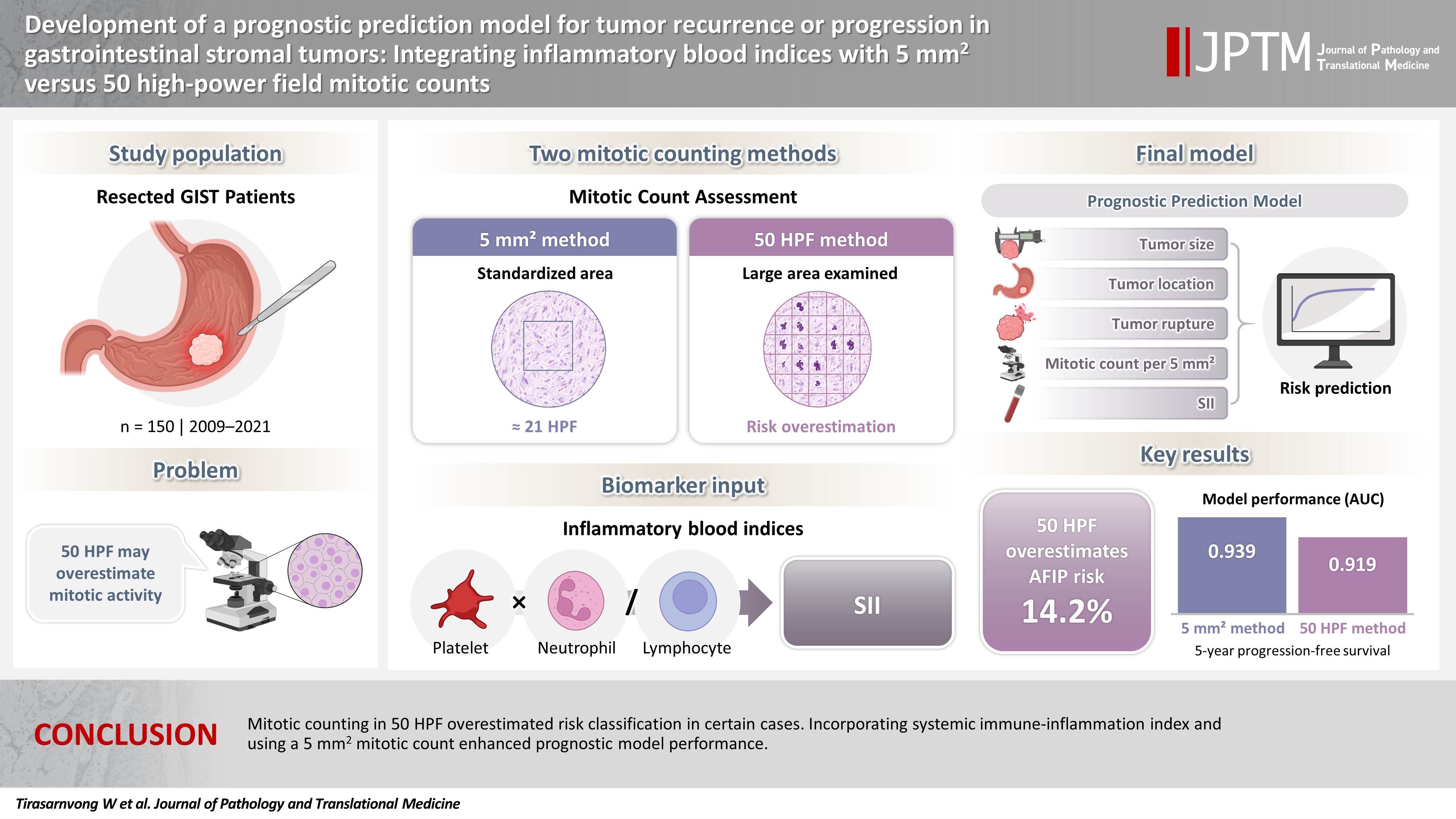
- Development of a prognostic prediction model for tumor recurrence or progression in gastrointestinal stromal tumors: integrating inflammatory blood indices with 5 mm2 versus 50 high-power field mitotic counts
- Waratchaya Tirasarnvong, Thammasin Ingviya, Paramee Thongsuksai
- J Pathol Transl Med. 2026;60(5):527-538. Published online July 31, 2026
- DOI: https://doi.org/10.4132/jptm.2026.06.15
- 983 View
- 13 Download
-
Abstract
PDF
 Supplementary Material
 - Background
The behavior of gastrointestinal stromal tumors varies according to tumor size, location, mitotic rate, and rupture. Traditional mitotic counting in 50 high-power fields (HPF; 5.3 mm2) may overestimate progression risk, as 5 mm2 corresponds to 20–25 HPF under modern microscopy. However, the 50-HPF method remains widely used. This study evaluated the impact of two mitotic counting methods on risk classification and developed a prognostic model combining inflammatory biomarkers with clinicopathological factors. Methods: We retrospectively analyzed 150 patients who underwent resection at Songklanagarind Hospital between 2009 and 2021. Patients who had received neoadjuvant therapy or had a second primary cancer were excluded. Mitosis was evaluated using both methods. Clinicopathological and serum biomarker data were collected. The primary outcome was 5-year disease-free or progression-free survival. The model was developed using forward stepwise variable selection based on the time-dependent area under the curve and internally validated by bootstrapping. Results: The 50-HPF method overestimated the Armed Forces Institute of Pathology classification in 14.2% of cases. A model incorporating tumor size, location, rupture, mitotic count within 5 mm2, and systemic immune-inflammation index achieved the highest area under the curve of 0.939 in both training and validation sets, outperforming previous models. The 5-mm2 method demonstrated superior performance to the 50-HPF method across all models (0.939 vs. 0.919 for the proposed model). Conclusions: Mitotic counting in 50 HPF overestimated risk classification in certain cases. Incorporating systemic immune-inflammation index and using a 5 mm2 mitotic count enhanced prognostic model performance.
- Ki-67 index and galectin-3 as surrogate markers for predicting disease-free survival in luminal-type breast carcinoma treated with neoadjuvant chemotherapy
- Ho-Chang Lee, Wonshik Han, Seock-Ah Im, In Ae Park
- J Pathol Transl Med. 2026;60(5):539-548. Published online September 11, 2026
- DOI: https://doi.org/10.4132/jptm.2026.06.22

- 747 View
- 17 Download
-
Abstract
PDFSupplementary Material
- Background
Residual cancer burden (RCB) is an important marker for patients with breast carcinoma treated with neoadjuvant chemotherapy (NACT). However, the association between RCB and prognosis is relatively less significant in residual luminal-type breast carcinoma (LTBC). Associations between clinicopathological variables, including RCB class, and immunohistochemical (IHC) markers with disease-free survival (DFS) were analyzed. Methods: Expression of Ki-67, calreticulin, clusterin, galectin-3, mucin-1, and p27 was assessed in tissue microarray slides of 55 post-NACT resection specimens from LTBC patients treated with docetaxel and doxorubicin. Patients’ age, pre-NACT progesterone receptor status, lymphovascular invasion, histologic grade, ypT category, ypN category, RCB class, and IHC markers were analyzed for their association with DFS using Kaplan-Meier analysis and Cox proportional hazards models. Results: Twenty of the 55 patients developed recurrence or distant metastasis. A Ki-67 index > 2.7% and high galectin-3 expression were associated with shorter DFS on Kaplan-Meier analysis (p < .001 and p = .018, respectively). Other clinicopathological and IHC markers were not significantly associated with DFS. In the multivariate Cox proportional hazards model, a Ki-67 index > 2.7% (hazard ratio, 7.23; p < .001) and high galectin-3 expression (hazard ratio, 4.51; p = .007) remained independent predictors of shorter DFS. Conclusions: The Ki-67 index and high galectin-3 expression in post-NACT resection specimens may serve as surrogate markers for predicting recurrence in LTBC.
- Diagnostic performance of fine needle aspiration cytology in the preoperative identification of mucoepidermoid carcinoma: a cross-sectional diagnostic analytical study
- Sumaya , Dishant Ramkrishna Sonuwane, Amita Krishnappa
- J Pathol Transl Med. 2026;60(5):549-557. Published online September 15, 2026
- DOI: https://doi.org/10.4132/jptm.2026.07.08

- 509 View
- 26 Download
-
Abstract
PDFSupplementary Material
- Background
Mucoepidermoid carcinoma (MEC), the most common malignant tumor of the salivary gland, accounts for 5%–10% of all salivary gland tumors. MEC shows extensive cytomorphological diversity, making preoperative diagnosis challenging. Hence, the present study was conducted to assess the diagnostic accuracy of fine-needle aspiration cytology (FNAC) in diagnosing MEC preoperatively and to discuss the cytological pitfalls in diagnosing mucoepidermoid carcinoma. Methods: The present study was a cross-sectional diagnostic analytical study conducted over a period of five years, which included confirmed cases of MEC. Each case was classified according to the Milan System for Reporting Salivary Gland Cytopathology (MSRSGC) and individual cytomorphological features were noted. All cases were compared by considering histopathology as the gold standard for diagnosis. Sensitivity, specificity, positive predictive value (PPV), and negative predictive value (NPV) of FNAC in diagnosing MEC were calculated to evaluate the diagnostic accuracy of FNAC. Results: All 42 cases of MEC were reclassified according to MSRSGC as follows: category II, one case; category III, one case; category IVA, two cases; category IVb, one case; category V, four cases; and category VI, 33 cases. Discordant cases (5 cases) were mainly due to cystic change, low cellularity, and overlapping features with benign lesions. The sensitivity, specificity, PPV, NPV, and diagnostic accuracy were found to be 88.1%, 100%, 100%, 97.4%, and 97.8%, respectively. Conclusions: FNAC is an important preoperative diagnostic investigation for MEC as reflected by its high specificity, sensitivity, and overall diagnostic accuracy in the present study. Careful attention to individual cytomorphological features and clinicoradiological correlation can significantly improve the diagnostic accuracy by directing the clinicians for further management.
- BRCA1/2-stratified immune profiling of treatment-naive high-grade serous ovarian cancer ascites identifies a Treg-enriched ascitic immune phenotype
- Megha Sharma, Bhavneet Kaur, Bhavana Rai, Man Updesh Singh Sachdeva, Amit Raj Sharma, Parikshaa Gupta, Upasana Gautam, Rashmi Bagga, Radhika Srinivasan
- J Pathol Transl Med. 2026;60(5):558-571. Published online September 11, 2026
- DOI: https://doi.org/10.4132/jptm.2026.07.27

- 985 View
- 20 Download
-
Abstract
PDFSupplementary Material
- Background
Malignant ascites is a common presentation in advanced high-grade serous ovarian carcinoma (HGSOC), yet its immune composition and genetic correlates remain poorly defined. This study explored the immune microenvironment of ascitic fluid in ovarian carcinoma and its association with BRCA mutation status, chemotherapy response, and survival. Methods: Ascitic fluid from 133 patients (33 non-malignant controls, 31 non-ovarian carcinoma, and 69 HGSOC cases) was analyzed using multiparameter flow cytometry to quantify lymphocyte and macrophage subsets, and programmed cell death 1/programmed cell death ligand 1 immune-checkpoint marker expression. Targeted sequencing of TP53 and BRCA1/2 was performed in HGSOC, and findings were correlated to immune parameters, chemotherapy response, progression-free and overall survival. Results: Ovarian carcinoma ascites, compared with non-malignant effusions, showed increased CD3+ and CD8+ T-cell frequencies, higher regulatory T cell (Treg)–associated populations, and reduced CD19+CD20+ B-cell levels. Targeted sequencing identified TP53 mutations in 97.4% and BRCA1/2 mutations in 35.9% of sequenced HGSOC cases. BRCA-wild-type cases showed significantly lower CD4+ T-cell and B-cell levels, higher Treg levels, and shorter progression-free and overall survival than BRCA1/2-mutated cases. Higher CD3+ and CD8+ T-cell levels were associated with poor chemotherapy response. In exploratory multivariable Cox models, BRCA-wild-type status remained significantly associated with poorer overall survival, whereas immune-cell groups were not independently significant. Conclusions: HGSOC ascites showed a Treg-enriched immune profile, with relatively higher Treg levels in BRCA-wild-type cases. BRCA-wild-type status was associated with poorer outcomes, while the evaluated immune-cell subsets were not independently prognostic in exploratory analysis. Ascitic fluid-based immune and molecular profiling may provide prognostic information worthy of validation in larger independent cohorts.
Case Studies
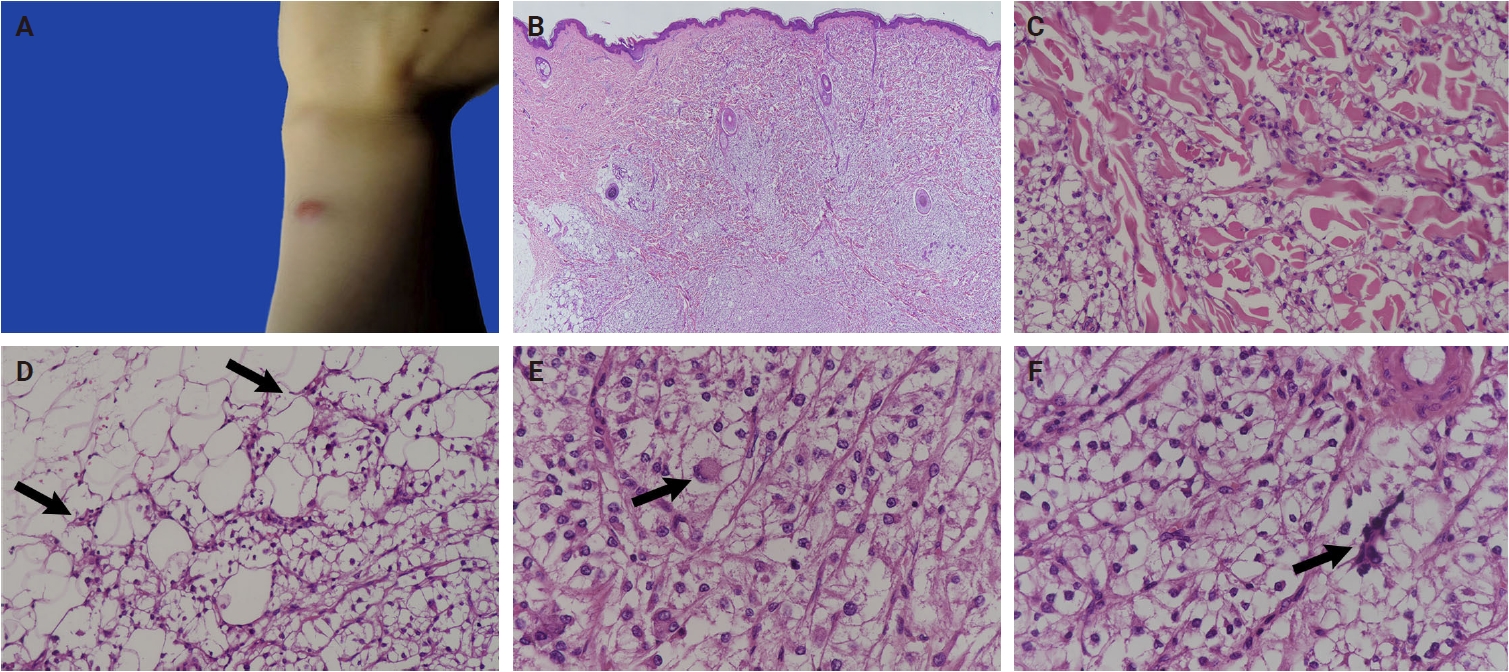
- Clinicopathological characteristics of primary malignant cutaneous perivascular epithelioid cell tumor: case report and literature review
- Huaming Li, Dan Zhang, Shiwu Zhang
- J Pathol Transl Med. 2026;60(5):572-577. Published online July 20, 2026
- DOI: https://doi.org/10.4132/jptm.2026.05.10
- 1,424 View
- 25 Download
-
Abstract
PDF
- Primary cutaneous malignant perivascular epithelioid cell tumors (PEComas) are extremely rare. Accurate diagnosis is critical for prognostic evaluation and guiding clinical management. Here, we report a case of a 19-year-old woman with a 1.1 cm exophytic red mass on her left upper limb. Histological examination revealed a dermal tumor composed of clear cells with prominent nucleoli. The tumor cells displayed cytologic atypia, nuclear pleomorphism, multinucleated giant cells, mitoses and invasive growth, with a multinodular distribution within the dermis and vascular invasion. Immunohistochemically, the tumor cells expressed cathepsin K, HMB45, and CD10. Based on morphological and immunohistochemical findings, we classified it as a primary malignant cutaneous PEComa. To date, only eight reported cases have been described as primary malignant cutaneous PEComas. The present case appears to be the youngest patient reported among all malignant PEComas.
- Fibrosarcoma of bone masquerading as fibrous dysplasia: diagnostic pitfall and molecular correlates of aggressive behavior
- Wangpan J. Shi, Brady K. Huang, Li Lei
- J Pathol Transl Med. 2026;60(5):578-586. Published online August 3, 2026
- DOI: https://doi.org/10.4132/jptm.2026.05.29
- 854 View
- 19 Download
-
Abstract
PDFSupplementary Material
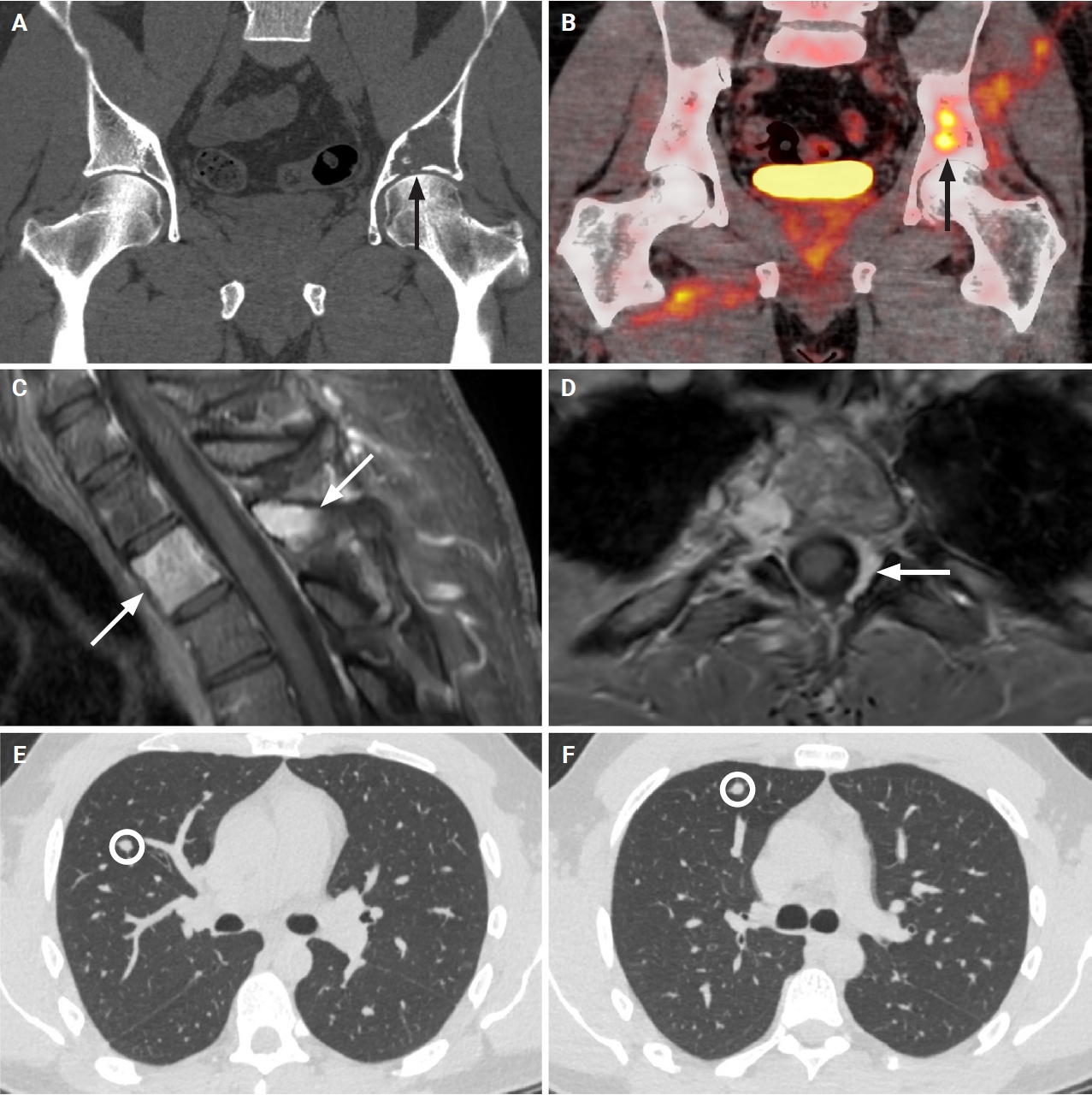
- Low-grade fibro-osseous lesions can be challenging to classify. A 33-year-old man presented with synchronous lesions involving the ilium and T2 vertebra. Because of an impending pathologic fracture, he received several doses of denosumab. Initial biopsies showed bland fibro-osseous lesions lacking GNAS or MDM2 alterations and were favored to represent polyostotic fibrous dysplasia. Subsequent iliac curettage revealed a fascicular spindle cell proliferation with subtle atypia and focal ossification, leading to a revised diagnosis of low-grade fibrosarcoma. Re-biopsy of the T2 lesion demonstrated a similar spindle cell proliferation without ossification. Sequencing identified copy number gains involving KIT, PDGFRA, and TERT. At 16-month follow-up, two metastatic pulmonary nodules developed, one responsive to chemotherapy. The patient remains alive with disease at 27 months after presentation. This case highlights a diagnostic pitfall in which low-grade fibrosarcoma with denosumab-associated ossification may mimic fibrous dysplasia and underscores the prognostic value of molecular profiling beyond histologic grading.
Newsletter
- What’s new in neoplastic pulmonary pathology 2026: updates on grading, staging and molecular testing
- Andreas Tiefenbacher, Luka Brčić
- J Pathol Transl Med. 2026;60(5):587-591. Published online August 31, 2026
- DOI: https://doi.org/10.4132/jptm.2026.07.28
- 1,255 View
- 103 Download
-
Abstract
PDF
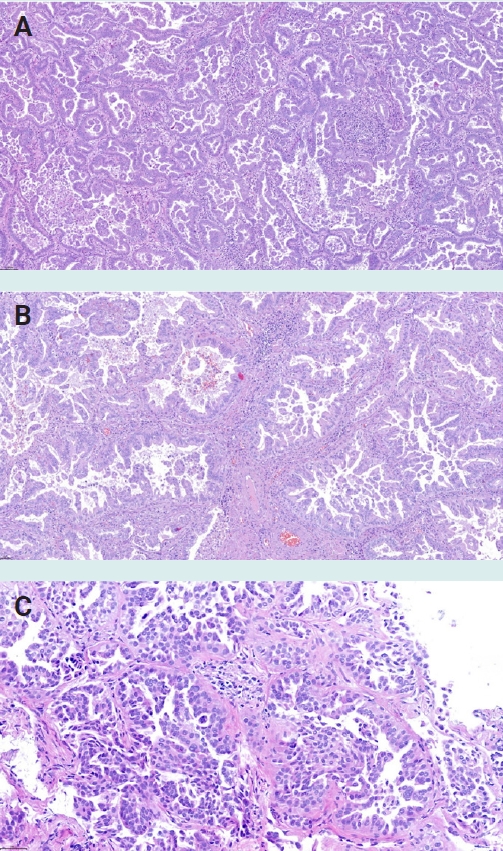
- Neoplastic pulmonary pathology has continued to advance in recent years, including the introduction of histologic grading systems for both adenocarcinoma and squamous cell carcinoma, implementation of the UICC TNM 9th Edition classification, expanded molecular testing requirements, refinements in neuroendocrine tumor classification, and improvements in mesothelioma diagnostics. This newsletter summarizes the most important developments relevant to practicing pathologists.
 First
First Prev
Prev



