
 E-submission
Search
- Page Path
- HOME > Search
- Continuous quality improvement program and its results of Korean Society for Cytopathology
- Yoo-Duk Choi, Hoon-Kyu Oh, Su-Jin Kim, Kyung-Hee Kim, Yun-Kyung Lee, Bo-Sung Kim, Eun-Jeong Jang, Yoon-Jung Choi, Eun-Kyung Han, Dong-Hoon Kim, Younghee Choi, Chan-Kwon Jung, Sung-Nam Kim, Kyueng-Whan Min, Seok-Jin Yoon, Hun-Kyung Lee, Kyung Un Choi, Hye Kyoung Yoon
- J Pathol Transl Med. 2020;54(3):246-252. Published online April 15, 2020
- DOI: https://doi.org/10.4132/jptm.2020.02.22
- 8,510 View
- 133 Download
- 6 Web of Science
- 8 Crossref
-
 Abstract
 PDF
PDF - Background
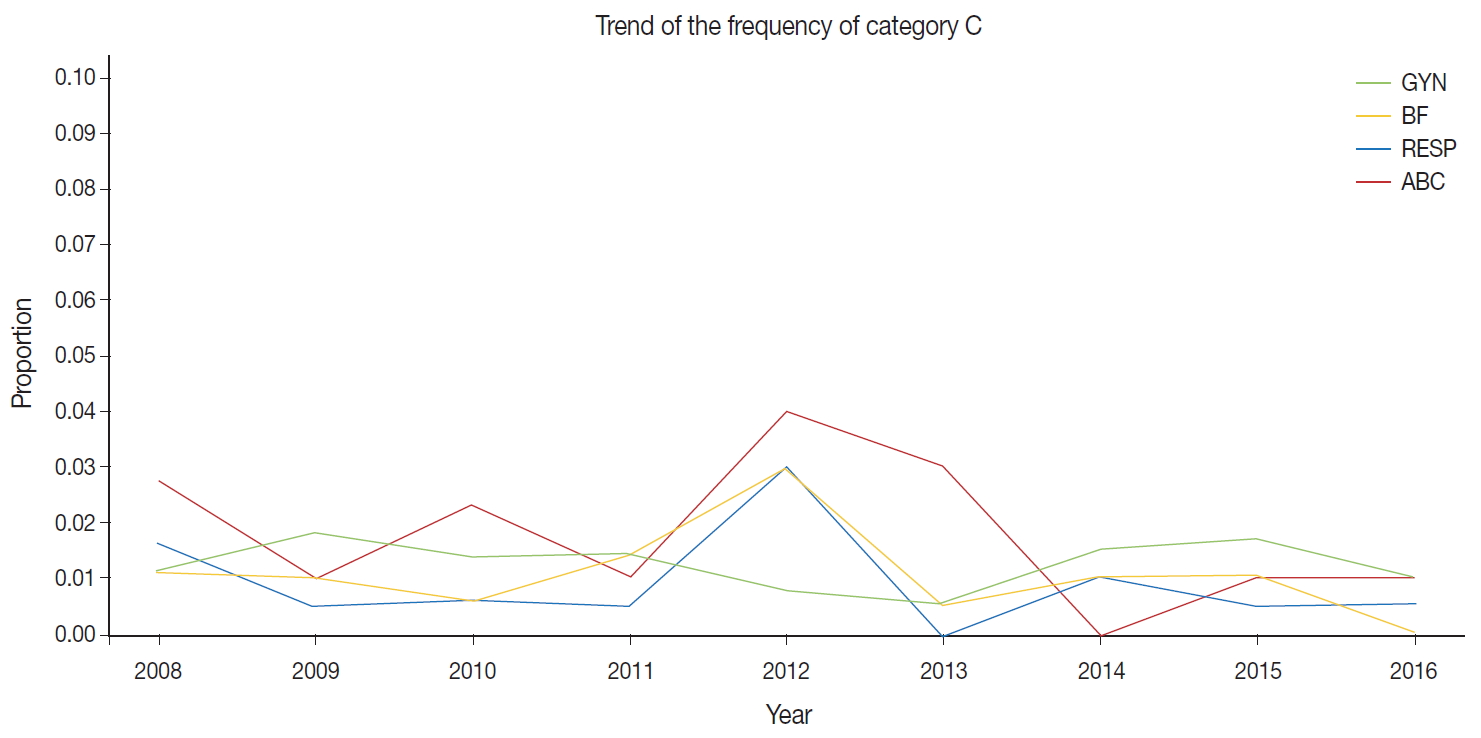
Since 1995, the Korean Society for Cytopathology has overseen the Continuous Quality Improvement program for cytopathology laboratories. The Committee of Quality Improvement has carried out an annual survey of cytology data for each laboratory and set standards for proficiency tests. Methods: Evaluations were conducted four times per year from 2008 to 2018 and comprised statistics regarding cytology diagnoses of previous years, proficiency tests using cytology slides provided by the committee, assessment of adequacy of gynecology (GYN) cytology slides, and submission of cytology slides for proficiency tests. Results: A total of 206 institutes participated in 2017, and the results were as follows. The number of cytology tests increased from year to year. The ratio of liquid-based cytology in GYN gradually decreased, as most of the GYN cytology had been performed at commercial laboratories. The distribution of GYN diagnoses demonstrated nearly 3.0% as atypical squamous cells. The rate for squamous cell carcinoma was less than 0.02%. The atypical squamous cell/squamous intraepithelial lesion ratio was about 3:1 and showed an upward trend. The major discordant rate of cytology-histology in GYN cytology was less than 1%. The proficiency test maintained a major discordant rate less than 2%. The rate of inappropriate specimens for GYN cytology slides gradually decreased. Conclusions: The Continuous Quality Improvement program should be included in quality assurance programs. Moreover, these data can contribute to development of national cancer examination guidelines and facilitate cancer prevention and treatment. -
Citations
Citations to this article as recorded by
- Practice of Cytopathology in Korea: A 40‐Year Evolution Through Standardization, Digital Transformation, and Global Partnership
Yosep Chong, Ran Hong, Hyeong Ju Kwon, Haeryoung Kim, Lucia Kim, Soon Jae Kim, Yoon Jung Choi
Diagnostic Cytopathology.2026; 54(2): 146. CrossRef - Cervical cytology findings in a large urban screening cohort in Tashkent, Uzbekistan: a 3-year population-based analysis using the Bethesda 2014 system
Rakhimov Bakhodir, Gulrukh Botiralieva, Turdiyeva Guzal, Sabina Sadikova, Rakhimova Mekhrbonu
Journal of the American Society of Cytopathology.2026;[Epub] CrossRef - A Study on the Workload of Cytotechnologists: Focus on Commercial Laboratories
Eun-Suk PARK
Korean Journal of Clinical Laboratory Science.2025; 57(2): 228. CrossRef - Integration of Digital Cytology in Quality Assurance Programs for Cytopathology
Yosep Chong, Maria Jesús Fernández Aceñero, Zaibo Li, Andrey Bychkov
Acta Cytologica.2025; 70(1): 126. CrossRef - National quality assurance program using digital cytopathology: a 5-year digital transformation experience by the Korean Society for Cytopathology
Yosep Chong, Hyeong Ju Kwon, Soon Auck Hong, Sung Soon Kim, Bo-Sung Kim, Younghee Choi, Yoon Jung Choi, Jung-Soo Pyo, Ji Yun Jeong, Soo Jin Jung, Hoon Kyu Oh, Seung-Sook Lee
Journal of Pathology and Translational Medicine.2025; 59(5): 320. CrossRef - Diagnostic proficiency test using digital cytopathology and comparative assessment of whole slide images of cytologic samples for quality assurance program in Korea
Yosep Chong, Soon Auck Hong, Hoon Kyu Oh, Soo Jin Jung, Bo-Sung Kim, Ji Yun Jeong, Ho-Chang Lee, Gyungyub Gong
Journal of Pathology and Translational Medicine.2023; 57(5): 251. CrossRef - Re-Increasing Trends in Thyroid Cancer Incidence after a Short Period of Decrease in Korea: Reigniting the Debate on Ultrasound Screening
Chan Kwon Jung, Ja Seong Bae, Young Joo Park
Endocrinology and Metabolism.2022; 37(5): 816. CrossRef - Current status of cytopathology practice in Korea: impact of the coronavirus pandemic on cytopathology practice
Soon Auck Hong, Haeyoen Jung, Sung Sun Kim, Min-Sun Jin, Jung-Soo Pyo, Ji Yun Jeong, Younghee Choi, Gyungyub Gong, Yosep Chong
Journal of Pathology and Translational Medicine.2022; 56(6): 361. CrossRef
- Practice of Cytopathology in Korea: A 40‐Year Evolution Through Standardization, Digital Transformation, and Global Partnership
- Prognostic Significance of CD109 Expression in Patients with Ovarian Epithelial Cancer
- So Young Kim, Kyung Un Choi, Chungsu Hwang, Hyung Jung Lee, Jung Hee Lee, Dong Hoon Shin, Jee Yeon Kim, Mee Young Sol, Jae Ho Kim, Ki Hyung Kim, Dong Soo Suh, Byung Su Kwon
- J Pathol Transl Med. 2019;53(4):244-252. Published online May 2, 2019
- DOI: https://doi.org/10.4132/jptm.2019.04.16
- 10,130 View
- 130 Download
- 9 Web of Science
- 7 Crossref
-
Abstract
PDF
- Background
Ovarian epithelial cancer (OEC) is the second-most common gynecologic malignancy. CD109 expression is elevated in human tumor cell lines and carcinomas. A previous study showed that CD109 expression is elevated in human tumor cell lines and CD109 plays a role in cancer progression. Therefore, this study aimed to determine whether CD109 is expressed in OEC and can be useful in predicting the prognosis.
Methods
Immunohistochemical staining for CD109 and reverse transcription-quantitative polymerase chain reaction was performed. Then we compared CD109 expression and chemoresistance, overall survival, and recurrence-free survival of OEC patients. Chemoresistance was evaluated by dividing into good-response group and poor-response group by the time to recurrence after chemotherapy.
Results
CD109 expression was associated with overall survival (p = .020), but not recurrence-free survival (p = .290). CD109 expression was not an independent risk factor for overall survival due to its reliability (hazard ratio, 1.58; p = .160; 95% confidence interval, 0.82 to 3.05), although we found that CD109 positivity was related to chemoresistance. The poor-response group showed higher rates of CD109 expression than the good-response group (93.8% vs 66.7%, p = .047). Also, the CD109 mRNA expression level was 2.88 times higher in the poor-response group as compared to the good-response group (p = .001).
Conclusions
Examining the CD109 expression in patients with OEC may be helpful in predicting survival and chemotherapeutic effect. -
Citations
Citations to this article as recorded by- CD109 Expression in Tumor and Stromal Cells Serves as a Prognostic Biomarker for Tumor Progression and Outcome in Gallbladder Adenocarcinoma
Taro Kogami, Masaaki Ichinoe, Yasutaka Sakurai, Takuya Kato, Masahiro Matsushita, Akihiro Tamaki, Yurika Kesen, Shoko Hayashi, Itaru Sanoyama, Yoshiko Numata, Atsuko Umezawa, Masatoshi Ichihara, Chika Kusano, Yoshiki Murakumo
Pathology International.2026;[Epub] CrossRef - Advances in the Study of CD109 in Tumors
平慧 周
Medical Diagnosis.2024; 14(02): 167. CrossRef - Identification of CD109 in the extracellular vesicles derived from ovarian cancer stem-like cells
Ye Eun Kim, Jun Se Kim, Min Joo Shin, Seo Yul Lee, Dae Kyoung Kim, Nam-Kyung Lee, Yang Woo Kwon, Kyung-Un Choi, Dong-Soo Suh, Byoung Soo Kim, Sanghwa Jeong, Jae Ho Kim
BMB Reports.2024; 57(12): 527. CrossRef - CD109 Promotes Drug Resistance in A2780 Ovarian Cancer Cells by Regulating the STAT3-NOTCH1 Signaling Axis
Jun Se Kim, Min Joo Shin, Seo Yul Lee, Dae Kyoung Kim, Kyung-Un Choi, Dong-Soo Suh, Dayea Kim, Jae Ho Kim
International Journal of Molecular Sciences.2023; 24(12): 10306. CrossRef - CD109 facilitates progression and 5-fluorouracil resistance of nasopharyngeal carcinoma
Zhenwei Zhu, Fang Zhou, Cheng Mao
Materials Express.2022; 12(9): 1189. CrossRef - Usefulness of CD109 expression as a prognostic biomarker in patients with cancer
Hyun Min Koh, Hyun Ju Lee, Dong Chul Kim
Medicine.2021; 100(11): e25006. CrossRef - Serum CD109 levels reflect the node metastasis status in head and neck squamous cell carcinoma
Sumitaka Hagiwara, Eiichi Sasaki, Yasuhisa Hasegawa, Hidenori Suzuki, Daisuke Nishikawa, Shintaro Beppu, Hoshino Terada, Michi Sawabe, Masahide Takahashi, Nobuhiro Hanai
Cancer Medicine.2021; 10(4): 1335. CrossRef
- CD109 Expression in Tumor and Stromal Cells Serves as a Prognostic Biomarker for Tumor Progression and Outcome in Gallbladder Adenocarcinoma
- The Role of TWIST in Ovarian Epithelial Cancers
- Kyungbin Kim, Eun Young Park, Man Soo Yoon, Dong Soo Suh, Ki Hyung Kim, Jeong Hee Lee, Dong Hoon Shin, Jee Yeon Kim, Mee Young Sol, Kyung Un Choi
- Korean J Pathol. 2014;48(4):283-291. Published online August 26, 2014
- DOI: https://doi.org/10.4132/KoreanJPathol.2014.48.4.283
- 10,921 View
- 42 Download
- 13 Crossref
-
Abstract
PDF
Background Epithelial-mesenchymal transition (EMT) is associated with tumor hypoxia. EMT is regulated, in part, by the action of TWIST, which inhibits of E-cadherin expression and may interfere with the p53 tumor-suppressor pathway.
Methods We examined the expression of TWIST, E-cadherin, hypoxia-inducible factor 1α (HIF1α), and p53 by immunohistochemistry in 123 cases of ovarian epithelial cancers (OEC) to evaluate the role of TWIST in OEC. We assessed the association between protein expression and clinicopathologic parameters.
Results The expression of TWIST, E-cadherin, HIF1α, and p53 proteins was found in 28.5%, 51.2%, 35.0%, and 29.3% of cases, respectively. TWIST expression was associated with higher histologic grade and unfavorable survival. TWIST expression was correlated with HIF1α expression and reduced E-cadherin expression. The altered HIF1α/TWIST/E-cadherin pathway was associated with lower overall survival (OS), while the co-expression of TWIST and p53 was correlated with lower progression-free survival. In the multivariate analyses, TWIST expression was an independent prognostic factor for OS.
Conclusions Our data imply that TWIST expression could be a useful predictor of unfavorable prognosis for OEC. TWIST may affect the p53 tumor-suppressor pathway. Moreover, hypoxia-mediated EMT, which involves the HIF1α/TWIST/E-cadherin pathway may play an important role in the progression of OEC.
-
Citations
Citations to this article as recorded by- Evaluation of Serum HIF-1α as a Hypoxia-Related Biomarker in Patients with Malignant Salivary Gland Neoplasms
Wojciech Domka, Maciej Misiołek, Angelika Myśliwiec, Tomasz Kubrak, Agnieszka Przygórzewska, Dorota Bartusik-Aebisher, David Aebisher
Biomedicines.2026; 14(7): 1611. CrossRef - The Mechanism and Dynamic Regulation of Epithelial to Mesenchymal Transition in Ovarian Cancer
Pande Kadek Aditya Prayudi, I Gde Sastra Winata, I Nyoman Bayu Mahendra, I Nyoman Gede Budiana, Kade Yudi Saspriyana, Ketut Suwiyoga
Clinical and Experimental Obstetrics & Gynecology.2023;[Epub] CrossRef - E-Cadherin Expression in Relation to Clinicopathological Parameters and Survival of Patients with Epithelial Ovarian Cancer
Michal Kielbik, Izabela Szulc-Kielbik, Magdalena Klink
International Journal of Molecular Sciences.2022; 23(22): 14383. CrossRef - Oxygen sensing, mitochondrial biology and experimental therapeutics for pulmonary hypertension and cancer
Danchen Wu, Asish Dasgupta, Austin D. Read, Rachel E.T. Bentley, Mehras Motamed, Kuang-Hueih Chen, Ruaa Al-Qazazi, Jeffrey D. Mewburn, Kimberly J. Dunham-Snary, Elahe Alizadeh, Lian Tian, Stephen L. Archer
Free Radical Biology and Medicine.2021; 170: 150. CrossRef - Hypoxia-Induced Epithelial-Mesenchymal Transition in Cancers: HIF-1α and Beyond
Shing Yau Tam, Vincent W. C. Wu, Helen K. W. Law
Frontiers in Oncology.2020;[Epub] CrossRef - Expression of selected epithelial–mesenchymal transition transcription factors in serous borderline ovarian tumors and type I ovarian cancers
Pawel Sadlecki, Jakub Jóźwicki, Paulina Antosik, Marek Grabiec
Tumor Biology.2018; 40(6): 101042831878480. CrossRef - Expression and prognostic significance of epithelial-mesenchymal transition-related markers and phenotype in serous ovarian cancer
In Hye Song, Kyu-Rae Kim, Sehun Lim, Seok-Hyung Kim, Chang Ohk Sung
Pathology - Research and Practice.2018; 214(10): 1564. CrossRef - Transcription factors controlling E-cadherin down-regulation in ovarian cancer
Holly Russell, Md Zahidul Islam Pranjol
Bioscience Horizons: The International Journal of Student Research.2018;[Epub] CrossRef - Immunohistochemical expression of TWIST in oral squamous cell carcinoma and its correlation with clinicopathologic factors
Maryam Seyedmajidi, Safoura Seifi, Dariush Moslemi, Seyyedeh-Fatemeh Mozaffari, Hemmat Gholinia, Zahra Zolfaghari
Journal of Cancer Research and Therapeutics.2018; 14(5): 964. CrossRef - Activation of TWIST1 by COL11A1 promotes chemoresistance and inhibits apoptosis in ovarian cancer cells by modulating NF‐κB‐mediated IKKβ expression
Yi‐Hui Wu, Yu‐Fang Huang, Tzu‐Hao Chang, Cheng‐Yang Chou
International Journal of Cancer.2017; 141(11): 2305. CrossRef - MicroRNA-219-5p inhibits the proliferation, migration, and invasion of epithelial ovarian cancer cells by targeting the Twist/Wnt/β-catenin signaling pathway
Chunyan Wei, Xi Zhang, Sai He, Bianli Liu, Hongfang Han, Xuejun Sun
Gene.2017; 637: 25. CrossRef - Inhibition of proliferation and invasion of hepatocellular carcinoma cells by lncRNA-ASLNC02525 silencing and the mechanism
Zi Chen, Dongwen Xu, Tao Zhang
International Journal of Oncology.2017; 51(3): 851. CrossRef - Is overexpression of TWIST, a transcriptional factor, a prognostic biomarker of head and neck carcinoma? Evidence from fifteen studies
Xianlu Zhuo, Huanli Luo, Aoshuang Chang, Dairong Li, Houyu Zhao, Qi Zhou
Scientific Reports.2015;[Epub] CrossRef
- Evaluation of Serum HIF-1α as a Hypoxia-Related Biomarker in Patients with Malignant Salivary Gland Neoplasms
- Prognostic Relevance of the Expression of CA IX, GLUT-1, and VEGF in Ovarian Epithelial Cancers
- Kyungbin Kim, Won Young Park, Jee Yeon Kim, Mee Young Sol, Dong Hun Shin, Do Youn Park, Chang Hun Lee, Jeong Hee Lee, Kyung Un Choi
- Korean J Pathol. 2012;46(6):532-540. Published online December 26, 2012
- DOI: https://doi.org/10.4132/KoreanJPathol.2012.46.6.532
- 12,075 View
- 43 Download
- 16 Crossref
-
Abstract
PDF
Background Tumor hypoxia is associated with malignant progression and treatment resistance. Hypoxia-related factors, such as carbonic anhydrase IX (CA IX), glucose transporter-1 (GLUT-1), and vascular endothelial growth factor (VEGF) permit tumor cell adaptation to hypoxia. We attempted to elucidate the correlation of these markers with variable clinicopathological factors and overall prognosis.
Methods Immunohistochemistry for CA IX, GLUT-1, and VEGF was performed on formalin-fixed, paraffin-embedded tissues from 125 cases of ovarian epithelial cancer (OEC).
Results CA IX expression was significantly associated with an endometrioid and mucinous histology, nuclear grade, tumor necrosis, and mitosis. GLUT-1 expression was associated with tumor necrosis and mitosis. VEGF expression was correlated only with disease recurrence. Expression of each marker was not significant in terms of overall survival in OECs; however, there was a significant correlation between poor overall survival rate and high coexpression of these markers.
Conclusions The present study suggests that it is questionable whether CA IX, GLUT-1, or VEGF can be used alone as independent prognostic factors in OECs. Using at least two markers helps to predict patient outcomes in total OECs. Moreover, the inhibition of two target gene combinations might prove to be a novel anticancer therapy.
-
Citations
Citations to this article as recorded by- Glucose-transporter 1 (GLUT1) as a prognostic biomarker: evidence from 14,966 human tumors across 134 cancer types
Seyma Büyücek, Katharina Möller, Florian Viehweger, Ria Schlichter, Anne Menz, Andreas M Luebke, Viktor Reiswich, Martina Kluth, Claudia Hube-Magg, Andrea Hinsch, Florian Lutz, Sören Weidemann, Frank Jacobsen, Maximilian Lennartz, David Dum, Christian Ber
BMC Cancer.2026;[Epub] CrossRef - Role of Carbonic Anhydrase IX Expression in Triple-negative Breast Cancer
Hemali B Kotadiya, Nupur A Patel, Hemangini H Vora
Gujarat Cancer Society Research Journal.2026; 27(2): 31. CrossRef - Evaluation of the effect of Endogenous and Exogenous Antioxidants on Hypoxia Induced Breast Adenocarcinoma Cell Invasion and Migration:
In vitro
Subarnarekha Maitra, Poulami Sen, Dibya Sinha, Tathagata Roy
Research Journal of Pharmacy and Technology.2025; : 3153. CrossRef - Effect of Ultrasound Therapy at the ST11 on Sympathetic Nervous System Change: A Prospective Randomized Controlled Study
Shinwoo Kang, Dongho Keum
Journal of Korean Medicine Rehabilitation.2023; 33(4): 167. CrossRef - A systematic review verified by bioinformatic analysis based on TCGA reveals week prognosis power of CAIX in renal cancer
Zikuan Zhang, Bo Wu, Yuan Shao, Yongquan Chen, Dongwen Wang, Lucia Magnelli
PLOS ONE.2022; 17(12): e0278556. CrossRef - Effect of Acupuncture at the Field of the Auricular Branch of the Vagus Nerve on Autonomic Nervous System Change
Sunjoo An, Dongho Keum
Journal of Korean Medicine Rehabilitation.2021; 31(2): 81. CrossRef - Responses of Autonomic Nervous System and Gastrointestinal Function to Acupuncture at Abdominal Anterior Cutaneous Nerve : A Pilot Study
Seohyun Park, Hojun Kim, Dongho Keum
Journal of Korean Medicine.2019; 40(1): 99. CrossRef - Omega-3 polyunsaturated fatty acid docosahexaenoic acid and its role in exhaustive-exercise-induced changes in female rat ovulatory cycle
Abeer F. Mostafa, Shereen M. Samir, R.M. Nagib
Canadian Journal of Physiology and Pharmacology.2018; 96(4): 395. CrossRef - Clear cell carcinomas of the ovary and kidney: clarity through genomics
Jennifer X Ji, Yi Kan Wang, Dawn R Cochrane, David G Huntsman
The Journal of Pathology.2018; 244(5): 550. CrossRef - Prognostic Significance of Carbonic Anhydrase IX Expression in Cancer Patients: A Meta-Analysis
Simon J. A. van Kuijk, Ala Yaromina, Ruud Houben, Raymon Niemans, Philippe Lambin, Ludwig J. Dubois
Frontiers in Oncology.2016;[Epub] CrossRef - Review of Research Topics on Abdominal Examination
Jihye Kim, Jeong Hwan Park, Keun Ho Kim
Journal of Korean Medicine.2016; 37(3): 1. CrossRef - Expression of hypoxic markers and their prognostic significance in soft tissue sarcoma
JEUNG IL KIM, KYUNG UN CHOI, IN SOOK LEE, YOUNG JIN CHOI, WON TACK KIM, DONG HOON SHIN, KYUNGBIN KIM, JEONG HEE LEE, JEE YEON KIM, MEE YOUNG SOL
Oncology Letters.2015; 9(4): 1699. CrossRef - Evaluation of a Hypoxia Regulated Gene Panel in Ovarian Cancer
Amanda F. Baker, Scott W. Malm, Ritu Pandey, Cindy Laughren, Haiyan Cui, Denise Roe, Setsuko K. Chambers
Cancer Microenvironment.2015; 8(1): 45. CrossRef - Sulforaphane reduces molecular response to hypoxia in ovarian tumor cells independently of their resistance to chemotherapy
MICHAL PASTOREK, VERONIKA SIMKO, MARTINA TAKACOVA, MONIKA BARATHOVA, MARIA BARTOSOVA, LUBA HUNAKOVA, OLGA SEDLAKOVA, SONA HUDECOVA, OLGA KRIZANOVA, FRANCK DEQUIEDT, SILVIA PASTOREKOVA, JAN SEDLAK
International Journal of Oncology.2015; 47(1): 51. CrossRef - Overexpression of Glucose Transporter-1 (GLUT-1) Predicts Poor Prognosis in Epithelial Ovarian Cancer
Hanbyoul Cho, You Sun Lee, Julie Kim, Joon-Yong Chung, Jae-Hoon Kim
Cancer Investigation.2013; 31(9): 607. CrossRef - Towards Lipidomics of Low-Abundant Species for Exploring Tumor Heterogeneity Guided by High-Resolution Mass Spectrometry Imaging
Jonathan Cimino, David Calligaris, Johann Far, Delphine Debois, Silvia Blacher, Nor Sounni, Agnès Noel, Edwin De Pauw
International Journal of Molecular Sciences.2013; 14(12): 24560. CrossRef
- Glucose-transporter 1 (GLUT1) as a prognostic biomarker: evidence from 14,966 human tumors across 134 cancer types
- Ectomesenchymal Chondromyxoid Tumor in the Anterior Tongue: Case Report of a Unique Tumor
- Min Gyoung Pak, Kyung Bin Kim, Nari Shin, Woo Kyung Kim, Dong Hoon Shin, Kyung Un Choi, Mee Young Sol
- Korean J Pathol. 2012;46(2):192-196. Published online April 25, 2012
- DOI: https://doi.org/10.4132/KoreanJPathol.2012.46.2.192
- 10,026 View
- 63 Download
- 7 Crossref
-
Abstract
PDF
Ectomesenchymal chondromyxoid tumor (ECMT) is a rare tumor, exclusively arising in the anterior tongue. Thirty-eight cases have been reported in the English literature. It usually presents as a sessile protrusion and shows round to spindle cells embedded in myxoid to chondroid stroma. Tumor cells are almost always positive for polyclonal glial fibrillary acidic protein (GFAP). We report our experience in the recent treatment of a case of ECMT, the third case in 3 years. The mass in the anterior tongue revealed characteristic morphologic features of ECMT and the expression of polyclonal GFAP. Although ECMT should be differentiated from other mesenchymal tumors including myoepithelioma, its clinical, morphological, and immunohistochemical features enable its diagnosis, especially when pathologists are aware of it.
-
Citations
Citations to this article as recorded by- A case of ectomesenchymal chondromyxoid tumor on the lateral border of the tongue
Kohei KAWAMURA, Takayuki KURIMOTO, Yukihiro OHTA, Takuji YASUDA, Kanemitsu SHIRASUNA, Hideo YOSHIOKA
Japanese Journal of Oral and Maxillofacial Surgery.2025; 71(8): 354. CrossRef - Ectomesenchymal chondromyxoid tumor of the oral cavity: a report of 5 new cases with comprehensive review of the literature and clinicohistopathologic features
Molly Housley Smith, Jack Moynihan
Oral Surgery, Oral Medicine, Oral Pathology and Oral Radiology.2023; 135(3): 410. CrossRef - Chondroid choristoma of the tongue
Sumaiya Nezam, Roquaiya Nishat, Shabab Ahmed Khan, Jeevendra Nath Shukla
National Journal of Maxillofacial Surgery.2022; 13(Suppl 1): S121. CrossRef - Ectomesenchymal chondromyxoid tumor: a comprehensive updated review of the literature and case report
Astrid Truschnegg, Stephan Acham, Lumnije Kqiku, Norbert Jakse, Alfred Beham
International Journal of Oral Science.2018;[Epub] CrossRef - Clinical features of ectomesenchymal chondromyxoid tumors: A systematic review of the literature
Masanari G. Kato, Evren Erkul, Kendall S. Brewer, Emily E. Harruff, Shaun A. Nguyen, Terry A. Day
Oral Oncology.2017; 67: 192. CrossRef - Cyclin D1 Expression in Ectomesenchymal Chondromyxoid Tumor of the Anterior Tongue
Jan Laco, Radovan Mottl, Walter Höbling, Stephan Ihrler, Petr Grossmann, Alena Skalova, Ales Ryska
International Journal of Surgical Pathology.2016; 24(7): 586. CrossRef - Nodular lesion in the buccal mucosa
Bruna Jalfim Maraschin, Ana Carolina Amorim Pellicioli, Lélia Batista de Souza, Pantelis Varvaki Rados, Marco Antonio Trevizani Martins, Manoela Domingues Martins
The Journal of the American Dental Association.2015; 146(3): 196. CrossRef
- A case of ectomesenchymal chondromyxoid tumor on the lateral border of the tongue
- Type and Incidence of Soft Tissue Sarcomas in Korea: 2001-2007.
- Kyung Un Choi, Hae Youn Kang, Heasoo Koo, Mi Seon Kwon, Dong Hoon Kim, Mi Jung Kim, Su Jin Kim, Young Sill Kim, Chul Hwan Kim, Yong Koo Park, Hye Rim Park, Seung Sam Paik, Jin Young Yoo, Anhi Lee, Jae Hyuk Lee, Hyekyung Lee, Kyu Yun Jang, Young Chae Chu, Joon Hyuk Choi
- Korean J Pathol. 2011;45(6):557-563.
- DOI: https://doi.org/10.4132/KoreanJPathol.2011.45.6.557
- 5,539 View
- 52 Download
- 1 Crossref
-
Abstract
PDF
- BACKGROUND
The Korean Bone and Soft Tissue Pathology Study Group of the Korean Society of Pathologists conducted a nationwide retrospective analysis of soft tissue sarcoma (STS) to provide the clinicopathologic characteristics of STS within the population of the Republic of Korea.
METHODS
The cases of STS were collected during a 7-year period (2001-2007) from 19 institutes in Korea. All cases were classified according to the histologic criteria proposed by the World Health Organization. Clinicopathologic data were reviewed.
RESULTS
Data from 722 patients (median age, 50 years) were collected. Data showed a slight male predominance. The most frequent types of STS in decreasing order were liposarcoma, malignant fibrous histiocytoma, leiomyosarcoma, and synovial sarcoma. STS occurred throughout the body, although approximately half (47.8%) were located in the extremities. The majority of STS was histologically classified as high grade with a large tumor size (>5 cm). The overall survival rate for the patients was 76.3% (median follow-up time, 26 months; range, 1 to 89 months). Histologic grade, tumor size, American Joint Committee on Cancer stage, tumor site, and resection status were prognostic. Significant independent adverse prognostic factors were large tumor size (>5 cm) and tumor site other than extremities.
CONCLUSIONS
We reported the distribution and characteristics of STS in the Republic of Korea. -
Citations
Citations to this article as recorded by- Distribution and survival of primary sarcoma in Korea: A single center analysis of 2017 cases
Sung Jun Jo, Kyeong Sik Kim, Kyo Won Lee, Jae Berm Park, Yoon-La Choi, Jeong Il Yu, Su Jin Lee, Dong Il Choi, Sung Joo Kim
Korean Journal of Clinical Oncology.2018; 14(1): 30. CrossRef
- Distribution and survival of primary sarcoma in Korea: A single center analysis of 2017 cases
- Molecular Biological Characteristics of Differentiated Early Gastric Cancer on the Basis of Mucin Expression.
- Nari Shin, Hye Yeon Kim, Woo Kyung Kim, Min Gyung Park, Kyung Bin Kim, Dong Hoon Shin, Kyung Un Choi, Jee Yeon Kim, Chang Hun Lee, Gi Young Huh, Mee Young Sol, Do Youn Park
- Korean J Pathol. 2011;45(1):69-78.
- DOI: https://doi.org/10.4132/KoreanJPathol.2011.45.1.69
- 5,469 View
- 24 Download
- 2 Crossref
-
Abstract
PDF
- BACKGROUND
It is clear that the biologic characteristics of gastric cancer are different on the basis of mucin phenotypes. However, there are unabated controversies on the exact biologic differences of mucin expression in gastric cancer.
METHODS
We analyzed various protein expressions and microsatellite instability (MSI) status based on mucin expression in 130 differentiated early gastric adenocarcinoma cases. Furthermore, we evaluated the genomic alternation in 10 selected differentiated early gastric adenocarcinoma cases using array based comparative genomic hybridization (aCGH).
RESULTS
Intestinal mucin predominant subtype showed significantly elevated p53 protein and caudal-related homeobox 2 expression, and delocalization of beta catenin expressions compared to the gastric mucin predominant subtype. On MSI status, the gastric mucin predominant subtype more frequently showed unstable status than the intestinal mucin predominant subtype. CGH study showed more frequent chromosomal gain and loss in the intestinal mucin predominant subtype than the gastric mucin predominant subtype, albeit without statistical significance. Interestingly, there were significant differences in chromosomal alternation between four mucin phenotypes.
CONCLUSIONS
Study results suggest possible different points of biologic behaviors in early differentiated gastric adenocarcinomas by mucin expression type. -
Citations
Citations to this article as recorded by- Mucin Expression in Gastric Cancer: Reappraisal of Its Clinicopathologic and Prognostic Significance
Dae Hwan Kim, Nari Shin, Gwang Ha Kim, Geum Am Song, Tae-Yong Jeon, Dong-Heon Kim, Gregory Y. Lauwers, Do Youn Park
Archives of Pathology & Laboratory Medicine.2013; 137(8): 1047. CrossRef - Microsatellite Instability Status in Gastric Cancer: A Reappraisal of Its Clinical Significance and Relationship with Mucin Phenotypes
Joo-Yeun Kim, Na Ri Shin, Ahrong Kim, Hyun-Jeong Lee, Won-young Park, Jee-Yeon Kim, Chang-Hun Lee, Gi-Young Huh, Do Youn Park
Korean Journal of Pathology.2013; 47(1): 28. CrossRef
- Mucin Expression in Gastric Cancer: Reappraisal of Its Clinicopathologic and Prognostic Significance
- Expression of p63 and its Isoform, deltaNp63, in Non-Small Cell Lung Carcinoma.
- Ick Doo Kim, Dong Hoon Shin, Kyung Un Choi, Do Youn Park, Gi Yeong Huh, Mee Young Sol, Min Ki Lee, Young Dae Kim, Chang Hun Lee
- Korean J Pathol. 2009;43(4):321-328.
- DOI: https://doi.org/10.4132/KoreanJPathol.2009.43.4.321
- 4,617 View
- 58 Download
-
Abstract
PDF
- BACKGROUND
Several studies have been conducted on the role of the p63 gene family in non-small cell lung carcinoma (NSCLC). Nevertheless, the role of these genes in the development and progression of NSCLC remains controversial. This study was designed to examine the expression and clinicopathologic significance of the p63 family in NSCLC.
METHODS
Immunohistochemical staining was performed on 92 cases of NSCLC (47 squamous cell carcinomas [SqCCs] and 45 adenocarcinomas [ACs]) using tissue microarray blocks. The results were analyzed and correlated with clinicopathologic data. RESULTS: The expression of delta Np63 (Delta Np63) was elevated in SqCC (39/47), but not in AC (2/45; p<0.01). Both p63 and Delta Np63 had high expression in 39 SqCCs; p63 and Delta Np63 also had a similar geomorphologic distribution in most positive tumors. The expression of Delta Np63 was correlated with histologic type, gender, pT stage, p53 expression, and p63 expression. pT and pN stages were independent factors in survival (p<0.05, respectively).
CONCLUSIONS
The major p63 isoform in NSCLC, Delta Np63, had a strong correlation with p53 and p63, and was exclusively expressed in SqCC. However, our findings suggest that Delta Np63 was not an independent prognostic factor for NSCLC.
- Array-comparative Genomic Hybridization Analysis of Alveolar Soft Part Sarcoma.
- Jeung Il Kim, Kyung Un Choi, Hyun Jeong Kang, Dong Hoon Shin, In Sook Lee, Tae Yong Moon, Won Taek Kim
- Korean J Pathol. 2009;43(3):231-237.
- DOI: https://doi.org/10.4132/KoreanJPathol.2009.43.3.231
- 3,773 View
- 26 Download
-
Abstract
PDF
- BACKGROUND
Alveolar soft part sarcomas (ASPSs) are rare, histologically distinctive soft tissue sarcomas of unknown origin. Although ASPSs are characterized by a specific alteration, der(17)t(X;17)(p11;q25), the entire spectrum of genetic events underlying the pathogenesis of ASPS is unclear. Using array-based comparative genomic hybridization (array-CGH), we examined the DNA copy number changes in ASPS.
METHODS
Array-CGH, composed of 4,030 clones, was performed in two samples of fresh frozen tumor tissues from a 29-year-old male and a 16-year-old female.
RESULTS
We identified 16 commonly altered chromosomal regions involving 25 genes. Eleven altered regions were located on chromosome Xp (Xp22.33, Xp22.11, Xp11.3, Xp11.3-Xp11.23, Xp22.2, Xp22.12, Xp22.31, Xp22.32, Xp21.1, Xp21.3, and Xp11.4). Additional regions with an increased copy number were observed at 1q25.1, 7q35, 12p12.1, and 17p11.2. Loss was found in only one region of chromosome 22q11.23. Several genes located within the amplified region of Xp included GYG2, ARSD, ARSE, ARSH, UBE1, USP11, PCTK1, ARAF, SYN1, TIMP1, XK, PDK3, PCYT1B, PHEX, ARX, RPS6KA3, TMSB4X, TMEM27, BMX, and KAL1.
CONCLUSIONS
This was the first application report of genome-wide copy number changes by BAC array-CGH in ASPSs. Our study showed unique genomic regions and new candidate genes that suggest a neural origin and are associated with tumor pathogenesis in ASPSs.
- Analysis of Microsatellite Instability in Ovarian Epithelial Cancer.
- Mee Young Sol, Kyung Un Choi, Jee Yeon Kim, Hyun Jeong Kang, Dong Hoon Shin, Ik Doo Kim, Hyo Seon Choi, Soon Jung Seo
- Korean J Pathol. 2007;41(6):380-386.
- 2,685 View
- 22 Download
-
Abstract
PDF
- BACKGROUND
The aim of this study was to clarify the incidence and role of microsatellite instability (MSI) in sporadic ovarian epithelial cancers (OEC). We investigated the MSI status and mismatch repair (MMR) protein expression in OEC.
METHODS
MSI was examined by fluorescence- based polymerase chain reaction using five NCI panel markers (BAT25, BAT26, D2S123, D5S346 and D17S250) in 46 cases of OEC. Immunohistochemistry (IHC) for hMLH1 and hMSH2 was performed.
RESULTS
Seven cases (15.2%) exhibited high-frequency MSI (MSIH), one exhibited low-frequency MSI (MSI-L), and the remaining 38 demonstrated microsatellite stability (MSS). MSI-H in OEC was not associated with histologic grade, FIGO stage, tumor size, mitoses or histologic type. Loss of expression of either hMLH1 or hMSH2 was observed in 4 of the 7 (59.3%) MSI-H cases, whereas 4 of the 39 (10.3%) MSI-L or MSS tumors revealed loss of expression of MMR proteins. The sensitivity and specificity of immunohistochemistry for hMLH1 and hMSH2 were 57.1% and 89.7%.
CONCLUSIONS
Our data suggest that a genetic defect in the MMR system might play a role in the carcinogenesis of a minor subset of sporadic OEC however, immunohistochemical testing for hMLH1 and hMSH2 cannot accurately determine microsatellite instability status in OEC.
- Primary Extragastrointestinal Stromal Tumor (EGIST) of the Greater Omentum.
- Kyung Un Choi, Jee Yeun Kim, Do Youn Park, Chang Hun Lee, Mee Young Sol, Kang Suek Suh, Jun Woo Lee
- Korean J Pathol. 2001;35(4):347-350.
- 4,335 View
- 34 Download
-
Abstract
PDF
- Gastrointestinal stromal tumors (GISTs) were recently defined as spindle cell, epithelioid, or occasionally, pleomorphic mesenchymal tumors of the gastrointestinal tract that express the CD117 (proto-oncogene c-kit protein, stem cell factor receptor), as detected using immunohistochemistry. And they show a new tendency to include the CD117-positive mesenchymal spindle cell or epithelioid neoplasms primary in the omentum and mesentery, and is so termed extragastrointestinal stromal tumors (EGISTs). Omental EGISTs are very rare and similar to their gastrointestinal counterpart. We present a case of primary EGIST of the greater omentum in a 58-year-old man. The resected tumor mass measured 20X15X5 cm and weighed 1,150 g. The cut surface displayed a central cystic change and partial mural nodules. Microscopically, most parts of the tumor were composed of round or polygonal cells, with many of them containing perinuclear vacuoles. The mitotic count was less than one per 50 high-power-fields. Immunohistochemically, the tumor cells were diffusely positive for CD117 and vimentin, and focally for smooth muscle actin and CD34. Ultrastructurally, partially smooth muscle differentiation was confirmed in this case.
- Expression of Fas/Fas Ligand and Its Relationship with Apoptosis in Chemically Induced Preneoplastic Lesions in Rat Liver.
- Hye Jin Lee, Do Youn Park, Kyung Un Choi, Jee Yeon Kim, Chang Hun Lee, Mee Young Sol, Kang Suek Suh
- Korean J Pathol. 2001;35(5):383-390.
- 2,366 View
- 15 Download
-
Abstract
PDF
- BACKGROUND
Apoptosis of hepatocytes plays a major role in experimental hepatocarcinogenesis of rats. But sequential change and localization of Fas and Fas ligand (FasL) in preneoplastic lesions and the relationship with apoptosis are not clearly elucidated.
METHODS
We investigated sequential change and localization of Fas/FasL and its relationship to apoptosis in preneoplastic lesions of chemical hepatocarcinogenesis in rats using northern blot analysis, immunohistochemistry and terminal deoxynucleotidyl transferase end labeling (TUNEL) assay.
RESULTS
We found that mRNA of Fas and Fas ligand increased for up to 42 days and 14 days after partial hepatectomy, respectively, and thereafter decreased with time. Fas protein was localized on the cytoplasm of hepatocytes of preneoplastic lesions, as well as on the cytoplasmic membrane of the adjacent liver parenchyme. Fas negative preneoplastic lesions were evident at 42 days after partial hepatectomy. FasL protein was found only in the cytoplasm of hepatocytes of preneoplastic lesions, instead of in the adjacent liver parenchyme. FasL-positive hepatocytes increased with time for up to 14 days after partial hepatectomy and therafter decreased. Also, TUNEL-positive apoptotic cells increased with time and were more numerous in the adjacent liver parenchyme than in the preneoplastic lesions.
CONCLUSIONS
It was suggested that Fas/FasL-mediated apoptosis might be one of the major mechanisms for controlling apoptotic cell death in the promotion stage of chemical hepatocarcinogenesis.
- A Multiinstitutional Consensus Study on the Pathologic Diagnosis of Endometrial Hyperplasia and Carcinoma.
- Kwang Sun Suh, Insun Kim, Moon Hyang Park, Geung Hwan Ahn, Jin Hee Sohn, In Ae Park, Hye Kyoung Yoon, Kyu Rae Kim, Hee Jung An, Dong Won Kim, Mi Jin Kim, Hee Jae Joo, Eun Kyung Kim, Young Hee Choi, Chong Woo Yoo, Kyung Un Choi, Sang Yeop Yi, Hye Sun Kim, Sung Ran Hong, Hee Jeong Lee, Sun Lee
- Korean J Pathol. 2008;42(2):87-93.
- 2,736 View
- 26 Download
-
Abstract
PDF
- BACKGROUND
The purpose of this study was to examine the reproducibility of both the diagnosis of endometrial hyperplasia (EH) or adenocarcinoma, and the histologic grading (HG) of endometrioid adenocarcinoma (EC).
METHODS
Ninety-three cases of EH or adenocarcinomas were reviewed independently by 21 pathologists of the Gynecologic Pathology Study Group. A consensus diagnosis was defined as agreement among more than two thirds of the 21 pathologists.
RESULTS
There was no agreement on the diagnosis in 13 cases (14.0%). According to the consensus review, six of the 11 EH cases (54.5%) were diagnosed as EH, 48 of the 57 EC cases (84.2%) were EC, and 5 of the 6 serous carcinomas (SC) (83.3%) were SC. There was no consensus for the 6 atypical EH (AEH) cases. On the HG of EC, there was no agreement in 2 cases (3.5%). According to the consensus review, 30 of the 33 G1 cases (90.9%) were G1, 11 of the 18 G2 cases (61.1%) were G2, and 4 of the 4 G3 cases (100.0%) were G3.
CONCLUSIONS
The consensus study showed high agreement for both EC and SC, but there was no consensus for AEH. The reproducibility for the HG of G2 was poor. We suggest that simplification of the classification of EH and a two-tiered grading system for EC will be necessary.
- Cytologic Features of Fine Needle Aspirates of Hyalinizing Trabecular Adenoma with Occult Papillary Carcinoma of the Thyroid.
- Kyung Un Choi, Jee Yeon Kim, Jin Sook Lee, Do Youn Park, Chang Hoon Lee, Mee Young So, Kang Suek Suh
- J Pathol Transl Med. 2003;14(1):7-11.
- 2,347 View
- 12 Download
-
Abstract
PDF
- Hyalinizing trabecular adenoma of the thyroid gland is a rare benign neoplasm predominantly diagnosed in middle-aged women. Carney et al. first described this entity that may mimic paraganglioma, medullary carcinoma and papillary carcinoma in 1987. We describe cytologic and histopathologic features of a case of hyalinizing trabecular adenoma combined with occult papillary carcinoma in the opposite lobe. A 55-year-old woman presented with nontender palpable mass of the right neck for 6 months. The aspirate was cellular and contained small clusters and sheets of epithelial cells with abundant filamentous, vacuolated, and ill-defined cytoplasm. The nuclei were slightly pleomorphic and showed nuclear overlapping, nuclear grooves, and intranuclear cytoplasmic inclusions. Histologic examination showed hyalinizing trabecular adenoma in the right lobe and occult papillary carcinoma in the left lobe.
- Fine Needle Aspiration Cytology of Insular Carcinoma of the Thyroid.
- Kyung Un Choi, Jee Yeon Kim, Jin Sook Lee, Chang Hun Lee
- J Pathol Transl Med. 2003;14(1):17-21.
- 2,396 View
- 19 Download
-
Abstract
PDF
- Insular carcinoma of the thyroid(ICT) is an uncommon thyroglobulin-producing neoplasm, intermediate between well differentiated and anaplastic carcinoma. Only a few publications have addressed the fine needle aspiration cytologic(FNAC) findings from ICT. We experienced a case histologically diagnosed as ICT and with preoperative FNAC in a 52-year-old woman. The FNAC displayed scanty colloid and abundant monomorphic follicular cells presented singly, in small loose aggregates, and in cohesive trabecular or acinar clusters. Intact insulae of tumor cells were also identified. Necrosis and mitosis were rare. Tumor cells showed round and monomorphic nuclei, finely granular chromatin, and inconspicuous nucleoli. When insular structure is identified in thyroid FNAC specimen, ICT should be included in the differential diagnosis. Herein we discuss and review the cytologic criteria for separation of ICT from other thyroid neoplasms.
- Mixed Liposarcoma: A Case Report.
- Jeung Il Kim, Hyun Jeong Kang, Kyung Un Choi
- Korean J Pathol. 2005;39(3):200-202.
- 2,548 View
- 20 Download
-
Abstract
PDF
- True mixed liposarcomas are extremely rare tumors. We report here on a case of mixed liposarcoma that was composed of well differentiated and pleomorphic liposarcoma. A 76-year-old man presented to us with a mass in his left upper arm. This lesion had been there for twenty years, it was recently growing rapidly and had doubled in size during the recent 2 months. The MR image showed a mass composed of a fat component and a soft tissue component with necrosis. The old fat component was revealed as well differentiated liposarcoma, and the recent growing soft tissue component was revealed as pleomorphic liposarcoma. The two components showed different immunohistochemical results for MDM2.
- Altered Expression of DNA Topoisomerase IIalpha, Ki-67, p53 and p27 in Non-Hodgkin's Lymphoma.
- Kyeong Min Lee, Mee Young Sol, Hyun Jeong Kang, Dong Hoon Shin, Kyung Un Choi, Hwal Woong Kim, Jee Yeon Kim, Do Youn Park, Chang Hun Lee
- Korean J Pathol. 2005;39(5):332-337.
- 2,735 View
- 19 Download
-
Abstract
PDF
- BACKGROUND
Topoisomerase II (TOPO II) is an enzyme that separates intertwined chromosomes during DNA synthesis by transiently breaking and joining DNA strands. The level of TOP II is one of the determinants of cellular sensitivity to anti-tumor drugs in non-Hodgkin's lymphoma patients. The alpha form of TOPO II has been recently used as a marker of cellular proliferation. High levels of TOPO IIalpha are expressed in aggressive and proliferative tumors.
METHODS
This study was designed to evaluate the relationship between TOPO IIalpha expression and clinicopathological parameters including age, gender, the serum LDH level, the serum beta2-microglobulin level and stage, or expressions, of Ki-67, p53 and p27, in non-Hodgkin's lymphoma. We analyzed forty-one biopsied tissue specimens from patients with non-Hodgkin's lymphoma.
RESULTS
The expression of TOPO IIalpha increased with the clinical stage and it was correlated with Ki-67 and p53 expressions. However, TOPO IIalpha expression did not have any significant correlation with age, gender, the serum LDH level, the serum 2-microglobulin level and the p27 expression.
CONCLUSIONS
TOPO IIalpha expression is a useful marker of cellular proliferation and it may serve as a prognostic factor of a tumor's progression and aggressiveness in non-Hodgkin's lymphomas.
- Cytologic Features of Pseudoangiomatous Stromal Hyperplasia of the Breast: A Case Report with Review of Literature.
- Jin Sook Lee, Jee Yeon Kim, Dong Hoon Shin, Do Youn Park, Kyung Un Choi, Chang Hoon Lee, Mee Young Sol
- J Pathol Transl Med. 2005;16(1):25-30.
- 2,736 View
- 41 Download
-
Abstract
PDF
- Pseudoangiomatous stromal hyperplasia(PASH) was initially described by Vuitch et al. as a benign breast lesion, consisting of mammary stromal proliferations which simulate vascular lesions, and which might be mistaken for a low-grade angiosarcoma. This condition occasionally presents as a palpable mass in postmenopausal women, but is more frequently encountered as an incidental component in premenopausal women. Clinical, radiological, and fine-needle aspiration(FNA) findings associated with this condition can mimic those observed in conjunction with a phyllodes tumor or a fibroadenoma. The cytological features of PASH are generally nonspecific, and its diagnosis by FNA cytology is fairly difficult. In this study, we report a case of PASH, manifesting as a palpable mass
- Invasine Ductal Carcinoma with Osteoclast-Like Giant Cell in a Young Woman.
- Hyun Jeong Kang, Jee Yeon Kim, Kyung Un Choi, Hee Suk Kwak, Mee Young Sol
- J Pathol Transl Med. 2007;18(1):69-73.
- 2,661 View
- 27 Download
-
Abstract
PDF
- Mammary carcinoma with osteoclast-like giant cells is an unusual neoplasm characterized by giant cells, mononuclear stromal cells, and hemorrhage accompanying a low grade carcinoma. We present the cytological findings in a case of invasive ductal carcinoma with osteoclast-like giant cells that was initially confused with a fibroadenoma, due to its well-demarcated and soft mass and the young age of the patient. A 28-year-old female presented with a 4.5 cm, well demarcated, soft and nontender mass in the right breast. Fine needle aspiration cytology (FNAC) showed a combination of low grade malignant epithelial cell clusters and osteoclast-like giant cells. The atypical epithelial cells were present in cohesive sheets and clusters. Osteoclast-like giant cells and bland-looking mononuclear cells were scattered. An histological examination revealed the presence of an invasive ductal carcinoma with osteoclast-like giant cells. We report here the cytological findings of this rare carcinoma in a very young woman. The minimal atypia of the epithelial cells and its soft consistency may lead to a false negative diagnosis in a young woman. The recognition that osteoclastlike giant cells are rarely present in a low grade carcinoma, but not in benign lesion, can assist the physician in making a correct diagnosis.
- Fine Needle Aspiration Cytology of Palpable Lymph Nodes: A Single Institutional Experience of 1,346 Cases.
- Dong Hoon Shin, Kyung Un Choi, Jee Yeon Kim, Hyun Jeong Kang, Ick Doo Kim, Mee Young Sol
- J Pathol Transl Med. 2007;18(2):126-132.
- 2,632 View
- 16 Download
-
Abstract
PDF
- The aim of this study was to evaluate the diagnostic value of fine needle aspiration cytology (FNAC) for the assessment of palpable enlarged lymph nodes. The authors reviewed the results of 1,346 FNACs of palpable enlarged lymph nodes performed at Pusan National University Hospital from 1998 to 2004. Of the 1,346 cases, 1,265 (94.0%) were satisfactory and 81 (6.0%) unsatisfactory. Cytologic diagnoses were judged in 488 cases, based on subsequent histologic diagnoses, clinical follow up, or both. Global results for all malignancies (lymphoid and non-lymphoid neoplasms) based on cases with final diagnoses, showed a sensitivity of 87.4% and a specificity of 98.7%. The overall diagnostic accuracy was 93.2%, and the false negative rate reduced from 12.6% to 7.3% when lymphomatous cases were excluded. The annual data for this period showed that the number of diagnostic lymph node biopsies and the rate of inadequately sampled material markedly decreased. Gene rearrangement studies for IgH and TCR gamma were helful in 30 cases. FNAC is a useful initial diagnostic procedure for the evaluation of palpable enlarged lymph nodes. However, the technique should be assisted by the appropriate ancillary studies and by proper interpretation by a cytopathologist.
- Alteration of G1/S Cell Cycle Regulatory Proteins in Ovarian Epithelial Tumors.
- Jee Yeon Kim, Hwal Woong Kim, Kyung Un Choi, Chang Hun Lee, Mee Young Sol, Hyun Jeong Kang, Dong Hoon Shin
- Korean J Pathol. 2006;40(4):274-281.
- 2,613 View
- 19 Download
-
Abstract
PDF
- BACKGROUND
Disturbances of the cell cycle regulatory proteins are key events underlying the development and/or progression of human malignancies. The aim of this study was to evaluate the expression of G1/S cell cycle regulatory proteins in ovarian epithelial tumor.
METHODS
We simultaneously evaluated the expression of cyclin D1, cyclin E, CDK4, CDK2, p16, Rb, E2F1, p53 and the Ki67 labelling index (LI) by immunohistochemical methods in 148 cases of ovarian epithelial tumor of the benign (n=47), borderline (n=29), and malignant type (n=72).
RESULTS
The expression of cyclin E, CDK2, p16, Rb, E2F1, p53 and the Ki67 LI gradually increased from the benign type, through the borderline type, to the malignant tumors. Between the borderline and malignant tumors, the increased expression of cyclin E, E2F1, and p53, and the decreased expression of Rb were significantly associated with malignancy. The reduced Rb expression and the increased E2F1 expression were correlated with the FIGO stage and the histologic grade in the malignant ovarian epithelial tumors. CONCLUSIONS: Cyclin E, E2F1, and p53 overexpressions and the loss of Rb are the important components during carcinogenesis of ovarian epithelial tumors. Our results suggest that in- creased expression of E2F1 should be considered as a new parameter for the prognosis of patients with malignant ovarian epithelial tumors.
- Overexpression of Insulin-like Growth Factor Binding Protein 3 in Colorectal Carcinoma Identified by cDNA Microarray and Immunohistochemical Analysis.
- Kyung Un Choi, Do Youn Park, Jee Yeon Kim, Jin Sook Lee, Mee Young Sol
- Korean J Pathol. 2003;37(3):166-173.
- 2,161 View
- 12 Download
-
Abstract
PDF
- BACKGROUND
Insulin-like growth factor binding protein 3 (IGFBP3), a member of six proteins with a high affinity for insulin-like growth factors (IGFs), seems to modulate the effects of IGFs on cells and to regulate cell proliferation through the IGF-independent pathway. We assessed the role of IGFBP3 in the colorectal carcinoma detected by cDNA microarray.
METHODS
To identify molecular alterations in the colorectal carcinoma, we analyzed gene expression profiles of the colorectal adenocarcinoma by means of a cDNA microarray representing 7,500 genes. Of the differentially expressed genes, the author assessed the insulin-like growth factor binding protein 3 (IGFBP3) gene at the protein level using immunohistochemistry.
RESULTS
The expressions of 21 and 16 genes were noted to have more than fivefold increases or decreases in the colonic adenocarcinoma tissue compared with the noncancerous colonic mucosal tissue. The differentially expressed genes include those associated with cell proliferation/apoptosis, signal transduction/transcription, metabolizing enzymes, cytoskeleton, angiogenesis, ion channel, extracellular matrix and others. Of the total 68 cases of colorectal adenocarcinomas observed, 34 cases (50%) showed positive immunohistochemical stainings for IGFBP3.
CONCLUSIONS
In this study, it is suggested that IGFBP3 plays a role in colorectal carcinogenesis. And combining an immunohistochemistry with a cDNA microarray can facillitate the rapid characterization of a candidate novel molecular target.
- Assessment of Apoptosis by M30 Immunoreactivity and the Relationship with the MSI status and the Clinicopathological Characteristics of Colorectal Carcinomas.
- Hyun Jeong Kang, Mee Young Sol, Do Youn Park, Soo Han Lee, Dong Hun Shin, Jee Yeon Kim, Kyung Un Choi, Hwal Woong Kim, Chang Hun Lee, Gi Young Huh
- Korean J Pathol. 2006;40(5):319-325.
- 2,612 View
- 22 Download
-
Abstract
PDF
- BACKGROUND
The monoclonal antibody M30 recognizes a neoepitope of cytokeratin 18 that's produced during the process of apoptosis, and it is reactive in formalin-fixed, paraffin-embedded tissue. The detailed nature of apoptosis in colorectal cancer is unclear, especially in regard to the MSI status and the clinicopathologic factors. The purpose of this study was to elucidate the apoptosis assessed by M30 immunoreactivity in colorectal cancer and its relationship with the MSI status and the various clinicopathologic factors of colorectal cancers.
METHODS
101 colorectal cancers were classified according to levels of MSI as 12 MSI-H, 4 MSI-L and 85 MSS. Apoptosis was quantified by immunohistochemistry with using M30 CytoDEATH anti-body.
RESULTS
The apoptotic index assessed by M30 was significantly increased in the MSI-H and MSI-L colorectal cancer compared to that in the MSS colorectal cancer. Right sided colon cancer showed a significant higher apoptotic index than did the left sided colon cancer. There was also a tendency for decreased apoptosis in metastatic colorectal cancers (Duke's stage D). There was somewhat of an increase of apoptosis in colorectal cancers with mucinous carcinoma and medullary carcinoma, and also in the colorectal cancers with an increased TIL count, but this was not statistically significant.
CONCLUSION
M30 immunoreactivity is a valuable method to detect apoptosis in formalin-fixed, paraffin-embedded tissue and it might explain that MSI-H colorectal cancer shows better clinical behavior than MSS colorectal cancer in regard to the increased apoptosis.
- Expression of Met Protein in Colorectal Carcinoma.
- Kyung Un Choi, Jin Sook Lee, Chang Hun Lee, Mee Young Sol, Kang Suk Suh
- Korean J Pathol. 2000;34(7):501-508.
- 2,182 View
- 12 Download
-
Abstract
PDF
- Met protein is a transmembrane 190 kD heterodimer with tyrosine kinase activity, encoded by c-Met oncogene. It serves as a high affinity receptor for hepatocyte growth factor (HGF)/scatter factor (SF), a cytokine which stimulates cell proliferation, motility, and invasion. In this study, we immunohistochemically evaluated the expression of Met/hepatocyte growth factor receptor in colorectal cancers. Met protein was expressed in 31 of 72 patients (43.1%). The staining pattern was cytoplasmic in nature, present throughout the tumor, and showed variable intensity from case to case. The relationship between the expression rate and intensity, and age and sex of patients, tumor size (p=0.645), tumor site (p=0.902) and tumor differentiation (p=0.844) was not statistically significant. The expression rate and intensity were significantly correlated with lymphovascular invasion (p=0.001), lymph node metastasis (p=0.010), depth of invasion (0.019), and stage (p=0.023). Cytoplasmic accumulation of Met protein was not associated with enhanced PCNA index of tumor cells (p=0.052). These results suggest that Met protein may play an important role in the invasion and metastasis of colorectal cancer cells.
- Analysis of Gene Expression in Renal Cell Carcinomas Using cDNA Microarray: Reduced Expression of Decorin in Renal Cell Carcinomas.
- Jin Sook Lee, Kang Suek Suh, Kyung Un Choi, Jee Yeun Kim, Do Youn Park
- Korean J Pathol. 2003;37(4):232-238.
- 2,196 View
- 14 Download
-
Abstract
PDF
- BACKGROUND
Identification of the genes expressed differentially in renal cell carcinoma (RCC)but not in the non-cancerous kidney is important for understanding the molecular basis ofrenal cell carcinoma and for defining possible prognostic value and therapeutic intervention.We investigated the changes in gene expression accompanying the development and progression of kidney cancer by cDNA microarrays.
METHODS
To identify molecular alterations in renal cell carcinoma, we measured expression profiles for paired neoplastic and noncancerouskidney samples from an individual by means of a cDNA microarry representing 7, 500genes. Of the differentially expressed genes, we assessed the decorin gene at the proteinlevel using immunohistochemistry.
RESULTS
The 60 genes were noted to have more than a fivefold change in expression (either increased or decreased) in RCC compared to the noncancerouskidney. The changed genes are those associated with signal transduction, metabolizingenzymes, the cytoskeleton, cell adhesion, cell cycle control, modulation of transcription, the tumor suppressor gene and tumor antigens. Under immunohistochemistry, the expressionof decorin was significantly decreased in the tumor than in the non-cancerous kidney.The expression rate of decorin was not associated with the patient's sex, age, histologic type, Fuhrmann nuclear grade and T stage.
CONCLUSION
The author predicted that these geneexpression profiling experiments will lead to improvements in the basic understanding of renaltumor pathogenesis and will promote the discovery of novel molecular markers for renal tumordiagnosis and therapy.
 First
First Prev
Prev



