
 E-submission
Search
- Page Path
- HOME > Search
- Prevalence of HER2-ultralow breast cancer in South Korea: a multicenter study by reassessment of HER2-zero cases
- Min Chong Kim, Eun Yoon Cho, Hee Jin Lee, Ji Shin Lee, Jee Yeon Kim, Wan Seop Kim, Chungyeul Kim, Sun-Young Jun, Hye Jeong Choi, So Mang Lee, Ahrong Kim, Ji-Young Kim, Jeong Yun Shim, Gyungyub Gong, Young Kyung Bae
- J Pathol Transl Med. 2026;60(2):184-192. Published online February 23, 2026
- DOI: https://doi.org/10.4132/jptm.2025.10.22
- 3,377 View
- 215 Download
- 1 Crossref
-
 Abstract
 PDF
PDF Supplementary Material
 - Background
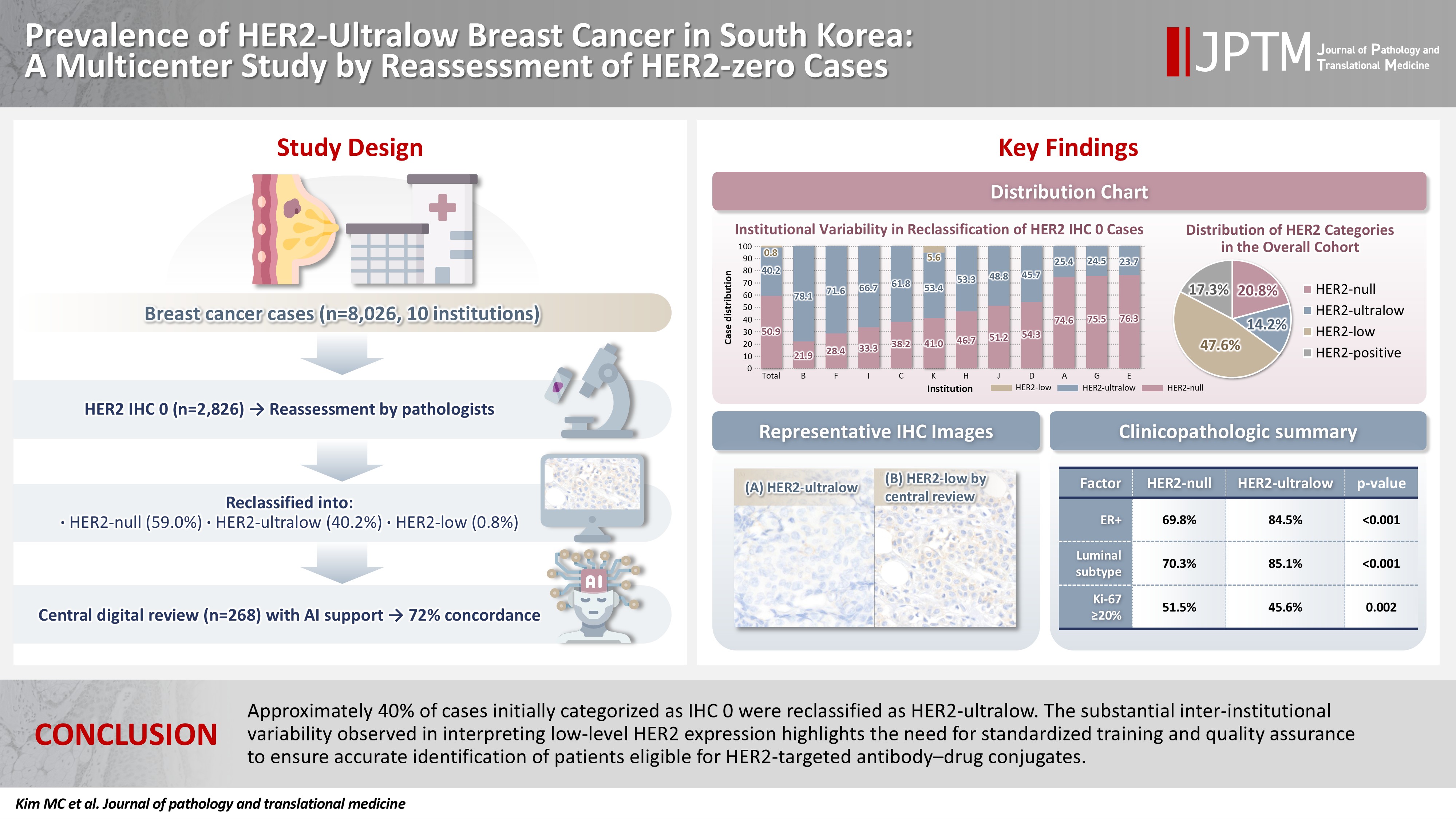
This study aimed to determine the prevalence of human epidermal growth factor receptor 2 (HER2)–ultralow breast cancer among cases initially classified as HER2 immunohistochemistry (IHC) 0 and assess interobserver variability in interpreting low-level HER2 expression. Methods: In this multicenter retrospective study, all invasive breast cancer cases diagnosed between January and December 2022 across 10 Korean institutions were retrieved. Institutional pathologists reexamined HER2 IHC slides originally reported as IHC 0 according to the 2018 American Society of Clinical Oncology/College of American Pathologists guidelines and reclassified them as HER2-null (0), HER2-ultralow (0+), or HER2-low (1+). Slides from 10% of HER2-null and HER2-ultralow cases were digitized for central review and independently assessed by two pathologists, with discrepancies resolved by consensus. Results: Among 8,026 cases, 2,836 cases (35.5%) were initially reported as IHC 0. Upon re-review, 1,673 (59.0%), 1,139 (40.2%), and 24 (0.8%) cases were reclassified as HER2-null, HER2-ultralow, and HER2-low, respectively. The prevalence of HER2-ultralow breast cancer varied considerably across institutions (23.7%–78.1%). Central review of 268 digitized cases showed concordance in 193 cases (72.0%). Among the 75 discordant cases, 54 tumors (72.0%) were upgraded from HER2-null to HER2-ultralow, and 18 (24.0%) tumors were upgraded from HER2-ultralow to HER2-low. Furthermore, two tumors (2.7%) were downgraded from HER2-ultralow to HER2-null. Conclusions: Approximately 40% of cases initially categorized as IHC 0 were reclassified as HER2-ultralow. The substantial inter-institutional variability observed in interpreting low-level HER2 expression highlights the need for standardized training and quality assurance to ensure accurate identification of patients eligible for HER2-targeted antibody–drug conjugates. -
Citations
Citations to this article as recorded by
- HER2-Low Breast Cancer: A Review of Epidemiology, Diagnostic Challenges, Targeted Therapies, and Clinical Outcomes
Maedeh Mirasheh, Zahra Shahabinia, Mai Abdel Haleem A. Abusalah, Afrooz Mazidimoradi, Leila Allahqoli, Hamid Salehiniya, Do-Youn Lee
Journal of Clinical Medicine.2026; 15(19): 7559. CrossRef
- HER2-Low Breast Cancer: A Review of Epidemiology, Diagnostic Challenges, Targeted Therapies, and Clinical Outcomes
- Current state of cytopathology residency training: a Korean national survey of pathologists
- Uiju Cho, Tae Jung Kim, Wan Seop Kim, Kyo Young Lee, Hye Kyoung Yoon, Hyun Joo Choi
- J Pathol Transl Med. 2023;57(2):95-101. Published online March 14, 2023
- DOI: https://doi.org/10.4132/jptm.2023.01.06
- 5,432 View
- 86 Download
- 1 Web of Science
- 1 Crossref
-
Abstract
PDFSupplementary Material
- Background
Although the Korean Society for Cytopathology has developed educational goals as guidelines for cytopathology education in Korea, there is still no systematic approach to cytopathology education status for pathology residents. Furthermore, satisfaction with cytopathology education and with the outcome of the current training/educational program has not been investigated in Korea. This study aimed to obtain comprehensive data on the current state of cytopathology education for residents and evaluate education outcomes.
Methods
An online survey was conducted in December 2020 for the board-certified pathologists and training residents registered as members of the Korean Society for Cytopathology. The questionnaire comprised questions that investigated the current status of cytopathology at each training institution, the degree of satisfaction with the work and education related to cytopathology, outcomes of cytopathology training, and educational accomplishments.
Results
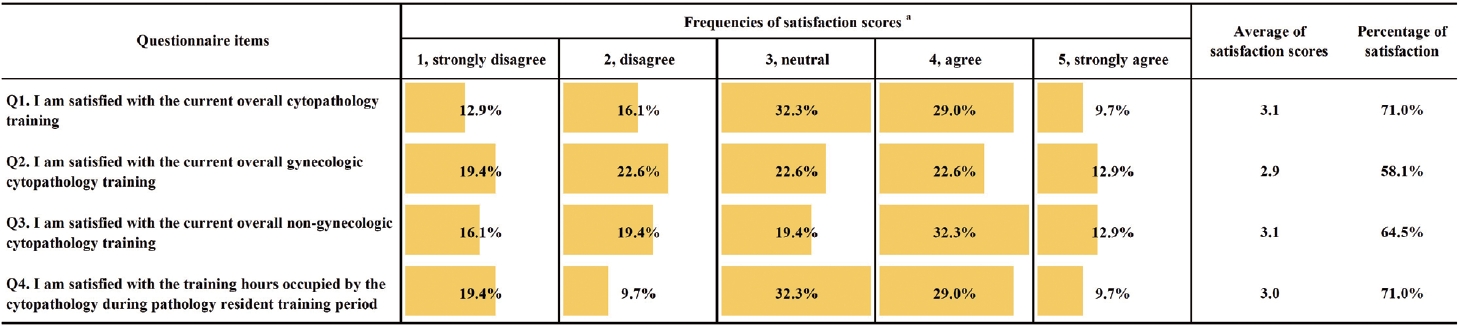
Of the participants surveyed, 12.3% (132/1,075) completed the questionnaire, and 36.8% (32/87) of cytopathology residents participated. The mean overall satisfaction with cytopathology education was 3.1 points (on a 1- to 5-point scale, 5: very satisfied). The most frequent suggestion among the free description format responses was to expand educational opportunities, such as online education opportunities, outside of the individual institutions.
Conclusions
Our results showed that cytopathology training in Korea needs further improvement. We expect that this study will inform systematic training of competent medical personnel armed with broad cytopathology knowledge and strong problem-solving abilities. -
Citations
Citations to this article as recorded by- Artificial Intelligence–Assisted Daily Quality Control System for the Histologic Diagnosis of Gastrointestinal Endoscopic Biopsies: A 1-Year Experience
Seung-Yeon Yoo, Yuri Hwang, Seokju Yun, Ok Hee Lee, Jiwook Jang, Youngjin Park, Tae Young Cho, Young Sin Ko
Archives of Pathology & Laboratory Medicine.2025; 149(7): 659. CrossRef
- Artificial Intelligence–Assisted Daily Quality Control System for the Histologic Diagnosis of Gastrointestinal Endoscopic Biopsies: A 1-Year Experience
- Molecular biomarker testing for non–small cell lung cancer: consensus statement of the Korean Cardiopulmonary Pathology Study Group
- Sunhee Chang, Hyo Sup Shim, Tae Jung Kim, Yoon-La Choi, Wan Seop Kim, Dong Hoon Shin, Lucia Kim, Heae Surng Park, Geon Kook Lee, Chang Hun Lee
- J Pathol Transl Med. 2021;55(3):181-191. Published online May 11, 2021
- DOI: https://doi.org/10.4132/jptm.2021.03.23
- 16,621 View
- 363 Download
- 17 Web of Science
- 17 Crossref
-
Abstract
PDF
- Molecular biomarker testing is the standard of care for non–small cell lung cancer (NSCLC) patients. In 2017, the Korean Cardiopulmonary Pathology Study Group and the Korean Molecular Pathology Study Group co-published a molecular testing guideline which contained almost all known genetic changes that aid in treatment decisions or predict prognosis in patients with NSCLC. Since then there have been significant changes in targeted therapies as well as molecular testing including newly approved targeted drugs and liquid biopsy. In order to reflect these changes, the Korean Cardiopulmonary Pathology Study Group developed a consensus statement on molecular biomarker testing. This consensus statement was crafted to provide guidance on what genes should be tested, as well as methodology, samples, patient selection, reporting and quality control.
-
Citations
Citations to this article as recorded by- Biomarker Testing Practices for Non-small Cell Lung Cancer: Survey Insights from South Korean Pathology Laboratories
Sehui Kim, Dajeong Kim, Lucia Kim, Wan-Seop Kim
Cancer Research and Treatment.2026;[Epub] CrossRef - Discovery of mutations predictive of survival benefit from immunotherapy in first-line NSCLC: A retrospective machine learning study of IMpower150 liquid biopsy data
Min Yuan, Wei Feng, Haolun Ding, Yaning Yang, Xu Steven Xu
Computers in Biology and Medicine.2025; 189: 109964. CrossRef - Clinical utility of the Oncomine Dx Target Testmulti‐CDxsystem and the possibility of utilizing those original sequence data
Ayaka Saito, Hideki Terai, Tae‐Jung Kim, Katsura Emoto, Ryutaro Kawano, Kohei Nakamura, Hideyuki Hayashi, Hatsuyo Takaoka, Akihiko Ogata, Katsuhito Kinoshita, Fumimaro Ito, Lisa Shigematsu, Masahiko Okada, Takahiro Fukushima, Akifumi Mitsuishi, Taro Shino
Cancer Medicine.2024;[Epub] CrossRef - Clinicopathologic and Molecular Characteristics of HER2 (ERBB2)-Altered Non–Small Cell Lung Cancer: Implications for Precision Medicine
Yurimi Lee, Boram Lee, Yoon-La Choi, Dong-Wook Kang, Joungho Han
Modern Pathology.2024; 37(6): 100490. CrossRef - Pleural effusion supernatant: a reliable resource for cell-free DNA in molecular testing of lung cancer
Shilpi Thakur, Amber Rathor, Surabhi Jain, Aruna Nambirajan, Sachin Khurana, Prabhat Singh Malik, Deepali Jain
Journal of the American Society of Cytopathology.2024; 13(4): 291. CrossRef - A Novel Dual-labeled Peptide for Multimodal Imaging of EGFR with
L858R Mutation
Myoung Hyoun Kim, Seul-Gi Kim, Dae-Weung Kim
Current Radiopharmaceuticals.2024; 17(2): 174. CrossRef - The Advantage of Targeted Next-Generation Sequencing over qPCR in Testing for Druggable EGFR Variants in Non-Small-Cell Lung Cancer
Adam Szpechcinski, Joanna Moes-Sosnowska, Paulina Skronska, Urszula Lechowicz, Magdalena Pelc, Malgorzata Szolkowska, Piotr Rudzinski, Emil Wojda, Krystyna Maszkowska-Kopij, Renata Langfort, Tadeusz Orlowski, Pawel Sliwinski, Mateusz Polaczek, Joanna Chor
International Journal of Molecular Sciences.2024; 25(14): 7908. CrossRef - Cost-effectiveness of next-generation sequencing for advanced EGFR/ALK-negative non-small cell lung cancer
Dong-Won Kang, Sun-Kyeong Park, Sokbom Kang, Eui-Kyung Lee
Lung Cancer.2024; 197: 107970. CrossRef - FACILITATE: A real-world, multicenter, prospective study investigating the utility of a rapid, fully automated real-time PCR assay versus local reference methods for detecting epidermal growth factor receptor variants in NSCLC
Anke Behnke, Anne Cayre, Giovanna De Maglio, Giuseppe Giannini, Lionel Habran, Marina Tarsitano, Massimiliano Chetta, David Cappellen, Alexandra Lespagnol, Cecile Le Naoures, Gabriella Massazza, Annarita Destro, Irina Bonzheim, Achim Rau, Achim Battmann,
Pathology and Oncology Research.2023;[Epub] CrossRef - Problems in the Pathologic Diagnosis of Suspected Lung Cancer
Soo Han Kim, Mi-Hyun Kim, Min Ki Lee, Jung Seop Eom
Tuberculosis and Respiratory Diseases.2023; 86(3): 176. CrossRef - Mesonephric-like Adenocarcinoma of the Ovary: Clinicopathological and Molecular Characteristics
Hyun Hee Koh, Eunhyang Park, Hyun-Soo Kim
Diagnostics.2022; 12(2): 326. CrossRef - Alveolar Soft Part Sarcoma of the Uterus: Clinicopathological and Molecular Characteristics
Yurimi Lee, Kiyong Na, Ha Young Woo, Hyun-Soo Kim
Diagnostics.2022; 12(5): 1102. CrossRef - Landscape of EGFR mutations in lung adenocarcinoma: a single institute experience with comparison of PANAMutyper testing and targeted next-generation sequencing
Jeonghyo Lee, Yeon Bi Han, Hyun Jung Kwon, Song Kook Lee, Hyojin Kim, Jin-Haeng Chung
Journal of Pathology and Translational Medicine.2022; 56(5): 249. CrossRef - Biomarker testing of cytology specimens in personalized medicine for lung cancer patients
Hyojin Kim, Jin-Haeng Chung
Journal of Pathology and Translational Medicine.2022; 56(6): 326. CrossRef - Usefulness of BRAF VE1 immunohistochemistry in non–small cell lung cancers: a multi-institutional study by 15 pathologists in Korea
Sunhee Chang, Yoon-La Choi, Hyo Sup Shim, Geon Kook Lee, Seung Yeon Ha
Journal of Pathology and Translational Medicine.2022; 56(6): 334. CrossRef - Non-Small Cell Lung Cancer: Treatment, Diagnosis, and Life after Treatment
Reethi Yadlapalli, Eswar Kumar Adoni Valmiki, Terry Oroszi
Journal of Cancer Therapy.2022; 13(07): 450. CrossRef - Lung Cancer in Korea
Sehhoon Park, Chang-Min Choi, Seung-Sik Hwang, Yoon-La Choi, Hyae Young Kim, Young-Chul Kim, Young Tae Kim, Ho Yun Lee, Si Yeol Song, Myung-Ju Ahn
Journal of Thoracic Oncology.2021; 16(12): 1988. CrossRef
- Biomarker Testing Practices for Non-small Cell Lung Cancer: Survey Insights from South Korean Pathology Laboratories
- Liquid biopsy using extracellular vesicle–derived DNA in lung adenocarcinoma
- In Ae Kim, Jae Young Hur, Hee Joung Kim, Seung Eun Lee, Wan Seop Kim, Kye Young Lee
- J Pathol Transl Med. 2020;54(6):453-461. Published online October 8, 2020
- DOI: https://doi.org/10.4132/jptm.2020.08.13
- 11,436 View
- 178 Download
- 22 Web of Science
- 21 Crossref
-
Abstract
PDF
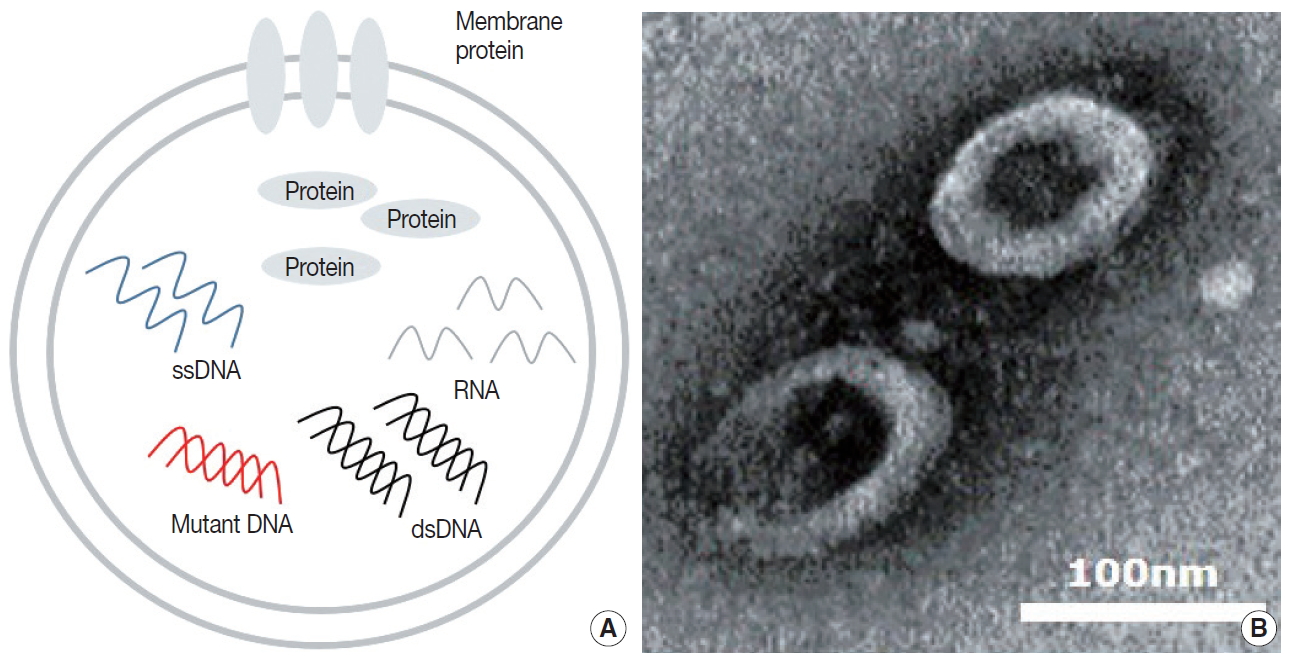
- Blood liquid biopsy has emerged as a way of overcoming the clinical limitations of repeat biopsy by testing for the presence of acquired resistance mutations to therapeutic agents. Despite its merits of repeatability and non-invasiveness, this method is currently only used as a supplemental test due to a relatively low sensitivity rate of 50%–60%, and cannot replace tissue biopsy. The circulating tumor DNAs used in blood liquid biopsies are passive products of fragmented DNA with a short half-life released following tumor cell death; the low sensitivity seen with liquid blood biopsy results from this instability, which makes increasing the sensitivity of this test fundamentally difficult. Extracellular vesicles (EVs) are ideal carriers of cancer biomarkers, as cancer cells secret an abundance of EVs, and the contents of tumor cell-originated EVs reflect the molecular and genetic composition of parental cells. In addition, EV-derived DNAs (EV DNAs) consist of large-sized genomic DNAs and tumor-specific oncogenic mutant DNAs. For these reasons, liquid biopsy using EV DNA has the potential to overcome issues arising from tissue shortages associated with small biopsies, which are often seen in lung cancer patients, and the biopsy product can be used in other diagnostic methods, such as epidermal growth factor receptor (EGFR) mutation testing and next-generation sequencing (NGS). A higher sensitivity can be achieved when EV DNAs obtained from bronchoalveolar lavage fluid (BALF) are used rather than those from blood. BALF, when obtained close to the tumor site, is a promising liquid biopsy tool, as it enables the gathering of both cellular and non-cellular fractions of the tumor microenvironment, and provides increased diagnostic sensitivity when compared to blood.
-
Citations
Citations to this article as recorded by- Application of extracellular vesicles in tumor liquid biopsy
Shuai Li, Yating Liu, Dayong Yang
Chinese Science Bulletin.2026; 71(2): 421. CrossRef - Liquid biopsy biomarkers for accurate detection of malignant pulmonary nodules: a meta-analytic approach
Alberto Caballero-Vazquez, Marta Garcia-Cerezo, Laura R. Fernandez-Castro, Concepcion Morales-Garcia, Antonio Jesus Lainez Ramos-Bossini, Fabian Vergara-Rubio, Francisco Gabriel Ortega-Sanchez, Jose Manuel Sanchez-Maldonado
Discover Oncology.2026;[Epub] CrossRef - Meta‐Analysis of Non‐Blood Liquid Biopsy Specimens: Diagnostic Performance in Cancer Detection
Kartavya Kumar Verma
Diagnostic Cytopathology.2026; 54(3): 235. CrossRef - Unraveling the multidimensional pleural ecosystem of lung cancer-associated malignant pleural effusion
Shuting Cui, Guimei Wang, Xiaozhe Sun, Zhenyu Wang, Guoqi Zhou, Hanliang Jiang
Cancer Cell International.2026;[Epub] CrossRef - Circulating Extracellular Vesicles as Promising Biomarkers for Precession Diagnostics: A Perspective on Lung Cancer
Sunil Vasu, Vinith Johnson, Archana M, K. Anki Reddy, Uday Kumar Sukumar
ACS Biomaterials Science & Engineering.2025; 11(1): 95. CrossRef - Diagnostic performance of metagenomic next-generation sequencing among hematological malignancy patients with bloodstream infections after antimicrobial therapy
Yueyi Xu, Miaoxin Peng, Tong Zhou, Yonggong Yang, Peipei Xu, Ting Xie, Xuefang Cao, Bing Chen, Jian Ouyang
Journal of Infection.2025; 90(2): 106395. CrossRef - Unraveling extracellular vesicle DNA: Biogenesis, functions, and clinical implications
Mehraneh Nouri, Fateme Nasiri, Samaneh Sharif, Mohammad Reza Abbaszadegan
Pathology - Research and Practice.2025; 269: 155937. CrossRef - Nanobiotechnology: A smart platform of the future transform liquid biopsy era
Srijan Goswami, Palas Samanta, Manab Deb Adhikari
The Journal of Liquid Biopsy.2024; 3: 100137. CrossRef - Mesenchymal stem/stromal cells: dedicator to maintain tumor homeostasis
Juncun Yao, Li Sun, Feng Gao, Wei Zhu
Human Cell.2024;[Epub] CrossRef - Extracellular Vesicle-DNA: The Next Liquid Biopsy Biomarker for Early Cancer Diagnosis?
Irène Tatischeff
Cancers.2023; 15(5): 1456. CrossRef - Isolation of extracellular vesicles from human plasma samples: The importance of controls
Migmar Tsamchoe, Stephanie Petrillo, Anthoula Lazaris, Peter Metrakos
Biotechnology Journal.2023;[Epub] CrossRef - The role of extracellular vesicles in non-small-cell lung cancer, the unknowns, and how new approach methodologies can support new knowledge generation in the field
Sive Mullen, Dania Movia
European Journal of Pharmaceutical Sciences.2023; 188: 106516. CrossRef - Silicon microfabrication technologies for biology integrated advance devices and interfaces
Vuslat B. Juska, Graeme Maxwell, Pedro Estrela, Martyn E. Pemble, Alan O'Riordan
Biosensors and Bioelectronics.2023; 237: 115503. CrossRef - Bronchoalveolar Lavage as Potential Diagnostic Specimens to Genetic Testing in Advanced Nonsmall Cell Lung Cancer
Xuwen Lin, Yazhou Cai, Chenyu Zong, Binbin Chen, Di Shao, Hao Cui, Zheng Li, Ping Xu
Technology in Cancer Research & Treatment.2023;[Epub] CrossRef - In-Cell Labeling Coupled to Direct Analysis of Extracellular Vesicles in the Conditioned Medium to Study Extracellular Vesicles Secretion with Minimum Sample Processing and Particle Loss
Anissa Viveiros, Vaibhavi Kadam, John Monyror, Luis Carlos Morales, Desmond Pink, Aja M. Rieger, Simonetta Sipione, Elena Posse de Chaves
Cells.2022; 11(3): 351. CrossRef - Recent advances in liquid biopsy in cancers: Diagnosis, disease state and treatment response monitoring
Zhixian Chen, Judy Wai Ping Yam
Clinical and Translational Discovery.2022;[Epub] CrossRef - Cell-Secreted Vesicles: Novel Opportunities in Cancer Diagnosis, Monitoring and Treatment
Cristina Catoni, Veronica Di Paolo, Elisabetta Rossi, Luigi Quintieri, Rita Zamarchi
Diagnostics.2021; 11(6): 1118. CrossRef - DNA-Loaded Extracellular Vesicles in Liquid Biopsy: Tiny Players With Big Potential?
Susana García-Silva, Miguel Gallardo, Héctor Peinado
Frontiers in Cell and Developmental Biology.2021;[Epub] CrossRef - Characteristics and Clinical Application of Extracellular Vesicle-Derived DNA
Jae Young Hur, Kye Young Lee
Cancers.2021; 13(15): 3827. CrossRef - Bronchoalveolar Lavage as a Potential Diagnostic Specimens to Genetic Testing in Advanced Lung Cancer
Xuwen Lin, Xueying Wang, Yazhou Cai, Chenyu Zong, Dawei Liu, Jiming Yu, Chenxin Zhou, Jing Yao, Zheng Li, ping xu
SSRN Electronic Journal .2021;[Epub] CrossRef - Multi-Omics Data Integration in Extracellular Vesicle Biology—Utopia or Future Reality?
Leona Chitoiu, Alexandra Dobranici, Mihaela Gherghiceanu, Sorina Dinescu, Marieta Costache
International Journal of Molecular Sciences.2020; 21(22): 8550. CrossRef
- Application of extracellular vesicles in tumor liquid biopsy
- Current status and future perspectives of liquid biopsy in non-small cell lung cancer
- Sunhee Chang, Jae Young Hur, Yoon-La Choi, Chang Hun Lee, Wan Seop Kim
- J Pathol Transl Med. 2020;54(3):204-212. Published online April 15, 2020
- DOI: https://doi.org/10.4132/jptm.2020.02.27

- 13,632 View
- 300 Download
- 21 Web of Science
- 21 Crossref
-
Abstract
PDF
- With advances in target therapy, molecular analysis of tumors is routinely required for treatment decisions in patients with advanced non-small cell lung cancer (NSCLC). Liquid biopsy refers to the sampling and analysis of circulating cell-free tumor DNA (ctDNA) in various body fluids, primarily blood. Because the technique is minimally invasive, liquid biopsies are the future in cancer management. Epidermal growth factor receptor (EGFR) ctDNA tests have been performed in routine clinical practice in advanced NSCLC patients to guide tyrosine kinase inhibitor treatment. In the near future, liquid biopsy will be a crucial prognostic, predictive, and diagnostic method in NSCLC. Here we present the current status and future perspectives of liquid biopsy in NSCLC.
-
Citations
Citations to this article as recorded by- Bridging gaps in mitochondrial disease diagnosis: the role of advanced biomarker discovery
Tendai Makwikwi, Maryke Schoonen, Izelle Smuts, Francois H. van der Westhuizen
Journal of Molecular Medicine.2026;[Epub] CrossRef - Comparison of tissue-based and plasma-based testing for EGFR mutation in non–small cell lung cancer patients
Yoon Kyung Kang, Dong Hoon Shin, Joon Young Park, Chung Su Hwang, Hyun Jung Lee, Jung Hee Lee, Jee Yeon Kim, JooYoung Na
Journal of Pathology and Translational Medicine.2025; 59(1): 60. CrossRef - Lab-in-a-Fiber detection and capture of cells
João C. Varela, Achar V. Harish, Pawel Maniewski, Timothy Gibbon, Oana Tudoran, Rainer Heuchel, Matthias Löhr, Walter Margulis, Aman Russom, Fredrik Laurell
Scientific Reports.2025;[Epub] CrossRef - Lung Cancer Diagnosis and Prognostic Monitoring Through Cell-Free RNA via Liquid Biopsy
Yuanming Pan, Chongbo Jiang, Mengchan Ye, Dongmei Li, Jinghui Wang
Therapeutics and Clinical Risk Management.2025; Volume 21: 1615. CrossRef - Unlocking the future of cancer diagnosis – promises and challenges of ctDNA-based liquid biopsies in non-small cell lung cancer
Chiara Reina, Berina Šabanović, Chiara Lazzari, Vanesa Gregorc, Christopher Heeschen
Translational Research.2024; 272: 41. CrossRef - Tailored point-of-care biosensors for liquid biopsy in the field of oncology
Sima Singh, Pritam Saha Podder, Matt Russo, Charles Henry, Stefano Cinti
Lab on a Chip.2023; 23(1): 44. CrossRef - Emerging role of non-invasive and liquid biopsy biomarkers in pancreatic cancer
Akash Bararia, Prosenjeet Chakraborty, Paromita Roy, Bitan Kumar Chattopadhay, Amlan Das, Aniruddha Chatterjee, Nilabja Sikdar
World Journal of Gastroenterology.2023; 29(15): 2241. CrossRef - Liquid biopsy in the management of advanced lung cancer: Implementation and practical aspects
Gabriela Fernandes, Ana Rodrigues, Cláudia Matos, Fernando Barata, Luís Cirnes, Lurdes Ferreira, José Albino Lopes, Margarida Felizardo, Paula Fidalgo, Ulisses Brito, Bárbara Parente
Cancer Treatment and Research Communications.2023; 36: 100725. CrossRef - Tweezer PCR: A Highly Specific Method for Accurate Identification of Low-Abundance Mutations
Shanglin Li, Yin Gu, Zhi Geng, Kaiyi Li, Yawei Hu, Qiang Liu, Rongxin Fu, Peng Liu
Analytical Chemistry.2023; 95(48): 17679. CrossRef - Mesonephric-like Adenocarcinoma of the Ovary: Clinicopathological and Molecular Characteristics
Hyun Hee Koh, Eunhyang Park, Hyun-Soo Kim
Diagnostics.2022; 12(2): 326. CrossRef - Alveolar Soft Part Sarcoma of the Uterus: Clinicopathological and Molecular Characteristics
Yurimi Lee, Kiyong Na, Ha Young Woo, Hyun-Soo Kim
Diagnostics.2022; 12(5): 1102. CrossRef - Exosomal MicroRNA Analyses in Esophageal Squamous Cell Carcinoma Cell Lines
Sora Kim, Gwang Ha Kim, Su Jin Park, Chae Hwa Kwon, Hoseok I, Moon Won Lee, Bong Eun Lee
Journal of Clinical Medicine.2022; 11(15): 4426. CrossRef - Molecular biomarker testing for non–small cell lung cancer: consensus statement of the Korean Cardiopulmonary Pathology Study Group
Sunhee Chang, Hyo Sup Shim, Tae Jung Kim, Yoon-La Choi, Wan Seop Kim, Dong Hoon Shin, Lucia Kim, Heae Surng Park, Geon Kook Lee, Chang Hun Lee
Journal of Pathology and Translational Medicine.2021; 55(3): 181. CrossRef - Update on molecular pathology and role of liquid biopsy in nonsmall cell lung cancer
Pamela Abdayem, David Planchard
European Respiratory Review.2021; 30(161): 200294. CrossRef - Dynamics of Specific cfDNA Fragments in the Plasma of Full Marathon Participants
Takehito Sugasawa, Shin-ichiro Fujita, Tomoaki Kuji, Noriyo Ishibashi, Kenshirou Tamai, Yasushi Kawakami, Kazuhiro Takekoshi
Genes.2021; 12(5): 676. CrossRef - Future Perspectives in Detecting EGFR and ALK Gene Alterations in Liquid Biopsies of Patients with NSCLC
Daniela Ferreira, Juliana Miranda, Paula Martins-Lopes, Filomena Adega, Raquel Chaves
International Journal of Molecular Sciences.2021; 22(8): 3815. CrossRef - Real-World Analysis of the EGFR Mutation Test in Tissue and Plasma Samples from Non-Small Cell Lung Cancer
Hyunwoo Lee, Joungho Han, Yoon-La Choi
Diagnostics.2021; 11(9): 1695. CrossRef - Objective Quantitation of EGFR Protein Levels using Quantitative Dot Blot Method for the Prognosis of Gastric Cancer Patients
Lei Xin, Fangrong Tang, Bo Song, Maozhou Yang, Jiandi Zhang
Journal of Gastric Cancer.2021; 21(4): 335. CrossRef - Molecular Therapeutics of Non-Small Cell Lung Cancer (NSCLC) and Challenges in Repeat Tissue Biopsy
Devanna Vasista Ganesha, Radheshyam Naik, Suhail Sayeed Mufti, Hrishi Varayathu
Advances in Lung Cancer.2021; 10(03): 21. CrossRef - The Role of the Liquid Biopsy in Decision-Making for Patients with Non-Small Cell Lung Cancer
D. Akhoundova, J. Mosquera Martinez, L. E. Musmann, C. Britschgi, C. Rütsche, M. Rechsteiner, E. Nadal, M. R. Garcia Campelo, A. Curioni-Fontecedro
Journal of Clinical Medicine.2020; 9(11): 3674. CrossRef - Expanding opportunities in precision oncology
T Raja
Cancer Research, Statistics, and Treatment.2020; 3(4): 863. CrossRef
- Bridging gaps in mitochondrial disease diagnosis: the role of advanced biomarker discovery
- Provisional Guideline Recommendation for EGFR Gene Mutation Testing in Liquid Samples of Lung Cancer Patients: A Proposal by the Korean Cardiopulmonary Pathology Study Group
- Dong Hoon Shin, Hyo Sup Shim, Tae Jung Kim, Heae Surng Park, Yun La Choi, Wan Seop Kim, Lucia Kim, Sun Hee Chang, Joon Seon Song, Hyo jin Kim, Jung Ho Han, Chang Hun Lee, Geon Kook Lee, Se Jin Jang
- J Pathol Transl Med. 2019;53(3):153-158. Published online February 28, 2019
- DOI: https://doi.org/10.4132/jptm.2019.02.22
- 12,370 View
- 266 Download
- 8 Web of Science
- 9 Crossref
-
Abstract
PDF
- Liquid biopsy for detection of mutation from circulating tumor DNA is a new technology which is attractive in that it is non-invasive. Epidermal growth factor receptor (EGFR) tyrosine kinase inhibitors (TKI) is an effective first line drug for advanced non-small cell lung cancer patients who harbor activating EGFR mutation. During the course of treatment, resistance against TKI arises which can be contributed to EGFR T790M mutation in about 50–60% of patients. Third generation TKI may overcome the resistance. In patients who cannot undergo tissue biopsy due to variable reasons, liquid biopsy is an excellent alternative for the detection of EGFR T790M mutation. However, this relatively novel method requires standardization and vigorous quality insurance. Thus, a standard set of guideline recommendations for liquid biopsy for EGFR mutation testing suitable for the Korean medical community is necessary. In this article, we propose a set of provisional guideline recommendations that was discussed and approved by the Cardiopulmonary Pathology Study Group of the Korean Society of Pathologists.
-
Citations
Citations to this article as recorded by- Chemical and Technological Aspects of Magnetic Particles for Cancer Liquid Biopsy Applications
Beatriz Naranjo‐Martínez, Ana Laura Coria‐Gutiérrez, Sunčica Sukur, Sedef Ozel‐Okcu, Václav Ranc, Francisco J. Terán, Franca Raucci, Marco A. Pierotti, Domenico Scionti, Anna Piperno
ChemistryOpen.2026;[Epub] CrossRef - Comparison of tissue-based and plasma-based testing for EGFR mutation in non–small cell lung cancer patients
Yoon Kyung Kang, Dong Hoon Shin, Joon Young Park, Chung Su Hwang, Hyun Jung Lee, Jung Hee Lee, Jee Yeon Kim, JooYoung Na
Journal of Pathology and Translational Medicine.2025; 59(1): 60. CrossRef - Improving non-small-cell lung cancer survival through molecular characterization: Perspective of a multidisciplinary expert panel
M.G.O. Fernandes, A.S. Vilariça, B. Fernandes, C. Camacho, C. Saraiva, F. Estevinho, H. Novais e Bastos, J.M. Lopes, P. Fidalgo, P. Garrido, S. Alves, S. Silva, T. Sequeira, F. Barata
Pulmonology.2024; 30(1): 4. CrossRef - Unlocking the future of cancer diagnosis – promises and challenges of ctDNA-based liquid biopsies in non-small cell lung cancer
Chiara Reina, Berina Šabanović, Chiara Lazzari, Vanesa Gregorc, Christopher Heeschen
Translational Research.2024; 272: 41. CrossRef - Exosomes in Lung Cancer: Actors and Heralds of Tumor Development
Amaia Sandúa, Estibaliz Alegre, Álvaro González
Cancers.2021; 13(17): 4330. CrossRef - Molecular biomarker testing for non–small cell lung cancer: consensus statement of the Korean Cardiopulmonary Pathology Study Group
Sunhee Chang, Hyo Sup Shim, Tae Jung Kim, Yoon-La Choi, Wan Seop Kim, Dong Hoon Shin, Lucia Kim, Heae Surng Park, Geon Kook Lee, Chang Hun Lee
Journal of Pathology and Translational Medicine.2021; 55(3): 181. CrossRef - A Review of Circulating Tumor DNA in the Diagnosis and Monitoring of Esophageal Cancer
Jiang Min, Huilin Zhou, Su Jiang, Hong Yu
Medical Science Monitor.2021;[Epub] CrossRef - Current status and future perspectives of liquid biopsy in non-small cell lung cancer
Sunhee Chang, Jae Young Hur, Yoon-La Choi, Chang Hun Lee, Wan Seop Kim
Journal of Pathology and Translational Medicine.2020; 54(3): 204. CrossRef - Prevalence of T790M mutation among TKI-therapy resistant Lebanese lung cancer patients based on liquid biopsy analysis: a first report from a major tertiary care center
Hazem Assi, Arafat Tfayli, Nada Assaf, Sarah Abou Daya, Aram H. Bidikian, Dima Kawsarani, Puzant Fermanian, Ghazi Zaatari, Rami Mahfouz
Molecular Biology Reports.2019; 46(4): 3671. CrossRef
- Chemical and Technological Aspects of Magnetic Particles for Cancer Liquid Biopsy Applications
- Current Cytology Practices in Korea: A Nationwide Survey by the Korean Society for Cytopathology
- Eun Ji Oh, Chan Kwon Jung, Dong-Hoon Kim, Han Kyeom Kim, Wan Seop Kim, So-Young Jin, Hye Kyoung Yoon
- J Pathol Transl Med. 2017;51(6):579-587. Published online September 27, 2017
- DOI: https://doi.org/10.4132/jptm.2017.08.11
- 10,855 View
- 177 Download
- 13 Web of Science
- 15 Crossref
-
Abstract
PDF
- Background
Limited data are available on the current status of cytology practices in Korea. This nationwide study presents Korean cytology statistics from 2015.
Methods
A nationwide survey was conducted in 2016 as a part of the mandatory quality-control program by the Korean Society for Cytopathology. The questionnaire was sent to 208 medical institutions performing cytopathologic examinations in Korea. Individual institutions were asked to submit their annual cytology statistical reports and gynecologic cytology-histology correlation data for 2015.
Results
Responses were obtained from 206 medical institutions including 83 university hospitals, 87 general hospitals, and 36 commercial laboratories. A total of 8,284,952 cytologic examinations were performed in 2015, primarily in commercial laboratories (74.9%). The most common cytology specimens were gynecologic samples (81.3%). Conventional smears and liquid-based cytology were performed in 6,190,526 (74.7%) and 2,094,426 (25.3%) cases, respectively. The overall diagnostic concordance rate between cytologic and histologic diagnoses of uterine cervical samples was 70.5%. Discordant cases were classified into three categories: category A (minimal clinical impact, 17.4%), category B (moderate clinical impact, 10.2%), and category C (major clinical impact, 1.9%). The ratio of atypical squamous cells of undetermined significance to squamous intraepithelial lesion was 1.6 in university hospitals, 2.9 in general hospitals, and 4.9 in commercial laboratories.
Conclusions
This survey reveals the current status and trend of cytology practices in Korea. The results of this study can serve as basic data for the establishment of nationwide cytopathology policies and quality improvement guidelines in Korean medical institutions. -
Citations
Citations to this article as recorded by- Practice of Cytopathology in Korea: A 40‐Year Evolution Through Standardization, Digital Transformation, and Global Partnership
Yosep Chong, Ran Hong, Hyeong Ju Kwon, Haeryoung Kim, Lucia Kim, Soon Jae Kim, Yoon Jung Choi
Diagnostic Cytopathology.2026; 54(2): 146. CrossRef - A Study on the Workload of Cytotechnologists: Focus on Commercial Laboratories
Eun-Suk PARK
Korean Journal of Clinical Laboratory Science.2025; 57(2): 228. CrossRef - Current state of cytopathology residency training: a Korean national survey of pathologists
Uiju Cho, Tae Jung Kim, Wan Seop Kim, Kyo Young Lee, Hye Kyoung Yoon, Hyun Joo Choi
Journal of Pathology and Translational Medicine.2023; 57(2): 95. CrossRef - Diagnostic proficiency test using digital cytopathology and comparative assessment of whole slide images of cytologic samples for quality assurance program in Korea
Yosep Chong, Soon Auck Hong, Hoon Kyu Oh, Soo Jin Jung, Bo-Sung Kim, Ji Yun Jeong, Ho-Chang Lee, Gyungyub Gong
Journal of Pathology and Translational Medicine.2023; 57(5): 251. CrossRef - Recent Application of Artificial Intelligence in Non-Gynecological Cancer Cytopathology: A Systematic Review
Nishant Thakur, Mohammad Rizwan Alam, Jamshid Abdul-Ghafar, Yosep Chong
Cancers.2022; 14(14): 3529. CrossRef - Re-Increasing Trends in Thyroid Cancer Incidence after a Short Period of Decrease in Korea: Reigniting the Debate on Ultrasound Screening
Chan Kwon Jung, Ja Seong Bae, Young Joo Park
Endocrinology and Metabolism.2022; 37(5): 816. CrossRef - Diagnostic distribution and pitfalls of glandular abnormalities in cervical cytology: a 25-year single-center study
Jung-A Sung, Ilias P. Nikas, Haeryoung Kim, Han Suk Ryu, Cheol Lee
Journal of Pathology and Translational Medicine.2022; 56(6): 354. CrossRef - Current status of cytopathology practice in Korea: impact of the coronavirus pandemic on cytopathology practice
Soon Auck Hong, Haeyoen Jung, Sung Sun Kim, Min-Sun Jin, Jung-Soo Pyo, Ji Yun Jeong, Younghee Choi, Gyungyub Gong, Yosep Chong
Journal of Pathology and Translational Medicine.2022; 56(6): 361. CrossRef - Systematic screening for cervical cancer in Dakar region: prevalence and correlation with biological and socio-demographic parameters
Dominique Diouf, Gora Diop, Cheikh Ahmadou Tidian Diarra, Aminata Issa Ngom, Khadija Niane, Moussa Ndiaye, Sidy Ka, Oumar Faye, Ahmadou Dem
Infectious Agents and Cancer.2020;[Epub] CrossRef - Continuous quality improvement program and its results of Korean Society for Cytopathology
Yoo-Duk Choi, Hoon-Kyu Oh, Su-Jin Kim, Kyung-Hee Kim, Yun-Kyung Lee, Bo-Sung Kim, Eun-Jeong Jang, Yoon-Jung Choi, Eun-Kyung Han, Dong-Hoon Kim, Younghee Choi, Chan-Kwon Jung, Sung-Nam Kim, Kyueng-Whan Min, Seok-Jin Yoon, Hun-Kyung Lee, Kyung Un Choi, Hye
Journal of Pathology and Translational Medicine.2020; 54(3): 246. CrossRef - Current status of cytopathology practices in Korea: annual report on the Continuous Quality Improvement program of the Korean Society for Cytopathology for 2018
Yosep Chong, Haeyoen Jung, Jung-Soo Pyo, Soon Won Hong, Hoon Kyu Oh
Journal of Pathology and Translational Medicine.2020; 54(4): 318. CrossRef - Current Status of and Perspectives on Cervical Cancer Screening in Korea
Sung-Chul Lim, Chong Woo Yoo
Journal of Pathology and Translational Medicine.2019; 53(4): 210. CrossRef - Cytomorphological Features of Hyperchromatic Crowded Groups in Liquid-Based Cervicovaginal Cytology: A Single Institutional Experience
Youngeun Lee, Cheol Lee, In Ae Park, Hyoung Jin An, Haeryoung Kim
Journal of Pathology and Translational Medicine.2019; 53(6): 393. CrossRef - Comparison Study of the Adequacy and Pain Scale of Ultrasound-Guided Fine-Needle Aspiration of Solid Thyroid Nodules with a 21- or 23-Gauge Needle for Liquid-Based Cytology: a Single-Center Study
Soo Jin Jung, Dong Wook Kim, Hye Jin Baek
Endocrine Pathology.2018; 29(1): 30. CrossRef - Thyroid Fine-Needle Aspiration Cytology Practice in Korea
Yoon Jin Cha, Ju Yeon Pyo, SoonWon Hong, Jae Yeon Seok, Kyung-Ju Kim, Jee-Young Han, Jeong Mo Bae, Hyeong Ju Kwon, Yeejeong Kim, Kyueng-Whan Min, Soonae Oak, Sunhee Chang
Journal of Pathology and Translational Medicine.2017; 51(6): 521. CrossRef
- Practice of Cytopathology in Korea: A 40‐Year Evolution Through Standardization, Digital Transformation, and Global Partnership
- Review of Medical Advisory Services by the Korean Society of Pathologists from 2003 to 2014
- Min Hye Jang, Geon Kook Lee, Han Seong Kim, Wan Seop Kim
- J Pathol Transl Med. 2016;50(1):37-44. Published online November 17, 2015
- DOI: https://doi.org/10.4132/jptm.2015.09.18
- 10,595 View
- 59 Download
- 1 Web of Science
-
Abstract
PDFSupplementary Material
- Background
Since 2003, the Korean Society of Pathologists (KSP) has been officially providing medical advisory services (MAS). We reviewed the cases submitted to the KSP between 2003 and 2014. Methods: In total, 1,950 cases were submitted, most by private health insurance companies. The main purposes of the consultations were to clarify the initial diagnoses and to assign a proper disease classification code. We comprehensively reviewed 1,803 consultation cases with detailed information. Results: In spite of some fluctuations, the number of submitted cases has been significantly increasing over the 12 study years. The colon and rectum (40.3%), urinary bladder (14.2%), and stomach (6.9%) were the three most common tissues of origin. The most common diagnoses for each of the three tissues of origin were neuroendocrine tumor (50.7%), non-invasive papillary urothelial carcinoma (70.7%), and adenocarcinoma (36.2%). Regardless of the tissue of origin, neuroendocrine tumor of the digestive system was the most common diagnosis (419 of 1,803). Conclusions: In the current study, we found that pathologic consultations associated with private health insurance accounted for a large proportion of the MAS. Coding of the biologic behavior of diseases was the main issue of the consultations. In spite of the effort of the KSP to set proper guidelines for coding and classification of tumors, this review revealed that problems still exist and will continue to be an important issue.
- Analysis of Mutations in Epidermal Growth Factor Receptor Gene in Korean Patients with Non-small Cell Lung Cancer: Summary of a Nationwide Survey
- Sang Hwa Lee, Wan Seop Kim, Yoo Duk Choi, Jeong Wook Seo, Joung Ho Han, Mi Jin Kim, Lucia Kim, Geon Kook Lee, Chang Hun Lee, Mee Hye Oh, Gou Young Kim, Sun Hee Sung, Kyo Young Lee, Sun Hee Chang, Mee Sook Rho, Han Kyeom Kim, Soon Hee Jung, Se Jin Jang, The Cardiopulmonary Pathology Study Group of Korean Society of Pathologists
- J Pathol Transl Med. 2015;49(6):481-488. Published online October 13, 2015
- DOI: https://doi.org/10.4132/jptm.2015.09.14
- 14,560 View
- 112 Download
- 25 Web of Science
- 27 Crossref
-
Abstract
PDF
- Background
Analysis of mutations in the epidermal growth factor receptor gene (EGFR) is important for predicting response to EGFR tyrosine kinase inhibitors. The overall rate of EGFR mutations in Korean patients is variable. To obtain comprehensive data on the status of EGFR mutations in Korean patients with lung cancer, the Cardiopulmonary Pathology Study Group of the Korean Society of Pathologists initiated a nationwide survey. Methods: We obtained 1,753 reports on EGFR mutations in patients with lung cancer from 15 hospitals between January and December 2009. We compared EGFR mutations with patient age, sex, history of smoking, histologic diagnosis, specimen type, procurement site, tumor cell dissection, and laboratory status. Results: The overall EGFR mutation rate was 34.3% in patients with non-small cell lung cancer (NSCLC) and 43.3% in patients with adenocarcinoma. EGFR mutation rate was significantly higher in women, never smokers, patients with adenocarcinoma, and patients who had undergone excisional biopsy. EGFR mutation rates did not differ with respect to patient age or procurement site among patients with NSCLC. Conclusions: EGFR mutation rates and statuses were similar to those in published data from other East Asian countries. -
Citations
Citations to this article as recorded by- Projected cancer burden attributable to population aging: Insight from a rapidly aging society
Minh‐Thao Tu, Hoejun Kwon, Yoon‐Jung Choi, Hyunsoon Cho
International Journal of Cancer.2026; 158(4): 951. CrossRef - Initial biomarker testing strategies and clinical outcomes in advanced non-small cell lung cancer
Masaki Ishida, Tadaaki Yamada, Yasuhiro Goto, Taiichiro Otsuki, Hirokazu Taniguchi, Taishi Harada, Akihiro Yoshimura, Shinsuke Shiotsu, Asuka Okada, Kazuki Jinno, Hibiki Kanda, Noeru Inoguchi, Mototaka Fukui, Takahiro Yamada, Tae Hata, Hayato Kawachi, Yuk
iScience.2026; 29(6): 115966. CrossRef - Diagnostic performance of machine learning-based radiomics models for predicting epidermal growth factor receptor mutation status in lung adenocarcinoma in Chinese patients: A systematic review and meta-analysis
Jia Yang, Junyu Jiang, Jin Peng, Jie Li, Peng Mi, Guangwen Chen
Journal of International Medical Research.2026;[Epub] CrossRef - Assessing mutation-clinical correlations and treatment outcomes in Vietnamese non-small cell lung cancer patients
Hoang-Bac Nguyen, Bang-Suong Nguyen-Thi, Huu-Huy Nguyen, Minh-Khoi Le, Quoc-Trung Lam, Tuan-Anh Nguyen
Practical Laboratory Medicine.2025; 45: e00477. CrossRef - Gradual Increase in Lung Cancer Risk Due to Particulate Matter Exposure in Patients With Pulmonary Function Impairments: A Nationwide Korean Database Analysis
Jongin Lee, Joon Young Choi, Jeong Uk Lim
Journal of Korean Medical Science.2025;[Epub] CrossRef - Real-world treatment outcomes in South Korean patients with epidermal growth factor receptor-mutant non-small cell lung cancer
Young Saing Kim, Eun Young Lee, Hyun Woo Lee, Jin-Hyuk Choi, Tae-Hwan Kim, Yong Won Choi, Mi Sun Ahn
The Korean Journal of Internal Medicine.2025; 40(6): 1029. CrossRef - The role of oncogenes and tumor suppressor genes in determining survival rates of lung cancer patients in the population of North Sumatra, Indonesia
Noni Novisari Soeroso, Fannie Rizki Ananda, Johan Samuel Sitanggang, Noverita Sprinse Vinolina
F1000Research.2023; 11: 853. CrossRef - Comprehensive analysis of NGS and ARMS-PCR for detecting EGFR mutations based on 4467 cases of NSCLC patients
Changlong He, Chengcheng Wei, Jun Wen, Shi Chen, Ling Chen, Yue Wu, Yifan Shen, Huili Bai, Yangli Zhang, Xueping Chen, Xiaosong Li
Journal of Cancer Research and Clinical Oncology.2022; 148(2): 321. CrossRef - Unique characteristics of G719X and S768I compound double mutations of epidermal growth factor receptor (EGFR) gene in lung cancer of coal-producing areas of East Yunnan in Southwestern China
Jun-Ling Wang, Yu-Dong Fu, Yan-Hong Gao, Xiu-Ping Li, Qian Xiong, Rui Li, Bo Hou, Ruo-Shan Huang, Jun-Feng Wang, Jian-Kun Zhang, Jia-Ling Lv, Chao Zhang, Hong-Wei Li
Genes and Environment.2022;[Epub] CrossRef - Continuous Vaginal Bleeding Induced By EGFR-TKI in Premenopausal Female Patients With EGFR Mutant NSCLC
Min Yu, Xiaoyu Li, Xueqian Wu, Weiya Wang, Yanying Li, Yan Zhang, Shuang Zhang, Yongsheng Wang
Frontiers in Oncology.2022;[Epub] CrossRef - The role of oncogenes and tumor suppressor genes in determining survival rates of lung cancer patients in the population of North Sumatra, Indonesia
Noni Novisari Soeroso, Fannie Rizki Ananda, Johan Samuel Sitanggang, Noverita Sprinse Vinolina
F1000Research.2022; 11: 853. CrossRef - Adverse Event Profiles of Epidermal Growth Factor Receptor Tyrosine Kinase Inhibitors in Adenocarcinoma Lung Patients in North Sumatera Population
Moh. Ramadhani Soeroso, Noni Novisari Soeroso, Setia Putra Tarigan, Elisna Syahruddin
Open Access Macedonian Journal of Medical Sciences.2022; 10(T7): 134. CrossRef - Landscape of EGFR mutations in lung adenocarcinoma: a single institute experience with comparison of PANAMutyper testing and targeted next-generation sequencing
Jeonghyo Lee, Yeon Bi Han, Hyun Jung Kwon, Song Kook Lee, Hyojin Kim, Jin-Haeng Chung
Journal of Pathology and Translational Medicine.2022; 56(5): 249. CrossRef - Traditional Chinese Medicine Syndromes are Associated with Driver Gene Mutations and Clinical Characteristics in Patients with Lung Adenocarcinoma
Jili Yang, Haiyan Lu, Niancai Jing, Bo Wang, Huanyu Guo, Shoukun Sun, Yue Zhang, Chan-Yen Kuo
Evidence-Based Complementary and Alternative Medicine.2022; 2022: 1. CrossRef - Exosome-based detection of EGFR T790M in plasma and pleural fluid of prospectively enrolled non-small cell lung cancer patients after first-line tyrosine kinase inhibitor therapy
Yoonjung Kim, Saeam Shin, Kyung-A Lee
Cancer Cell International.2021;[Epub] CrossRef - Molecular biomarker testing for non–small cell lung cancer: consensus statement of the Korean Cardiopulmonary Pathology Study Group
Sunhee Chang, Hyo Sup Shim, Tae Jung Kim, Yoon-La Choi, Wan Seop Kim, Dong Hoon Shin, Lucia Kim, Heae Surng Park, Geon Kook Lee, Chang Hun Lee
Journal of Pathology and Translational Medicine.2021; 55(3): 181. CrossRef - Osimertinib in Patients with T790M-Positive Advanced Non-small Cell Lung Cancer: Korean Subgroup Analysis from Phase II Studies
Myung-Ju Ahn, Ji-Youn Han, Dong-Wan Kim, Byoung Chul Cho, Jin-Hyoung Kang, Sang-We Kim, James Chih-Hsin Yang, Tetsuya Mitsudomi, Jong Seok Lee
Cancer Research and Treatment.2020; 52(1): 284. CrossRef - Long non-coding RNA ATB promotes human non-small cell lung cancer proliferation and metastasis by suppressing miR-141-3p
Guojie Lu, Yaosen Zhang, Klaus Roemer
PLOS ONE.2020; 15(2): e0229118. CrossRef - Prognostic Role of S100A8 and S100A9 Protein Expressions in Non-small Cell Carcinoma of the Lung
Hyun Min Koh, Hyo Jung An, Gyung Hyuck Ko, Jeong Hee Lee, Jong Sil Lee, Dong Chul Kim, Jung Wook Yang, Min Hye Kim, Sung Hwan Kim, Kyung Nyeo Jeon, Gyeong-Won Lee, Se Min Jang, Dae Hyun Song
Journal of Pathology and Translational Medicine.2019; 53(1): 13. CrossRef - Epidermal growth factor receptor T790M mutations in non-small cell lung cancer (NSCLC) of Yunnan in southwestern China
Yongchun Zhou, Yuhui Ma, Hutao Shi, Yaxi Du, Yunchao Huang
Scientific Reports.2018;[Epub] CrossRef - Does the efficacy of epidermal growth factor receptor (EGFR) tyrosine kinase inhibitor differ according to the type of EGFR mutation in non-small cell lung cancer?
Yong Won Choi, Jin-Hyuk Choi
The Korean Journal of Internal Medicine.2017; 32(3): 422. CrossRef - Molecular Testing of Lung Cancers
Hyo Sup Shim, Yoon-La Choi, Lucia Kim, Sunhee Chang, Wan-Seop Kim, Mee Sook Roh, Tae-Jung Kim, Seung Yeon Ha, Jin-Haeng Chung, Se Jin Jang, Geon Kook Lee
Journal of Pathology and Translational Medicine.2017; 51(3): 242. CrossRef - MET Exon 14 Skipping Mutations in Lung Adenocarcinoma: Clinicopathologic Implications and Prognostic Values
Geun Dong Lee, Seung Eun Lee, Doo-Yi Oh, Dan-bi Yu, Hae Min Jeong, Jooseok Kim, Sungyoul Hong, Hun Soon Jung, Ensel Oh, Ji-Young Song, Mi-Sook Lee, Mingi Kim, Kyungsoo Jung, Jhingook Kim, Young Kee Shin, Yoon-La Choi, Hyeong Ryul Kim
Journal of Thoracic Oncology.2017; 12(8): 1233. CrossRef - Epidermal growth factor receptor (EGFR) mutations in non-small cell lung cancer (NSCLC) of Yunnan in southwestern China
Yongchun Zhou, Yanlong Yang, Chenggang Yang, Yunlan Chen, Changshao Yang, Yaxi Du, Guangqiang Zhao, Yinjin Guo, Lianhua Ye, Yunchao Huang
Oncotarget.2017; 8(9): 15023. CrossRef - Detection of EGFR and KRAS Mutation by Pyrosequencing Analysis in Cytologic Samples of Non-Small Cell Lung Cancer
Seung Eun Lee, So-Young Lee, Hyung-Kyu Park, Seo-Young Oh, Hee-Joung Kim, Kye-Young Lee, Wan-Seop Kim
Journal of Korean Medical Science.2016; 31(8): 1224. CrossRef - MassARRAY, pyrosequencing, and PNA clamping for EGFR mutation detection in lung cancer tissue and cytological samples: a multicenter study
Kyueng-Whan Min, Wan-Seop Kim, Se Jin Jang, Yoo Duk Choi, Sunhee Chang, Soon Hee Jung, Lucia Kim, Mee-Sook Roh, Choong Sik Lee, Jung Weon Shim, Mi Jin Kim, Geon Kook Lee
Journal of Cancer Research and Clinical Oncology.2016; 142(10): 2209. CrossRef - Clinicopathologic characteristics of EGFR, KRAS, and ALK alterations in 6,595 lung cancers
Boram Lee, Taebum Lee, Se-Hoon Lee, Yoon-La Choi, Joungho Han
Oncotarget.2016; 7(17): 23874. CrossRef
- Projected cancer burden attributable to population aging: Insight from a rapidly aging society
- Erratum: Correction of Acknowledgments. ERG Immunohistochemistry as an Endothelial Marker for Assessing Lymphovascular Invasion
- Sehun Kim, Hyung Kyu Park, Ho Young Jung, So-Young Lee, Kyueng-Whan Min, Wook Youn Kim, Hye Seung Han, Wan Seop Kim, Tae Sook Hwang, So Dug Lim
- Korean J Pathol. 2013;47(5):503-503. Published online October 25, 2013
- DOI: https://doi.org/10.4132/KoreanJPathol.2013.47.5.503
- 6,077 View
- 51 Download
- Rhabdoid Colorectal Carcinomas: Reports of Two Cases
- Sang Hwa Lee, Hyesil Seol, Wook Youn Kim, So Dug Lim, Wan Seop Kim, Tae Sook Hwang, Hye Seung Han
- Korean J Pathol. 2013;47(4):372-377. Published online August 26, 2013
- DOI: https://doi.org/10.4132/KoreanJPathol.2013.47.4.372
- 11,004 View
- 55 Download
- 16 Crossref
-
Abstract
PDF
Rhabdoid colorectal carcinomas are very rare and only 10 cases have been previously reported. We report two cases of rhabdoid colorectal carcinoma, one arising in the sigmoid colon of a 62-year-old man and another in the rectum of an 83-year-old woman. In both cases, the patients had advanced tumors with lymph node metastases. The tumors mostly showed a diffuse arrangement with rhabdoid features and small glandular regions were combined. Transitional areas from the adenocarcinomas to the rhabdoid tumors were also noted. Adenocarcinoma cells were positive for mixed cytokeratin (CK), CK20 and epithelial membranous antigen (EMA), but focal positive for vimentin. The rhabdoid tumor cells were positive for mixed CK, but focal positive or negative for CK20 and EMA. In addition, they were diffusely positive for vimentin, but negative for desmin. The histological and immunohistologial findings of these two cases suggest that the rhabodid tumor cells originated from dedifferentiated adenocarcinomas.
-
Citations
Citations to this article as recorded by- Undifferentiated Rhabdoid Carcinoma of the Gastrointestinal Tract: A Rare and Aggressive Malignancy
Justin M Hsieh, Zara Summers, Shinn Yeung
Cureus.2025;[Epub] CrossRef - SMARCB1/INI1-Deficient Poorly Differentiated Carcinoma of the Colon With Rhabdoid Features—A Rare Tumor With Serrated Phenotype: Case Report and Review of Literature
Shivali Maurya, Sujata Yadav, Subham Bhowmik, Jasmine Dhal, Lalita Mehra, Raju Sharma, Asuri Krishna, Atul Sharma, Adarsh Barwad, Prasenjit Das
International Journal of Surgical Pathology.2024; 32(1): 187. CrossRef - Emerging and under-recognised patterns of colorectal carcinoma morphologies: a comprehensive review
Yuho Ono, Osman Yilmaz
Journal of Clinical Pathology.2024; 77(7): 439. CrossRef - A Case of Ascending Colon Carcinoma with Rhabdoid Features
Masanari YAMADA, Masanori ICHINOSE, Atsushi HIRATA, Yoshihiro KURATA, Kimiaki FUKASAWA, Hisahiro MATSUBARA
Nihon Rinsho Geka Gakkai Zasshi (Journal of Japan Surgical Association).2024; 85(6): 755. CrossRef - A Rare Case of Undifferentiated Rhabdoid Carcinoma of the Colon
Syed Alishan Nasir, Ronak Patel, Lalaine Ruiz, Michael Bush
Cureus.2022;[Epub] CrossRef - INI1-negative colorectal undifferentiated carcinoma with rhabdoid features and postoperative rapidly growing liver metastases: a case report and review of the literature
Masatsugu Kojima, Toru Miyake, Tomoyuki Ueki, Hiroyuki Ohta, Ryoji Kushima, Masanori Shiohara, Hiroo Mizuta, Hiroya Iida, Tsuyoshi Yamaguchi, Sachiko Kaida, Katsushi Takebayashi, Hiromitsu Maehira, Yusuke Nishina, Tomoharu Shimizu, Eiji Mekata, Masaji Tan
Surgical Case Reports.2021;[Epub] CrossRef - Undifferentiated carcinoma of the transverse colon with rhabdoid features that developed during treatment of non-small cell lung carcinoma with pembrolizumab: a case report
Yuya Ashitomi, Mitsuhiro Yano, Michihisa Kono, Takefumi Suzuki, Ichiro Kawamura, Shinji Okazaki, Yukinori Kamio, Osamu Hachiya, Yuka Urano, Fuyuhiko Motoi
Surgical Case Reports.2020;[Epub] CrossRef - BRAF Mutation in Colorectal Rhabdoid and Poorly Differentiated Medullary Carcinomas
Elena Bolzacchini, Nunzio Digiacomo, Cristina Marrazzo, Nora Sahnane, Roberta Maragliano, Anthony Gill, Luca Albarello, Fausto Sessa, Daniela Furlan, Carlo Capella
Cancers.2019; 11(9): 1252. CrossRef - Pathologic complete response to bevacizumab-FOLFIRI in metastatic colonic undifferentiated carcinoma with rhabdoid features
Tien-Chan Hsieh, Hung-Wei Liu, Chao-Wen Hsu
Journal of Cancer Research and Practice.2019; 6(3): 140. CrossRef - Extraordinary disease-free survival in a rare malignant extrarenal rhabdoid tumor: a case report and review of the literature
Francesco D’Amico, Alessandra Bertacco, Maurizio Cesari, Claudia Mescoli, Giorgio Caturegli, Gabriel Gondolesi, Umberto Cillo
Journal of Medical Case Reports.2018;[Epub] CrossRef - Tumor rabdoide extrarrenal maligno de colon: presentación de 3 casos y revisión de la literatura
María José Sánchez-de las Matas Garre, José García Solano, Pablo Conesa Zamora, Fidel Fernández Fernández, Miguel Pérez-Guillermo
Revista Española de Patología.2016; 49(2): 119. CrossRef - Poorly differentiated cecal adenocarcinoma showing prominent rhabdoid feature combined with appendiceal mucinous cystadenoma: A case report and review of the literature
IN-JU CHO, SUNG-SOO KIM, YOUNG-DON MIN, MUN-WHAN NOH, RAN HONG
Oncology Letters.2015; 9(4): 1527. CrossRef - A Rare Case of Undifferentiated Carcinoma of the Colon with Rhabdoid Features: A Case Report and Review of the Literature
E. Moussaly, J. P. Atallah
Case Reports in Oncological Medicine.2015; 2015: 1. CrossRef - Case Report of Rhabdoid Colon Cancer and Review of Literature
Aparna Kalyan, Gurleen Pasricha, Dulabh Monga, Aatur Singhi, Nathan Bahary
Clinical Colorectal Cancer.2015; 14(1): e5. CrossRef - Malignant Rhabdoid Tumor of the Colon: A Case Report
Elena Romera Barba, Ainhoa Sánchez Pérez, Carlos Duque Pérez, José Antonio García Marcilla, José Luis Vázquez Rojas
Cirugía Española (English Edition).2014; 92(9): 638. CrossRef - Tumor rabdoide maligno de colon: a propósito de un caso☆
Elena Romera Barba, Ainhoa Sánchez Pérez, Carlos Duque Pérez, José Antonio García Marcilla, José Luis Vázquez Rojas
Cirugía Española.2014; 92(9): 638. CrossRef
- Undifferentiated Rhabdoid Carcinoma of the Gastrointestinal Tract: A Rare and Aggressive Malignancy
- ERG Immunohistochemistry as an Endothelial Marker for Assessing Lymphovascular Invasion
- Sehun Kim, Hyung Kyu Park, Ho Young Jung, So-Young Lee, Kyueng-Whan Min, Wook Youn Kim, Hye Seung Han, Wan Seop Kim, Tae Sook Hwang, So Dug Lim
- Korean J Pathol. 2013;47(4):355-364. Published online August 26, 2013
- DOI: https://doi.org/10.4132/KoreanJPathol.2013.47.4.355
- 18,029 View
- 113 Download
- 27 Crossref
-
Abstract
PDF
Background ERG, a member of the ETS family of transcription factors, is a highly specific endothelial marker. We investigated whether the use of ERG immunostaining can help pathologists detect lymphovascular invasion (LVI) and decrease interobserver variability in LVI diagnosis.
Methods Fifteen cases of surgically resected colorectal cancers with hepatic metastasis were selected and the most representative sections for LVI detection were immunostained with ERG, CD31, and D2-40. Eight pathologists independently evaluated LVI status on hematoxylin and eosin (H&E) and the corresponding immunostained sections and then convened for a consensus meeting. The results were analyzed by kappa (κ) statistics.
Results The average rate of LVI positivity was observed in 43% with H&E only, 10% with CD31, 29% with D2-40, and 16% with ERG. Agreement among pathologists was fair for H&E only (κ=0.27), D2-40 (κ=0.21), ERG (κ=0.23), and was moderate for CD31 (κ=0.55). Consensus revealed that ERG nuclear immunoreactivity showed better visual contrast of LVI detection than the other staining, with improved agreement and LVI detection rate (κ=0.65, LVI positivity rate 80%).
Conclusions The present study demonstrated a superiority with ERG immunostaining and indicated that ERG is a promising panendothelial marker that might help pathologists increase LVI detection and decrease interobserver variability in LVI diagnosis.
-
Citations
Citations to this article as recorded by- Evaluation of ERG as a biomarker for immunohistochemical diagnosis of canine splenic hemangiosarcoma
Nadège Milhau, Césarine Klein, Frédérique Degorce-Rubiales, Thierry Marchal
Veterinary Immunology and Immunopathology.2026; 298: 111132. CrossRef - Exercise mitigates flow recirculation and activates metabolic transducer SCD1 to catalyze vascular protective metabolites
Susana Cavallero, Mehrdad Roustaei, Sandro Satta, Jae Min Cho, Henry Phan, Kyung In Baek, Ana M. Blázquez-Medela, Sheila Gonzalez-Ramos, Khoa Vu, Seul-Ki Park, Tomohiro Yokota, Jennifer Sumner, Julia J. Mack, Curt D. Sigmund, Srinivasa T. Reddy, Rongsong
Science Advances.2024;[Epub] CrossRef - Cardiac delivery of modified mRNA using lipid nanoparticles: Cellular targets and biodistribution after intramyocardial administration
M.C.I. Labonia, M. Estapé Senti, P.H. van der Kraak, M.A.D. Brans, I. Dokter, T.J. Streef, A.M. Smits, A.K. Deshantri, S.C.A. de Jager, R.M. Schiffelers, J.P.G. Sluijter, P. Vader
Journal of Controlled Release.2024; 369: 734. CrossRef - Heterogeneous Patterns of Endothelial NF-κB p65 and MAPK c-Jun Activation, Adhesion Molecule Expression, and Leukocyte Recruitment in Lung Microvasculature of Mice with Sepsis
Zhendong Wang, Erna-Zulaikha Dayang, Peter J. Zwiers, Martha L. Hernandez Garcia, Matthijs Luxen, Matijs van Meurs, Jill Moser, Jan A. A. M. Kamps, Grietje Molema
Biomedicines.2024; 12(8): 1672. CrossRef - Recruitment of neutrophils in glomeruli in early mouse sepsis is associated with E-selectin expression and activation of endothelial nuclear factor kappa-light-chain-enhancer of activated B cells and mitogen-activated protein kinase pathways
Zhendong Wang, Erna-Zulaikha Dayang, Peter J Zwiers, Martha L Hernandez Garcia, Matthijs Luxen, Matijs van Meurs, Jan A A M Kamps, Jill Moser, Grietje Molema
Journal of Leukocyte Biology.2024; 116(6): 1479. CrossRef - Endometrial cancer: predictors and oncological safety of tumor tissue manipulation
Raquel Quintana-Bertó, Pablo Padilla-Iserte, Víctor Lago, Carmen Tauste, Berta Díaz-Feijoo, Silvia Cabrera, Reyes Oliver-Pérez, Pluvio J. Coronado, María Belén Martín-Salamanca, Manuel Pantoja-Garrido, Josefa Marcos-Sanmartin, Eduardo Cazorla, Cristina Lo
Clinical and Translational Oncology.2023; 26(5): 1098. CrossRef - Universal method for the isolation of microvessels from frozen brain tissue: A proof-of-concept multiomic investigation of the neurovasculature
Marina Wakid, Daniel Almeida, Zahia Aouabed, Reza Rahimian, Maria Antonietta Davoli, Volodymyr Yerko, Elena Leonova-Erko, Vincent Richard, René Zahedi, Christoph Borchers, Gustavo Turecki, Naguib Mechawar
Brain, Behavior, & Immunity - Health.2023; 34: 100684. CrossRef - The Usefulness of Elastin Staining to Detect Vascular Invasion in Cancer
Jeffrey Gonzalez, Hisham F. Bahmad, Stephanie Ocejo, Alvaro Abreu, Meagan Popp, Samantha Gogola, Vielka Fernandez, Monica Recine, Robert Poppiti
International Journal of Molecular Sciences.2023; 24(20): 15264. CrossRef - Single‐nucleus transcriptome analysis reveals disease‐ and regeneration‐associated endothelial cells in white matter vascular dementia
Daniel N. Mitroi, Min Tian, Riki Kawaguchi, William E. Lowry, S. Thomas Carmichael
Journal of Cellular and Molecular Medicine.2022; 26(11): 3183. CrossRef - Gene of the month: ERG
Dorinda Mullen, Klaudia Nowak, Runjan Chetty
Journal of Clinical Pathology.2022; 75(9): 577. CrossRef - Oncological safety of hysteroscopy in endometrial cancer
Raquel Quintana-Bertó, Pablo Padilla-Iserte, Antonio Gil-Moreno, Reyes Oliver-Pérez, Pluvio J. Coronado, María Belén Martín-Salamanca, Manuel Pantoja-Garrido, Cristina Lorenzo, Eduardo Cazorla, Juan Gilabert-Estellés, Lourdes Sánchez, Fernando Roldán-Riva
International Journal of Gynecological Cancer.2022; 32(11): 1395. CrossRef - Upregulated PD-1 signaling antagonizes glomerular health in aged kidneys and disease
Jeffrey W. Pippin, Natalya Kaverina, Yuliang Wang, Diana G. Eng, Yuting Zeng, Uyen Tran, Carol J. Loretz, Anthony Chang, Shreeram Akilesh, Chetan Poudel, Hannah S. Perry, Christopher O’Connor, Joshua C. Vaughan, Markus Bitzer, Oliver Wessely, Stuart J. Sh
Journal of Clinical Investigation.2022;[Epub] CrossRef - Primary Soft Tissue Sarcoma of the Heart: An Emerging Chapter in Cardio-Oncology
Pietro Scicchitano, Maria Chiara Sergi, Matteo Cameli, Marcelo H. Miglioranza, Marco Matteo Ciccone, Marica Gentile, Camillo Porta, Marco Tucci
Biomedicines.2021; 9(7): 774. CrossRef - Analysis on the healing of gastrointestinal ulceration by using Hemospray
Christoph R. Werner, Lena Brücklmeier, Thomas Kratt, Nisar P. Malek, Bence Sipos, Dörte Wichmann, Martin Götz
Scientific Reports.2021;[Epub] CrossRef - Immunohistochemistry for diagnosis and prognosis of breast cancer: a review
T. Bonacho, F. Rodrigues, J. Liberal
Biotechnic & Histochemistry.2020; 95(2): 71. CrossRef - TMEM100 is a key factor for specification of lymphatic endothelial progenitors
Eun-Hye Moon, Yong Hwan Kim, Phuong-Nhung Vu, Hyunjin Yoo, Kwonho Hong, Young Jae Lee, S. Paul Oh
Angiogenesis.2020; 23(3): 339. CrossRef - Spectral photon-counting CT imaging of colorectal peritoneal metastases: initial experience in rats
Arnaud Thivolet, Salim Si-Mohamed, Pierre-Emmanuel Bonnot, Christophe Blanchet, Vahan Képénékian, Loïc Boussel, Philippe Douek, Pascal Rousset
Scientific Reports.2020;[Epub] CrossRef - Diagnostic and reporting issues of preneoplastic polyps of the large intestine with early carcinoma
Dale C. Snover
Annals of Diagnostic Pathology.2019; 39: 1. CrossRef - Feasibility of Endoscopic Resection in Early Gastric Cancer with Lymphovascular Invasion
Jeung Hui Pyo, Hyuk Lee, Yang Won Min, Byung-Hoon Min, Jun Haeng Lee, Kyoung-Mee Kim, Hyeseung Kim, Kyunga Kim, Jae J. Kim
Annals of Surgical Oncology.2019; 26(2): 449. CrossRef - Lymphovascular Invasion and the Decision for Postmastectomy Radiation Therapy: A Cautionary Case Report
J. Arthur Jensen, Rania Bakkar, Michele Burnison, Armando E. Giuliano
Plastic and Reconstructive Surgery - Global Open.2019; 7(2): e2115. CrossRef - Utility of ERG Immunohistochemistry for Evaluation of Lymphovascular Invasion in Testicular Germ Cell Tumors: A Retrospective Pilot Study
Aaron M. Udager, Jonathan B. McHugh, Todd M. Morgan, Daniel E. Spratt, Arul M. Chinnaiyan, Rohit Mehra
Applied Immunohistochemistry & Molecular Morphology.2019; 27(5): 392. CrossRef - An interesting observation from our experiences with circulating tumour cells
Kok H. Lim, Yong W. Chua, Tony K.H. Lim, Angela M. Takano
Lung Cancer.2017; 108: 247. CrossRef - Differences in Prevalence of Lymphovascular Invasion among Early Gastric Cancers between Korea and Japan
Sun-Young Lee, Naohisa Yoshida, Osamu Dohi, Sang Pyo Lee, Daisuke Ichikawa, Jeong Hwan Kim, In-Kyung Sung, Hyung Seok Park, Eigo Otsuji, Yoshito Itoh, Chan Sup Shim, Hye Seung Han, Mitsuo Kishimoto, Yuji Naito
Gut and Liver.2017; 11(3): 383. CrossRef - Tumor Budding Is an Independent Adverse Prognostic Factor in Pancreatic Ductal Adenocarcinoma
Kate O’Connor, Hector H. Li-Chang, Steven E. Kalloger, Renata D. Peixoto, Douglas L. Webber, David A. Owen, David K. Driman, Richard Kirsch, Stefano Serra, Charles H. Scudamore, Daniel J. Renouf, David F. Schaeffer
American Journal of Surgical Pathology.2015; 39(4): 472. CrossRef - P2X7Receptor Expression in Coexistence of Papillary Thyroid Carcinoma with Hashimoto's Thyroiditis
Ji Hyun Kwon, Eun Sook Nam, Hyung Sik Shin, Seong Jin Cho, Hye Rim Park, Mi Jung Kwon
Korean Journal of Pathology.2014; 48(1): 30. CrossRef - Evaluation of colon cancer histomorphology: a comparison between formalin and PAXgene tissue fixation by an international ring trial
Sibylle Gündisch, Julia Slotta-Huspenina, Paolo Verderio, Chiara Maura Ciniselli, Sara Pizzamiglio, Christina Schott, Enken Drecoll, Christian Viertler, Kurt Zatloukal, Marcel Kap, Peter Riegman, Irene Esposito, Katja Specht, Gregor Babaryka, Martin Assla
Virchows Archiv.2014; 465(5): 509. CrossRef - Tumor Sprouting in Papillary Thyroid Carcinoma Is Correlated with Lymph Node Metastasis and Recurrence
Eunjung Lee, Wonkyung Jung, Jeong-Soo Woo, Jae Bok Lee, Bong Kyung Shin, Han Kyeom Kim, Aeree Kim, Baek-hui Kim
Korean Journal of Pathology.2014; 48(2): 117. CrossRef
- Evaluation of ERG as a biomarker for immunohistochemical diagnosis of canine splenic hemangiosarcoma
- A Case of Multifocal Papillary Thyroid Carcinoma Consisting of One Encapsulated Follicular Variant with
BRAF K601E Mutation and Three Conventional Types withBRAF V600E Mutation - Wook Youn Kim, Young Sin Ko, Tae Sook Hwang, Hye Seung Han, So Dug Lim, Wan Seop Kim, Seo Young Oh
- Korean J Pathol. 2013;47(3):293-298. Published online June 25, 2013
- DOI: https://doi.org/10.4132/KoreanJPathol.2013.47.3.293
- 11,924 View
- 53 Download
- 7 Crossref
-
Abstract
PDF
Multifocal papillary thyroid carcinoma (mPTC) comprises about 20-30% of PTC. In mPTC, individual tumor foci can be identical or frequently composed of different histological types including follicular, solid, tall-cell or conventional patterns. We report a case of mPTC consisting of one encapsulated follicular variant of papillary thyroid carcinoma (FVPTC) and three conventional PTCs in a 44-year-old woman. This case genetically demonstrates unique features including the simultaneous presence of the
BRAF V600E (T1799A) mutation and theBRAF K601E (A1801G) mutation in conventional PTC and FVPTC, respectively.-
Citations
Citations to this article as recorded by- BRAF K601E Mutation in Oncocytic Carcinoma of the Thyroid: A Case Report and Literature Review
Antonio Matrone, Fabrizia Citro, Carla Gambale, Alessandro Prete, Elisa Minaldi, Raffaele Ciampi, Teresa Ramone, Gabriele Materazzi, Liborio Torregrossa, Rossella Elisei
Journal of Clinical Medicine.2023; 12(22): 6970. CrossRef - Case of aggressive metastatic follicular variant papillary thyroid carcinoma with BRAF K601E and BCORL1 mutations
Doaa Attia, Alexander Lurie, Qihui Zhai, Thomas Mesko, Robert Smallridge
BMJ Case Reports.2020; 13(6): e234208. CrossRef - BRAF gene: From human cancers to developmental syndromes
Muhammad Ramzan Manwar Hussain, Mukhtiar Baig, Hussein Sheik Ali Mohamoud, Zaheer Ulhaq, Daniel C. Hoessli, Ghaidaa Siraj Khogeer, Ranem Radwan Al-Sayed, Jumana Yousuf Al-Aama
Saudi Journal of Biological Sciences.2015; 22(4): 359. CrossRef - Clinical significance of BRAF V600E mutation in 154 patients with thyroid nodules
LINGYING YU, LIZHEN MA, QIAOFENG TU, YI ZHANG, YUEMING CHEN, DAOJUN YU, SHAOYU YANG
Oncology Letters.2015; 9(6): 2633. CrossRef - Clinicopathological Features of Rare BRAF Mutations in Korean Thyroid Cancer Patients
Uiju Cho, Woo Jin Oh, Ja Seong Bae, Sohee Lee, Young Sub Lee, Gyeong Sin Park, Youn Soo Lee, Chan Kwon Jung
Journal of Korean Medical Science.2014; 29(8): 1054. CrossRef - Recurrent Thyroid Papillary Carcinoma in Children Under Ten Years Old: Report of Two Cases and Literature Review
Byeong-Joo Noh, Ji-Youn Sung, Youn-Wha Kim, Yong-Koo Park
Korean Journal of Pathology.2014; 48(4): 297. CrossRef - Anaplastic Transformation of Papillary Thyroid Carcinoma in a Young Man: A Case Study with Immunohistochemical andBRAFAnalysis
Ji Hye Park, Hyeong Ju Kwon, Cheong Soo Park, SoonWon Hong
Korean Journal of Pathology.2014; 48(3): 234. CrossRef
- BRAF K601E Mutation in Oncocytic Carcinoma of the Thyroid: A Case Report and Literature Review
- No Detection of Simian Virus 40 in Malignant Mesothelioma in Korea
- Minseob Eom, Jamshid Abdul-Ghafar, Sun-Mi Park, Joung Ho Han, Soon Won Hong, Kun Young Kwon, Eun Suk Ko, Lucia Kim, Wan Seop Kim, Seung Yeon Ha, Kyo Young Lee, Chang Hun Lee, Hye Kyoung Yoon, Yoo Duk Choi, Myoung Ja Chung, Soon-Hee Jung
- Korean J Pathol. 2013;47(2):124-129. Published online April 24, 2013
- DOI: https://doi.org/10.4132/KoreanJPathol.2013.47.2.124
- 11,918 View
- 56 Download
- 6 Crossref
-
Abstract
PDF
Background Simian virus 40 (SV40), a polyomavirus, was discovered as a contaminant of a human polio vaccine in the 1960s. It is known that malignant mesothelioma (MM) is associated with SV40, and that the virus works as a cofactor to the carcinogenetic effects of asbestos. However, the reports about the correlation between SV40 and MM have not been consistent. The purpose of this study is to identify SV40 in MM tissue in Korea through detection of SV40 protein and DNA.
Methods We analyzed 62 cases of available paraffin-blocks enrolled through the Korean Malignant Mesothelioma Surveillance System and performed immunohistochemistry for SV40 protein and real-time polymerase chain reaction (PCR) for SV40 DNA.
Results Of 62 total cases, 40 had disease involving the pleura (64.5%), and 29 (46.8%) were found to be of the epithelioid subtype. Immunostaining demonstrated that all examined tissues were negative for SV40 protein. Sufficient DNA was extracted for real-time PCR analysis from 36 cases. Quantitative PCR of these samples showed no increase in SV40 transcript compared to the negative controls.
Conclusions SV40 is not associated with the development of MM in Korea.
-
Citations
Citations to this article as recorded by- Association Study of Pleural Mesothelioma and Oncogenic Simian Virus 40 in the Crocidolite-Contaminated Area of Dayao County, Yunnan Province, Southwest China
Ru-ai Liu, Bo-yong Wang, Xin Chen, Yuan-qian Pu, Jia-ji Zi, Wen Mei, Ye-pin Zhang, Lu Qiu, Wei Xiong
Genetic Testing and Molecular Biomarkers.2024; 28(5): 189. CrossRef - Binding of SV40’s Viral Capsid Protein VP1 to Its Glycosphingolipid Receptor GM1 Induces Negative Membrane Curvature: A Molecular Dynamics Study
Raisa Kociurzynski, Sophie D. Beck, Jean-Baptiste Bouhon, Winfried Römer, Volker Knecht
Langmuir.2019; 35(9): 3534. CrossRef - Estimated future incidence of malignant mesothelioma in South Korea: Projection from 2014 to 2033
Kyeong Min Kwak, Domyung Paek, Seung-sik Hwang, Young-Su Ju, Mark Allen Pershouse
PLOS ONE.2017; 12(8): e0183404. CrossRef - The function, mechanisms, and role of the genes PTEN and TP53 and the effects of asbestos in the development of malignant mesothelioma: a review focused on the genes' molecular mechanisms
Leonardo Vinícius Monteiro de Assis, Mauro César Isoldi
Tumor Biology.2014; 35(2): 889. CrossRef - The role of key genes and pathways involved in the tumorigenesis of Malignant Mesothelioma
Leonardo Vinícius Monteiro de Assis, Jamille Locatelli, Mauro César Isoldi
Biochimica et Biophysica Acta (BBA) - Reviews on Cancer.2014; 1845(2): 232. CrossRef - Pleural Mesothelioma: An Institutional Experience of 66 Cases
Soomin Ahn, In Ho Choi, Joungho Han, Jhingook Kim, Myung-Ju Ahn
Korean Journal of Pathology.2014; 48(2): 91. CrossRef
- Association Study of Pleural Mesothelioma and Oncogenic Simian Virus 40 in the Crocidolite-Contaminated Area of Dayao County, Yunnan Province, Southwest China
- CD44s and CD44v6 Are Predominantly Expressed in the Non-germinal Center B-Cell-like Type of Diffuse Large B-Cell Lymphomas.
- Kyueng Whan Min, Young Ha Oh, Chan Kum Park, So Dug Lim, Wan Seop Kim
- Korean J Pathol. 2011;45(6):589-595.
- DOI: https://doi.org/10.4132/KoreanJPathol.2011.45.6.589
- 4,651 View
- 31 Download
-
Abstract
PDF
- BACKGROUND
CD44 protein is known as a homing cellular adhesion molecule that is linked to diverse cellular functions such as adhesion, migration and invasion, which are all important in cancer progression and metastasis. The expression of CD44 standard and variant isoforms (CD44 standard isoform [CD44s] and CD44 splice variants containing exon v6 [CD44v6], respectively) is associated with an unfavorable clinical outcome in various neoplasms.
METHODS
Forty patients who were diagnosed with diffuse large B-cell lymphoma (DLBCL) through biopsy at Hanyang University Hospital between 1996 and 2003 were included in this study. CD44 proteins expression was analyzed by immunohistochemical staining on a tissue microarray and the correlation of CD44 with the types of DLBCL and clinical parameters, including the factors defined by the International Prognostic Index, was evaluated.
RESULTS
A high CD44s and intermediate to strong CD44v6 expression, including cytoplasmic membranous staining patterns, was present in 35% (14/40) and 25% (10/40) of DLBCL patients, respectively. High CD44s expression was correlated significantly with non-germinal center B-cell-like types (non-GCB, p=0.004) and patients with old age (p=0.041).
CONCLUSIONS
High CD44s expression may be significantly associated with the non-GCB type compared to the GCB type and may be essential to the prediction of disease outcome in tumor stage III in DLBCL patients.
- Prognostic Implication of Programmed Death-1-Positive Tumor-infiltrating Lymphocytes in Diffuse Large B-Cell Lymphoma.
- Young Sin Ko, Young Ha Oh, Chan Kum Park, Wook Youn Kim, Hye Seung Han, So Dug Lim, Tae Sook Hwang, Wan Seop Kim
- Korean J Pathol. 2011;45(6):573-581.
- DOI: https://doi.org/10.4132/KoreanJPathol.2011.45.6.573
- 5,198 View
- 42 Download
- 2 Crossref
-
Abstract
PDF
- BACKGROUND
Programmed death-1 (PD-1) is physiologically expressed by germinal center-associated helper T-cells and has an inhibitory effect on T-cell activity.
METHODS
We examined 63 cases of diffuse large B-cell lymphoma (DLBCL) and determined the number of PD-1-positive helper T-cells in a representative tumor area after immunohistochemical staining using a monoclonal antibody against PD-1. The PD-1-positive cells were counted in 3 high-power fields (HPFs; 400x).
RESULTS
Patients were divided into 2 groups: one with a high number of PD-1-positive cells (>20/HPF, n=33) and one with a low number of PD-1-positive cells (< or =20/HPF, n=30). The former group showed decreased overall survival, but at a statistically non-significant level (p=0.073). A high number of PD-1-positive cells was more common in patients at an advanced clinical stage and with high international prognostic index score (p=0.025 and p=0.026, respectively). The number of extranodal sites also somewhat correlated with the PD-1 staining status (p=0.071). However, the number of PD-1-positive cells was not associated with patient age, serum lactate dehydrogenase level, and Eastern Cooperative Oncology Group performance score.
CONCLUSIONS
The high number of PD-1-positive cells might be associated with an unfavorable outcome in DLBCL patients. -
Citations
Citations to this article as recorded by- Mechanisms of PD-1/PD-L1 expression and prognostic relevance in non-Hodgkin lymphoma: a summary of immunohistochemical studies
Pauline Gravelle, Barbara Burroni, Sarah Péricart, Cédric Rossi, Christine Bezombes, Marie Tosolini, Diane Damotte, Pierre Brousset, Jean-Jacques Fournié, Camille Laurent
Oncotarget.2017; 8(27): 44960. CrossRef - Expression of programmed cell death ligand 1 (PD-L1) in advanced stage EBV-associated extranodal NK/T cell lymphoma is associated with better prognosis
Wook Youn Kim, Ho Young Jung, Soo Jeong Nam, Tae Min Kim, Dae Seog Heo, Chul-Woo Kim, Yoon Kyung Jeon
Virchows Archiv.2016; 469(5): 581. CrossRef
- Mechanisms of PD-1/PD-L1 expression and prognostic relevance in non-Hodgkin lymphoma: a summary of immunohistochemical studies
- WHO Classification of Malignant Lymphomas in Korea: Report of the Third Nationwide Study.
- Jin Man Kim, Young Hyeh Ko, Seung Sook Lee, Jooryung Huh, Chang Suk Kang, Chul Woo Kim, Yun Kyung Kang, Jai Hyang Go, Min Kyung Kim, Wan Seop Kim, Yoon Jung Kim, Hyun Jung Kim, Hee Kyung Kim, Jong Hee Nam, Hyung Bae Moon, Chan Kum Park, Tae In Park, Young Ha Oh, Dong Wha Lee, Jong Sil Lee, Juhie Lee, Hyekyung Lee, Sung Chul Lim, Kyu Yun Jang, Hee Kyung Chang, Yoon Kyung Jeon, Hye Ra Jung, Min Sun Cho, Hee Jeong Cha, Suk Jin Choi, Jae Ho Han, Sook Hee Hong, Insun Kim
- Korean J Pathol. 2011;45(3):254-260.
- DOI: https://doi.org/10.4132/KoreanJPathol.2011.45.3.254
- 10,311 View
- 162 Download
- 69 Crossref
-
Abstract
PDF
- BACKGROUND
The aim of study was to determine the relative frequency of malignant lymphoma according to World Health Organization (WHO) classification in Korea.
METHODS
A total of 3,998 cases diagnosed at 31 institutes between 2005 and 2006 were enrolled. Information including age, gender, pathologic diagnosis, site of involvement and immunophenotypes were obtained.
RESULTS
The relative frequency of non-Hodgkin lymphoma (NHL) and Hodgkin lymphoma (HL) was 95.4% and 4.6%, respectively. B-cell lymphomas accounted for 77.6% of all NHL, while T/natural killer (T/NK)-cell lymphomas accounted for 22.4%. The most frequent subtypes of NHL were diffuse large B-cell lymphoma (42.7%), extranodal marginal zone B-cell lymphoma (MZBCL) of mucosa-associated lymphoid tissue (19.0%), NK/T-cell lymphoma (6.3%) and peripheral T-cell lymphoma (PTCL), unspecified (6.3%), in decreasing order. The relative frequency of HL was nodular sclerosis (47.4%), mixed cellularity (30.6%), and nodular lymphocyte predominant (12.1%) subtypes. Compared with a previous study in 1998, increase in gastric MZBCL and nodular sclerosis HL, and slight decrease of follicular lymphoma, PTCL, and NK/T-cell lymphoma were observed.
CONCLUSIONS
Korea had lower rates of HL and follicular lymphoma, and higher rates of extranodal NHL, extranodal MZBCL, and NK/T-cell lymphoma of nasal type compared with Western countries. Changes in the relative frequency of lymphoma subtypes are likely ascribed to refined diagnostic criteria and a change in national health care policy. -
Citations
Citations to this article as recorded by- High-density Lipoprotein Cholesterol and the Development of Extranodal Marginal Zone B-cell Lymphoma of Mucosa-associated Lymphoid Tissue
Joon Hyun Cho, Su Youn Nam, Junwoo Jo
Journal of Cancer Prevention.2025; 30(2): 89. CrossRef - Pattern of Bone Marrow Involvement in B-cell Non-Hodgkin’s Lymphoma - Experience from a Tertiary Care Center in North India
Shareefa Akhter, Nusrat Bashir, Mohmad Hussain Mir, Fahim Manzoor, Maniza Ayub, Malik Tariq Rasool, Sheikh Bilal
Journal of Radiation and Cancer Research.2024; 15(2): 64. CrossRef - Novel clinical risk stratification and treatment strategies in relapsed/refractory peripheral T-cell lymphoma
Esther Wei Yin Chang, Ya Hwee Tan, Jason Yongsheng Chan
Journal of Hematology & Oncology.2024;[Epub] CrossRef - Primary extranodal lymphomas: Five-year experience from a tertiary care center of North India
Priyanka Mishra, Manoj Prashar, Nidhin Rehman, Anamika Sinha, Deep K. Raman
Indian Journal of Cancer.2024; 61(1): 16. CrossRef - Characteristics of Gastric Mucosa-associated Lymphoid Tissue Lymphoma in Korea
Tae-Woo Kim, Joon Sung Kim
The Korean Journal of Gastroenterology.2024; 84(6): 243. CrossRef - Identification and overcoming rituximab resistance in diffuse large B-cell lymphoma using next-generation sequencing
Min Ji Jeon, Eun Sang Yu, Chul Won Choi, Dae Sik Kim
The Korean Journal of Internal Medicine.2023; 38(6): 893. CrossRef - Estimating the global burden of Epstein–Barr virus-related cancers
Yide Wong, Michael T. Meehan, Scott R. Burrows, Denise L. Doolan, John J. Miles
Journal of Cancer Research and Clinical Oncology.2022; 148(1): 31. CrossRef - Epidemiological Characteristics of Peripheral T-Cell Lymphoma: A Population-Based Study
Shuo Liu, Weiping Liu, Huichao Li, Lei Yang, Yuqin Song, Xi Zhang, Yangyang Cheng, Qingyu Li, Haoxin Li, Ning Wang, Jun Zhu, Jiafu Ji
Frontiers in Oncology.2022;[Epub] CrossRef - Structure and Function of Ligand CX3CL1 and its Receptor CX3CR1
in Cancer
Xinjie Lu
Current Medicinal Chemistry.2022; 29(41): 6228. CrossRef - Clinical course of duodenal mucosa‐associated lymphoid tissue lymphoma: Comparison with gastric mucosa‐associated lymphoid tissue lymphoma
Hee Kyong Na, Sung Hyun Won, Ji Yong Ahn, Ga Hee Kim, Kee Wook Jung, Jeong Hoon Lee, Do Hoon Kim, Kee Don Choi, Ho June Song, Gin Hyug Lee, Hwoon‐Yong Jung, Hwa Jung Kim
Journal of Gastroenterology and Hepatology.2021; 36(2): 406. CrossRef - Real-world data on the survival outcome of patients with newly diagnosed Waldenström macroglobulinemia
Jang Ho Cho, Joon-Ho Shim, Sang Eun Yoon, Hee-Jin Kim, Sun-Hee Kim, Young Hyeh Ko, Seung-Tae Lee, Kihyun Kim, Won Seog Kim, Seok Jin Kim
The Korean Journal of Internal Medicine.2021; 36(3): 668. CrossRef - Primary Gastrointestinal T/NK Cell Lymphoma
Eun Kyung Kim, Mi Jang, Woo Ick Yang, Sun Och Yoon
Cancers.2021; 13(11): 2679. CrossRef - Mucosa-Associated Lymphoid Tissue Lymphoma of the Cheek Mimicking Benign Entities: a Case Report
Hyun Hwang, Jae Ho Shin, Yon Kwon Ihn, Sungjun Han, Hong Sik Park
Investigative Magnetic Resonance Imaging.2021; 25(2): 129. CrossRef - Classification of non-Hodgkin lymphoma in the Middle Euphrates Region of Iraq according to the World Health Organization classification
Ahmed Mjali, AlyaaHadi Oudah, HaiderHasan Jaleel Al-Shammari, NareenTawfeeq Abbas
Iraqi Journal of Hematology.2021; 10(2): 170. CrossRef - Epstein-Barr virus NK and T cell lymphoproliferative disease: report of a 2018 international meeting
Jeffrey I. Cohen, Keiji Iwatsuki, Young-Hyeh Ko, Hiroshi Kimura, Irini Manoli, Koichi Ohshima, Stefania Pittaluga, Leticia Quintanilla-Martinez, Elaine S. Jaffe
Leukemia & Lymphoma.2020; 61(4): 808. CrossRef - Cutaneous lymphoma in Japan, 2012–2017: A nationwide study
Kazuyasu Fujii, Toshihisa Hamada, Takatoshi Shimauchi, Jun Asai, Yasuhiro Fujisawa, Hironobu Ihn, Norito Katoh
Journal of Dermatological Science.2020; 97(3): 187. CrossRef - Practical Approach to the Histologic Diagnosis of Gastrointestinal Lymphomas Through the First-line Marker Battery of CD20, CD3, CD30, and Epstein-Barr Virus–encoded RNAs
Eun Kyung Kim, Woo Ick Yang, Hyang Joo Ryu, Hee Lee Ji, Sun Och Yoon
Advances in Anatomic Pathology.2020; 27(2): 75. CrossRef - Treatment of mantle cell lymphoma in Asia: a consensus paper from the Asian Lymphoma Study Group
Dok Hyun Yoon, Junning Cao, Tsai-Yun Chen, Koji Izutsu, Seok Jin Kim, Yok Lam Kwong, Tong Yu Lin, Lim Soon Thye, Bing Xu, Deok Hwan Yang, Won Seog Kim
Journal of Hematology & Oncology.2020;[Epub] CrossRef - Morphologic variant of follicular lymphoma reminiscent of hyaline-vascular Castleman disease
Jiwon Koh, Yoon Kyung Jeon
Journal of Pathology and Translational Medicine.2020; 54(3): 253. CrossRef - Discovery of Novel Recurrent Mutations and Clinically Meaningful Subgroups in Nodal Marginal Zone Lymphoma
Jiwon Koh, Insoon Jang, Seongmin Choi, Sehui Kim, Ingeon Jang, Hyun Kyung Ahn, Cheol Lee, Jin Ho Paik, Chul Woo Kim, Megan S. Lim, Kwangsoo Kim, Yoon Kyung Jeon
Cancers.2020; 12(6): 1669. CrossRef - Clinicopathological and Immunophenotype Spectrum of Malignant Lymphoma in Eastern India Population – A Tertiary Care Hospital Study
Debahuti Mohapatra, Rajashree Tripathy, Prateek Das, Pallak Batalia
Journal of Evidence Based Medicine and Healthcare.2020; 7(38): 2120. CrossRef - Cost-utility analysis of pralatrexate for relapsed or refractory peripheral T-cell lymphoma based on a case-matched historical control study along with single arm clinical trial
Seonyoung Park, Ah-Young Kim, Hyeonseok Cho, Deborah Baik, Hankil Lee, Sunghwa Cho, Hye-Young Kang
BMC Cancer.2020;[Epub] CrossRef - Extranodal non-Hodgkin’s lymphoma: A case series at a tertiary care hospital
Pomilla Singh, Ravi Swami, Shashank Singh, N S Mani, M N Karandikar
IP Archives of Cytology and Histopathology Research.2020; 5(4): 302. CrossRef - Pediatric non‐Hodgkin lymphoma: Characteristics, stratification, and treatment at a single institute in Thailand
Worawut Choeyprasert, Usanarat Anurathapan, Samart Pakakasama, Nongnuch Sirachainan, Duantida Songdej, Surapong Lertthammakiat, Suradej Hongeng
Pediatrics International.2019; 61(1): 49. CrossRef - Epstein-Barr Virus-Associated T and NK-Cell Lymphoproliferative Diseases
Wook Youn Kim, Ivonne A. Montes-Mojarro, Falko Fend, Leticia Quintanilla-Martinez
Frontiers in Pediatrics.2019;[Epub] CrossRef - Chimeric Antigen Receptor T-Cell Therapy for Diffuse Large B-Cell Lymphoma
Heejung Chae, Dok Hyun Yoon
The Korean Journal of Medicine.2019; 94(2): 152. CrossRef - Classification of malignant lymphoma subtypes in Korean patients: a report of the 4th nationwide study
Hye-Ra Jung, Jooryung Huh, Young-Hyeh Ko, Yoon Kyung Jeon, Sun Och Yoon, Se Hoon Kim, Woo Ick Yang, Geongsin Park, Jo Heon Kim, Jin Ho Paik, Jae Ho Han, Hee Jung Cha, Kyu Yun Jang, Bong-Kyung Shin, Young-A Kim, Ji Eun Kim, Yoo Duk Choi, Min Gyoung Park, H
Journal of Hematopathology.2019; 12(4): 173. CrossRef - Phase II study of R–CVP followed by rituximab maintenance therapy for patients with advanced marginal zone lymphoma: consortium for improving survival of lymphoma (CISL) study
Sung Yong Oh, Won Seog Kim, Jin Seok Kim, Seok Jin Kim, Dok Hyun Yoon, Deok‐Hwan Yang, Won Sik Lee, Hyo Jung Kim, Ho‐Young Yhim, Seong Hyun Jeong, Jong Ho Won, Suee Lee, Jee Hyun Kong, Sung‐Nam Lim, Jun Ho Ji, Kyung A. Kwon, Gyeong‐Won Lee, Jae Hoon Lee,
Cancer Communications.2019;[Epub] CrossRef - Changing trends in lymphoid neoplasm distribution in South Korea: analysis of 8615 cases from a single institute, 1997–2016
Jongmin Sim, Takuya Takayama, Junhun Cho, Seok Jin Kim, Won Seog Kim, Howe J. Ree, Young Hyeh Ko
Medicine.2019; 98(45): e17641. CrossRef - Non‐Hodgkin lymphoma in South East Asia: An analysis of the histopathology, clinical features, and survival from Thailand
Tanin Intragumtornchai, Udomsak Bunworasate, Kitsada Wudhikarn, Arnuparp Lekhakula, Jakrawadi Julamanee, Kanchana Chansung, Chittima Sirijerachai, Lalita Norasetthada, Weerasak Nawarawong, Archrob Khuhapinant, Noppadol Siritanaratanakul, Tontanai Numbenja
Hematological Oncology.2018; 36(1): 28. CrossRef - Prevalence and Implications of Bone Marrow Involvement in Patients with Gastric Mucosa-Associated Lymphoid Tissue Lymphoma
Sang Il Choi, Myeong-Cherl Kook, Sanghyun Hwang, Young-Il Kim, Jong Yeul Lee, Chan Gyoo Kim, Il Ju Choi, Hyewon Lee, Hyeon Seok Eom, Soo-Jeong Cho
Gut and Liver.2018; 12(3): 278. CrossRef - A Case of Synchronous Lung Squamous Cell Carcinoma and Diffuse Large B-cell Lymphoma
Seung Jae Lee, Si Young Lim, Tae Kyung Yoo, Seul Ki Kim, You Gyung Kim, Hyun Joo Lee, Jae Uk Song
The Korean Journal of Medicine.2018; 93(3): 300. CrossRef - A risk stratification model for nodal peripheral T-cell lymphomas based on the NCCN-IPI and posttreatment Deauville score
Ho-Young Yhim, Yong Park, Yeon-Hee Han, Sungeun Kim, Sae-Ryung Kang, Joon-Ho Moon, Ju Hye Jeong, Ho-Jin Shin, Keunyoung Kim, Yoon Seok Choi, Kunho Kim, Min Kyoung Kim, Eunjung Kong, Dae Sik Kim, Jae Seon Eo, Ji Hyun Lee, Do-Young Kang, Won Sik Lee, Seok M
European Journal of Nuclear Medicine and Molecular Imaging.2018; 45(13): 2274. CrossRef - Low-grade follicular lymphoma involvement of the bone marrow with a mixed paratrabecular, diffuse, and massive pattern expressing typical mantle cell lymphoma immunophenotype CD23−/FMC7+: a case report
Jaewook Kim, Ji-Hun Lim, Joseph Jeong, Seon-Ho Lee, Jae-Cheol Jo, Sang Hyuk Park
Blood Research.2018; 53(3): 261. CrossRef - Aspectos epidemiológicos, clínicos e anatomopatológicos do linfoma folicular em cães
Renata D. Mazaro, Isis P.J. Rizkallah, Flávia S. Luz, Douglas M. Lorensetti, Bruno Cogliati, Rafael A. Fighera
Pesquisa Veterinária Brasileira.2018; 38(9): 1772. CrossRef - Serious fungal infections in Korea
K. Huh, Y. E. Ha, D. W. Denning, K. R. Peck
European Journal of Clinical Microbiology & Infectious Diseases.2017; 36(6): 957. CrossRef - Epidural Lymphoma Mimicking Hematoma: A Case Report
Dong-Yeong Lee, Soon-Taek Jeong, Kun-Tae Kim, Jung-Wook Yang, Dong-Hee Kim
Journal of Korean Society of Spine Surgery.2017; 24(1): 49. CrossRef - Geographical Correlations between Indoor Radon Concentration and Risks of Lung Cancer, Non-Hodgkin’s Lymphoma, and Leukemia during 1999–2008 in Korea
Mina Ha, Seung-sik Hwang, Sungchan Kang, No-Wook Park, Byung-Uck Chang, Yongjae Kim
International Journal of Environmental Research and Public Health.2017; 14(4): 344. CrossRef - Platelet to lymphocyte ratio (PLR) retains independent prognostic significance in advanced stage marginal zone lymphoma patients treated with rituximab, cyclophosphamide, vincristine, and prednisone combination chemotherapy (R-CVP): Consortium for Improvi
Jeongkuk Seo, Won Seog Kim, Jin Seok Kim, Seok Jin Kim, Jae Hoon Lee, Jun Shik Hong, Gyeong-Won Lee, Sung Yong Oh, Ji-Hyun Lee, Dok Hyun Yoon, Won-Sik Lee, Hyo Jung Kim, Jae-Yong Kwak, Hye Jin Kang, Jae-Cheol Jo, Yong Park, Ho Sup Lee, Hyo-Jin Kim, Cheolw
Blood Research.2017; 52(3): 200. CrossRef - Treatment outcome and risk analysis for cataract after radiotherapy of localized ocular adnexal mucosa-associated lymphoid tissue (MALT) lymphoma
Hee Hyun Park, Sea-Won Lee, Soo Yoon Sung, Byung Ock Choi
Radiation Oncology Journal.2017; 35(3): 249. CrossRef - The prognostic significance of CD11b+CX3CR1+ monocytes in patients with newly diagnosed diffuse large B-cell lymphoma
Ho-Young Yhim, Jeong-A Kim, Sun-Hye Ko, Youngrok Park, Eunjung Yim, Hee Sun Kim, Jae-Yong Kwak
Oncotarget.2017; 8(54): 92289. CrossRef - Epidural Lymphoma Mimicking Hematoma: A Case Report
Dong-Yeong Lee, Soon-Taek Jeong, Kun-Tae Kim, Jung-Wook Yang, Dong-Hee Kim
Journal of Korean Society of Spine Surgery.2017; 24(1): 49. CrossRef - A phase II study of oxaliplatin and prednisone for patients with relapsed or refractory marginal zone lymphoma: Consortium for Improving Survival of Lymphoma trial
Sung Yong Oh, Won Seog Kim, Jin Seok Kim, Yee Soo Chae, Gyeong-Won Lee, Hyeon Seok Eom, Hun Mo Ryoo, Suee Lee, Seok Jin Kim, Dok Hyun Yoon, Jong Ho Won, Junshik Hong, Jinny Park, Sang-Min Lee, Jung Yong Hong, Eunkyung Park, Hyo Jung Kim, Deok-Hwan Yang, H
Leukemia & Lymphoma.2016; 57(6): 1406. CrossRef - Diffuse Large B-Cell Lymphoma of the Peri-Implant Mucosa Mimicking Peri-Implantitis
Seong-Ho Jin, Gyeongsin Park, Youngkyung Ko, Jun-Beom Park
Journal of Oral Implantology.2016; 42(2): 220. CrossRef - The Roles of Radiotherapy and Chemotherapy in the Era of Multimodal Treatment for Early-Stage Nasal-Type Extranodal Natural Killer/T-Cell Lymphoma
Tae Hyung Kim, Jin Seok Kim, Yang-Gun Suh, Jaeho Cho, Woo-Ick Yang, Chang-Ok Suh
Yonsei Medical Journal.2016; 57(4): 846. CrossRef - Treatment outcomes of IMEP as a front-line chemotherapy for patients with peripheral T-cell lymphomas
Ji Young Lee, Sang Min Lee, Moon Young Choi, Ki Hyang Kim, Young Don Joo, Sung Nam Im, Won Sik Lee
Blood Research.2016; 51(3): 187. CrossRef - Immune reconstitution inflammatory syndrome versus non-immune reconstitution inflammatory syndrome lymphoma in HIV patients on antiretroviral therapy
Pyoeng Gyun Choe, Jinyong Park, Wan Beom Park, Tae Min Kim, Kyoung-Ho Song, Ji Hwan Bang, Eu Suk Kim, Sang Won Park, Hong Bin Kim, Nam Joong Kim, Myoung-don Oh, Kang Won Choe
International Journal of STD & AIDS.2016; 27(11): 1013. CrossRef - Clinical outcome and prognosis of patients with primary sinonasal tract diffuse large B-cell lymphoma treated with rituximab-cyclophosphamide, doxorubicin, vincristine and prednisone chemotherapy: a study by the Consortium for Improving Survival of Lympho
Gyeong-Won Lee, Se-Il Go, Seok-Hyun Kim, Junshik Hong, Yu Ri Kim, Sukjoong Oh, Sung-Yong Kim, Young Rok Do, Hyewon Lee, Soon Il Lee, Sung Hwa Bae, Sung Yong Oh, Moo Kon Song, Won-Sik Lee, Bohee Lee, Jin Seok Kim, Min Kyoung Kim, Hye Jin Kang, Jae-Sook Ahn
Leukemia & Lymphoma.2015; 56(4): 1020. CrossRef - Therapeutic comparison of Surgery combined with chemotherapy and chemotherapy alone for Primary Gastrointestinal Lymphoma: A single center study
Je Hun Kim, Ho Sup Lee, Jun Seop Lee, Jin Young Lee, Su Young Kim, Cheol Su Kim, Joung Wook Yang, Ga In You
Kosin Medical Journal.2015; 30(1): 29. CrossRef - A Case of Simultaneous Primary Gastric and Duodenal Mucosa-Associated Lymphoid Tissue Lymphoma after Therapeutic Endoscopy
Sun Hee Park, Jae Young Jang, Min A Park, Hyuck Kim, Young Woon Chang
Korean Journal of Medicine.2015; 89(1): 64. CrossRef - Clinicopathologic Study of Chromosomal Aberrations in Ocular Adnexal Lymphomas of Korean Patients
Hokyung Choung, Young A Kim, Namju Kim, Min Joung Lee, Sang In Khwarg
Korean Journal of Ophthalmology.2015; 29(5): 285. CrossRef - A Rare Case of Malignant Lymphoma Occurred at Spinal Epidural Space: A Case Report
Hyun-Jun Cho, Jang-Bo Lee, Junseok W. Hur, Sung-Won Jin, Tai-Hyoung Cho, Jung-Yul Park
Korean Journal of Spine.2015; 12(3): 177. CrossRef - Radiotherapy as an effective treatment modality for follicular lymphoma: a single institution experience
Seo Hee Choi, Jaeho Cho, Jin Seok Kim, June-Won Cheong, Chang-Ok Suh
Radiation Oncology Journal.2015; 33(4): 310. CrossRef - Current therapy of choice for cutaneous lymphomas: Complementary to the Japanese Dermatological Association/Japanese Skin Cancer Society guidelines
Keiji Iwatsuki, Toshihisa Hamada
The Journal of Dermatology.2014; 41(1): 43. CrossRef - The Role of Radiotherapy in the Treatment of Gastric Mucosa-Associated Lymphoid Tissue Lymphoma
Taek-Keun Nam, Jae-Sook Ahn, Yoo-Duk Choi, Jae-Uk Jeong, Yong-Hyeob Kim, Mee Sun Yoon, Ju-Young Song, Sung-Ja Ahn, Woong-Ki Chung
Cancer Research and Treatment.2014; 46(1): 33. CrossRef - Current Concepts in Primary Effusion Lymphoma and Other Effusion-Based Lymphomas
Yoonjung Kim, Chan Jeong Park, Jin Roh, Jooryung Huh
Korean Journal of Pathology.2014; 48(2): 81. CrossRef - Benign Indolent CD56-Positive NK-Cell Lymphoproliferative Lesion Involving Gastrointestinal Tract in an Adolescent
Jaemoon Koh, Heounjeong Go, Won Ae Lee, Yoon Kyung Jeon
Korean Journal of Pathology.2014; 48(1): 73. CrossRef - Peripheral T cell lymphoma in Asia
Sanghui Park, Young Hyeh Ko
International Journal of Hematology.2014; 99(3): 227. CrossRef - Characteristics of Cutaneous Lymphomas in Korea According to the New WHO-EORTC Classification: Report of a Nationwide Study
Jae Ho Han, Young-Hyeh Ko, Yun Kyung Kang, Wan-Seop Kim, Yoon Jung Kim, Insun Kim, Hyun-Jung Kim, Soo Kee Min, Chan-Kum Park, Chan-Sik Park, Bong-Kyung Shin, Woo Ick Yang, Young-Ha Oh, Jong Sil Lee, Juhie Lee, Tae Hui Lee, Hyekyung Lee, Ho Jung Lee, Yoon
Korean Journal of Pathology.2014; 48(2): 126. CrossRef - Epstein–Barr virus‐associated T/natural killer‐cell lymphoproliferative disorders
Sanghui Park, Young H. Ko
The Journal of Dermatology.2014; 41(1): 29. CrossRef - Overexpression of sphingosine-1-phosphate receptor 1 and phospho-signal transducer and activator of transcription 3 is associated with poor prognosis in rituximab-treated diffuse large B-cell lymphomas
Jin Ho Paik, Soo Jeong Nam, Tae Min Kim, Dae Seog Heo, Chul-Woo Kim, Yoon Kyung Jeon
BMC Cancer.2014;[Epub] CrossRef - Clinicopathologic implication of A20/TNFAIP3 deletion in diffuse large B-cell lymphoma: an analysis according to immunohistochemical subgroups and rituximab treatment
Jin Ho Paik, Heounjeong Go, Soo Jeong Nam, Tae Min Kim, Dae Seog Heo, Chul-Woo Kim, Yoon Kyung Jeon
Leukemia & Lymphoma.2013; 54(9): 1934. CrossRef - Clinical features and survival outcomes of patients with diffuse large B-cell lymphoma: analysis of web-based data from the Korean Lymphoma Working Party Registry
Hyeon Gyu Yi, Jin Seok Kim, Cheolwon Suh, Won Seog Kim, Jae-Yong Kwak, Jong-Seok Lee, Yang Soo Kim, Young Don Joo, Yoo Hong Min, Hong Ghi Lee, Sung-Soo Yoon, Jong-Ho Won, Seonyang Park, Hugh Chul Kim, Chul Soo Kim
Blood Research.2013; 48(2): 115. CrossRef - Epidemiologic overview of malignant lymphoma
Jooryung Huh
The Korean Journal of Hematology.2012; 47(2): 92. CrossRef - Gastrointestinal Lymphoma
Yoon Jung Lee, Jun Haeng Lee
The Korean Journal of Helicobacter and Upper Gastrointestinal Research.2012; 12(3): 158. CrossRef - Transformation of CD5-Negative Follicular Lymphoma into CD5-Positive Diffuse Large B-Cell Lymphoma: A Case Report
Hyeong Kug Kim, In Sung Cho, Hye Kyung Lee, Yong Hun Choi, Seong Min Cho, Hyun Jin Moon, Jin A Lee
Korean Journal of Medicine.2012; 83(2): 263. CrossRef - The Role of Radiotherapy for the Treatment of Gastric MALT Lymphoma
Jae-Sook Ahn, Taek-Keun Nam
Korean Journal of Medicine.2012; 83(6): 712. CrossRef - Pathophysiology of Gastric MALT Lymphoma
Gyeongsin Park, Chang Suk Kang
Korean Journal of Medicine.2012; 83(6): 689. CrossRef - CD44s and CD44v6 Are Predominantly Expressed in the Non-germinal Center B-Cell-like Type of Diffuse Large B-Cell Lymphomas
Kyueng-Whan Min, Young-Ha Oh, Chan-Kum Park, So-Dug Lim, Wan-Seop Kim
The Korean Journal of Pathology.2011; 45(6): 589. CrossRef
- High-density Lipoprotein Cholesterol and the Development of Extranodal Marginal Zone B-cell Lymphoma of Mucosa-associated Lymphoid Tissue
- Clinical Usefulness of SurePath(TM) Liquid-based Cytology in Thyroid Fine Needle Aspiration: Comparison with the Conventional Smear in Diagnostic Efficacy and Applicability of BRAF Mutation Test.
- Wook Youn Kim, Sang Hwa Lee, Young Sin Ko, So Dug Lim, Wan Seop Kim, Hye Seung Han, Hye Sil Seol, Seo Young Oh, Won Jin Moon, Tae Sook Hwang
- Korean J Pathol. 2011;45(2):188-195.
- DOI: https://doi.org/10.4132/KoreanJPathol.2011.45.2.188
- 6,814 View
- 87 Download
- 8 Crossref
-
Abstract
PDF
- BACKGROUND
Recently, liquid-based cytology (LBC) has been introduced as an alternative to the conventional smear (CS) technique in thyroid fine needle aspiration, due to its diagnostic convenience.
METHODS
We assessed 77 cases of thyroid fine needle aspiration using the SurePath(TM) method (SP) as LBC and CS via split-sample techniques. BRAF mutation tests were carried out via polymerase chain reaction and pyrosequencing immediately after diagnosis or a delay of more than one year.
RESULTS
In a comparison between SP and CS, the rate of concordance between SP and CS was as high as 84.4% (kappa value, 0.754). In comparison with histologic diagnosis, the overall sensitivity was 100% for both. The specificity was 62.5% for SP and 56.3% for CS. Relative to CS, papillary carcinomas on SP slides revealed more accentuated nuclear irregularities, nucleoli, and reduced nuclear size. In contrast to CS, the delayed BRAFV600E mutation test using SP slides after 1-2 years failed. The use of new primers amplifying shorter product size could help the delayed test achieve success.
CONCLUSIONS
Differences in the diagnostic efficacy of SP and CS were negligible. The failure of the delayed BRAF mutation test on the SP slides might be associated with DNA degradation. -
Citations
Citations to this article as recorded by- Comparison of Liquid-Based Preparations with Conventional Smears in Thyroid Fine-Needle Aspirates: A Systematic Review and Meta-Analysis
Yun Jin Kang, Hyeon Woo Lee, Gulnaz Stybayeva, Se Hwan Hwang
Cancers.2024; 16(4): 751. CrossRef - Liquid‐based cytology of pigmented phaeohyphomycotic lesion of the palm masquerading as a metastatic tumor
Thara Keloth, Debasis Gochhait, S Sivaranjani, Neelaiah Siddaraju
Diagnostic Cytopathology.2019; 47(8): 828. CrossRef - DNA degradation in liquid‐based cytology and its comparison with conventional smear
Wook Youn Kim, Seo Young Oh, Hyunkyung Kim, Tae Sook Hwang
Diagnostic Cytopathology.2016; 44(5): 450. CrossRef - Comparison of EASYPREP® and SurePath® in thyroid fine‐needle aspiration
Yosep Chong, Ki Hyun Baek, Jee Young Kim, Tae‐Jung Kim, Eun Jung Lee, Chang Suk Kang
Diagnostic Cytopathology.2016; 44(4): 283. CrossRef - Conventional smears versus liquid-based preparations for thyroid fine-needle aspirates: a systematic review and meta-analysis
Neeraja Nagarajan, Alireza Najafian, Eric B. Schneider, Martha A. Zeiger, Matthew T. Olson
Journal of the American Society of Cytopathology.2015; 4(5): 253. CrossRef - Liquid‐based cytology improves preoperative diagnostic accuracy of the tall cell variant of papillary thyroid carcinoma
Sung Hak Lee, Chan Kwon Jung, Ja Seong Bae, So Lyung Jung, Yeong Jin Choi, Chang Suk Kang
Diagnostic Cytopathology.2014; 42(1): 11. CrossRef - Stability of DNA, RNA, cytomorphology, and immunoantigenicity in Residual ThinPrep® Specimens
Younghye Kim, Kap Ro Choi, Moon Jung Chae, Bong Kyung Shin, Han Kyeom Kim, Aeree Kim, Baek‐hui Kim
APMIS.2013; 121(11): 1064. CrossRef - The Development of the Liquid Cell Smear Device for Liquid-Based Cytology Test
Han Yeong Oh, Ha Ju So, Seong Hyun Kim, Dong Wook Kim, Hyun Chang Kim
Applied Mechanics and Materials.2013; 284-287: 1564. CrossRef
- Comparison of Liquid-Based Preparations with Conventional Smears in Thyroid Fine-Needle Aspirates: A Systematic Review and Meta-Analysis
- A Consideration of MGMT Gene Promotor Methylation Analysis for Glioblastoma Using Methylation-Specific Polymerase Chain Reaction and Pyrosequencing.
- Sang Hwa Lee, Tae Sook Hwang, Young Cho Koh, Wook Youn Kim, Hye Seung Han, Wan Seop Kim, Young Sin Ko, So Dug Lim
- Korean J Pathol. 2011;45(1):21-29.
- DOI: https://doi.org/10.4132/KoreanJPathol.2011.45.1.21
- 6,081 View
- 56 Download
- 3 Crossref
-
Abstract
PDF
- BACKGROUND
O6-methylguanine-DNA methyltransferase (MGMT) gene promoter methylation is currently the most promising predictive marker for the outcome and benefit from temozolomide treatment in patients with glioblastoma, but there is no consensus on the analysis method for assessing the methylation status in the molecular diagnostic field. The objective of this study was to evaluate methylation-specific polymerase chain reaction (MSP) and pyrosequencing methods for assessing MGMT gene promotor methylation of glioblastoma as well as assessing the MGMT protein expression by immunohistochemistry.
METHODS
Twenty-seven cases of glioblastoma from the archives at the Department of Pathology Konkuk University Hospital were selected. MGMT promoter methylation was evaluated by MSP and the pyrosequencing methods. The MGMT expression was also measured at the protein level by immunohistochemistry.
RESULTS
Overall, MGMT hypermethylation was observed in 44.4% (12/27 cases) of the case of glioblastoma using either MSP or pyrosequencing. The concordant rate was 70.3% (19/27 cases) between MSP and pyrosequencing for MGMT methylation. There was no correlation between MGMT methylation and the protein expression. No significant differences in progression free survival and overall survival were seen between the methylated group and the unmethylated group by using either MSP or pyrosequencing. The status of the MGMT protein expression was correlated with progression free survival (p=0.026).
CONCLUSIONS
In this study the concordance rate between MSP and the pyrosequencing methods for assessing MGMT gene promotor methylation was relatively low for the cases of glioblastoma. This suggests that more reliable techniques for routine MGMT methylation study of glioblastoma remain to be developed because of quality control and assurance issues. -
Citations
Citations to this article as recorded by- Prognostic Role of Methylation Status of theMGMTPromoter Determined Quantitatively by Pyrosequencing in Glioblastoma Patients
Dae Cheol Kim, Ki Uk Kim, Young Zoon Kim
Journal of Korean Neurosurgical Society.2016; 59(1): 26. CrossRef - Distinct genetic alterations in pediatric glioblastomas
Sun-ju Byeon, Jae Kyung Myung, Se Hoon Kim, Seung-Ki Kim, Ji Hoon Phi, Sung-Hye Park
Child's Nervous System.2012; 28(7): 1025. CrossRef - MGMTGene Promoter Methylation Analysis by Pyrosequencing of Brain Tumour
Young Zoon Kim, Young Jin Song, Ki Uk Kim, Dae Cheol Kim
The Korean Journal of Pathology.2011; 45(5): 455. CrossRef
- Prognostic Role of Methylation Status of theMGMTPromoter Determined Quantitatively by Pyrosequencing in Glioblastoma Patients
- Korean Pediatric/Adolescent Lymphoma: Incidence and Pathologic Characteristics.
- Seung Sook Lee, Jin Man Kim, Young Hyeh Ko, Jooryung Huh, Chang Suk Kang, Chul Woo Kim, Yun Kyung Kang, Jai Hyang Go, Min Kyung Kim, Wan Seop Kim, Yoon Jung Kim, Hyun Jung Kim, Hee Kyung Kim, Jong Hee Nam, Hyung Bae Moon, Chan Kum Park, Tae In Park, Young Ha Oh, Dong Wha Lee, Jong Sil Lee, Juhie Lee, Hyekyung Lee, Sung Chul Lim, Kyu Yun Jang, Hee Kyung Chang, Yoon Kyung Jeon, Hye Ra Jung, Min Sun Cho, Hee Jeong Cha, Suk Jin Choi, Jae Ho Han, Sook Hee Hong, Insun Kim
- Korean J Pathol. 2010;44(2):117-124.
- DOI: https://doi.org/10.4132/KoreanJPathol.2010.44.2.117
- 6,515 View
- 79 Download
- 1 Crossref
-
Abstract
PDF
- BACKGROUND
The Hematopathology Study Group of the Korean Society of Pathologists conducted a nation-wide retrospective analysis of Korean pediatric lymphoma, to provide pathologic data on pediatric/adolescent lymphoma subtypes and features.
METHODS
All lymphoma cases of all age groups were collected during a recent 2 year-period (2005-2006) from 32 institutes in Korea. Among 3,686 lymphoma patients, 142 who were age 18 or less were classified according to the World Health Organization (WHO) classification.
RESULTS
Among 142 pediatric/adolescent lymphoma patients, Hodgkin lymphoma accounted for 21 (14.8%) and non-Hodgkin lymphoma (NHL) for 121 (85.2%). Hodgkin lymphoma appears to be more common in the pediatric/adolescent age group than in the all-ages group (14.8% vs 4.4%). T- and natural killer cell-NHL was more common in the pediatric/adolescent age group than in the all ages group (46.3% vs 22%). The majority of Korean pediatric/adolescent NHL cases was composed of Burkitt lymphoma, T- or B-lymphoblastic lymphoma, anaplastic large-cell lymphoma, and diffuse large B-cell lymphoma. For lymphoma patients under the age of 6 years, most had B-lymphoblastic or Burkitt lymphoma, which commonly presented at extranodal sites.
CONCLUSIONS
The distribution of lymphoma subtypes in the pediatric/adolescent age group is quite different from the distribution of adults, but it was quite similar to distribution in Western countries. -
Citations
Citations to this article as recorded by- A Case of Nasal Type Extranodal NK/T Cell Lymphoma Incidentally Detected in a Child
Ha Jin Oh, Sang Hyun Park, Hae In Jang, Dong Hoon Lee, Yoo Duk Choi, Hee Jo Baek, Hoon Kook
Clinical Pediatric Hematology-Oncology.2015; 22(1): 76. CrossRef
- A Case of Nasal Type Extranodal NK/T Cell Lymphoma Incidentally Detected in a Child
- Desmoplastic Small Round Cell Tumor with Ovarian Involvement: A Case Report.
- Sang Hwa Lee, Wan Seop Kim, Ji Hoon Kim, Hye Seung Han, So Dug Lim, Sang Yoon Kim, Tae Sook Hwang
- Korean J Pathol. 2009;43(2):185-188.
- DOI: https://doi.org/10.4132/KoreanJPathol.2009.43.2.185
- 4,331 View
- 35 Download
- 1 Crossref
-
Abstract
PDF
- Desmoplastic small round cell tumor (DSRCT) is a rare, aggressive neoplasm that preferentially involves the abdominal and pelvic cavities in relatively young males. We present a rare case of DSRCT arising in the ovary of a 16-year-old girl. During surgery, a 15 cm-sized huge mass was noted in the right ovary and wide spreading of the tumor was identified in the left ovary, uterine wall, and omentum and bowel wall. Histological investigation showed nests of small round cells with round nuclei and scanty eosinophilic cytoplasm accompanied with dense desmoplastic stroma. The immunohistochemistry showed that the tumor coexpressed epithelial, mesenchymal, and neuronal markers. The tumor cells ultrastructurally showed poorly developed cell junctions and occasionally showed intracytoplasmic aggregates of intermediate filaments. Molecular analysis of the tumor revealed chromosomal translocation t(11:22)(p13;q12) associated with the EWS-WT1 fusion protein. DSRCT should be included in the differential diagnosis of ovarian neoplasms in young patients.
-
Citations
Citations to this article as recorded by- Desmoplastic small round cell tumor of the ovary
Ravi Hari Phulware, Maitrayee Roy, Neeta Singh, Sunesh Kumar, Sandeep R. Mathur
Indian Journal of Pathology and Microbiology.2021; 64(1): 206. CrossRef
- Desmoplastic small round cell tumor of the ovary
- Fine Needle Aspiration Cytology of Glycogen-Rich Clear Cell Carcinoma of the Breast: A Report of Two Cases .
- Wan Seop Kim, Won Mi Lee, Eun Kyung Hong, Moon Hyang Park, Jung Dal Lee
- J Pathol Transl Med. 1998;9(2):213-219.
- 2,463 View
- 29 Download
-
Abstract
PDF
- Glycogen-rich clear cell carcinoma of the breast is an unusual variant of carcinoma with a recorded incidence of 1.4-3% of breast carcinomas. The cytologic characteristics have not been well described. We report two cases of glycogen-rich clear cell carcinoma with corresponding fine needle aspiration(FNA) cytologic findings and compare them to infiltrating ductal carcinoma and other clear cell malignancies with a review of literature. One was a 62-year-old woman exhibiting a palpable mass of the right breast. The smears showed atypical tight cell clusters and individually scattered single cells containing foamy or clear abundant cytoplasm with well defined cytoplasmic margins. Mild to moderate nuclear pleomorphism and a prominent nucleolus were present. The other was a 42-year-old woman who was admitted with a right breast mass. The smears showed moderately cellular, tightly cohesive tumor cells. The cytoplasmic outline was generally well demarcated. The tumor cells contained foamy to clear abundant cytoplasm with large and small vacuoles. The nuclear pleomorphism was marked. Both tumors resected by modified radical mastectomy, were diagnosed as glycogen-rich clear cell carcinoma. Histologically, the clear cell nature of tumor cells were not characteristic enough to predict this type of the tumor. Some cytologic features can be distinguished other clear cell breast cancer from glycogen-rich carcinoma. Recognition of these unusual patterns in a breast FNAC should raise the suspicion of a clear cell carcinoma including glycogen-rich subtype. Cytological localization of glycogen using PAS and D-PAS staining may permit the correct identification and differential diagnosis of this tumor.
- Fine Needle Aspiration Cytology of Inflammatory Pseudotumor of the Lung: Report of A Case Misdiagnosed as Adenocarcinoma .
- Wan Seop Kim, Eun Kyung Hong, Moon Hyang Park
- J Pathol Transl Med. 1999;10(2):145-149.
- 2,487 View
- 22 Download
-
Abstract
PDF
- Cytologic features of inflammatory pseudotumor of the lung have not been described frequently. We report fine needle aspiration cytologic(FNAC) finding of a case of inflammatory pseudotumor misdiagnosed as adenocarcinoma in a 63-year-old man. The FNAC displayed a mixture of histiocytes, myofibroblasts, pneumocytes, and plasma cells. Some histiocytes and myofibroblasts had large nuclei with irregular nuclear membrane and prominent nucleoli, which mislead the diagnosis of adenocarcinoma on FNAC. The heterogeneous cell population is the unique cytologic features of inflammatory pseudotumor, which are helpful to distinguish it from other circumscribed benign and malignant lesions. Familiarity with these features is essential to avoid misdiagnosis and possible overtreatment.
- Localized Cystic Disease of the Kidney: A case report.
- Wan Seop Kim, Moon Hyang Park
- Korean J Pathol. 1999;33(3):210-213.
- 2,184 View
- 13 Download
-
Abstract
PDF
- Localized cystic disease of the kidney is a rare entity with the gross and microscopic features of autosomal dominant polycystic kidney disease localized to only a portion of a kidney, and negative family history. We report a case of localized cystic disease of the kidney in a 38-year-old woman who complained of intermittent right flank pain for 1 year. The resected kidney showed multiple cysts measuring up to 4.0 3.5 3.0 cm, which were scattered throughout the mid- and lower poles of the kidney. Microscopically, the cystic lesion was composed of numerous cysts of variable size, lined by flattened epithelium. The intervening septa of the cysts contained normal or compressed renal tubules and glomeruli. Neither dysgenetic tissue such as immature cartilage or primitive mesenchymal tissue nor malignant cells was identified. Localized cystic disease should be included in the differential diagnosis of cystic lesions in the kidney.
- The Role of MIB-1 Expression and Apoptosis in Experimental Crescentic Glomerulonephritis.
- Nam Hoon Kim, Wan Seop Kim, Jung Woo Noh, Moon Hyang Park
- Korean J Pathol. 1999;33(4):231-242.
- 2,414 View
- 14 Download
-
Abstract
PDF
- It has been postulated that programmed cell death via apoptosis may be critical for remodelling of glomeruli after inflammatory injury. To understand the regulatory mechanism of apoptosis in experimental crescentic glomerulonephritis (CGN), we examined the MIB-1 score (proliferation index, PI) and apoptotic index during the progression of experimental CGN to end-stage renal failure. CGN was induced in New Zealand White rabbits by administration of guinea pig anti-GBM IgG after sensitization with guinea pig IgG and their kidneys were analyzed for the development of crescents through sequential renal biopsies. Serum creatinine levels progressively increased in a time course until day 45. The PI in glomeruli, tubular epithelial cells, and interstitium progressively increased during the progression of experimental CGN. The mean numbers of MIB-1 positive intraglomerular nuclei (PI) were significantly correlated with degrees of crescent formation and the numbers of apoptotic cells in the glomeruli, tubules, and interstitium. Significant apoptosis was present from day 1 (15.8 10.16 cells/glomerular cross section) and increased in number with the proliferative lesions as glomerular inflammation continued. Moreover, apoptosis increased during the resolution of the glomerular inflammation, and many apoptotic cells were present in the sclerotic lesions in day 17 (18.6 12.99 cells/glomerular cross section). As glomerular inflammation subsided, cellular crescents progressed to fibrous crescents with a reduction of cellularity by day 45. On day 45, the glomerular PI and the numbers of apoptotic cells were markedly decreased. The correlations found in CGN between the creatinine level and the percentage of crescents, between the percentage of crescent and PI, and between the PI and number of apoptotic cells support the hypothesis that there is a change in the glomerular and tubulo-interstitial apoptosis under pathologic conditions. These findings indicate that apoptosis plays an essential role in the resolution of intra- and extraglomerular inflammation and in the elimination of glomerular cells within the sclerotic regions for progressive CGN. The regulation of the apoptotic phenomenon and increased PI during CGN may be important in the progression of glomerular inflammation and the development of pathologic glomerular sclerosis.
- Idiopathic Hypertrophic Spinal Pachymeningitis: A Case Report.
- Eun Kyung Kim, Wan Seop Kim, Jong Eun Joo, Won Mi Lee, Byng Kwan Moon, Hyun Sook Kim
- Korean J Pathol. 2002;36(4):278-280.
- 2,580 View
- 22 Download
-
Abstract
PDF
- We report a case of idiopathic hypertrophic spinal pachymeningitis in a 56-year-old woman who complained of a tingling sensation and progressive weakenss of both legs since 6 months prior, and then was unable to walk for 1 week. Magnetic resonance imaging showed a low signal intensity of dural and epidural mass in the T7-T11. The mass was concentrically compressing the spinal cord and extending to the paraspinal area through the intervertebral foramina. Total laminectomy from T7 to T12 and mass removal were done. The mass was composed of markedly thickened dura mater. Microscopic examination showed fibrous thickening with hyalinization and infiltration of chronic inflammatory cells, mainly lymphocytes. Idiopathic hypertrophic spinal pachymeningitis is a rare disease causing progressive paraparesis that can resemble other disorders associated with spinal compression.
- Glycogen-Rich Clear Cell Carcinoma of Breast: A case report.
- Nam Hoon Kim, Wan Seop Kim, Young Hyeh Ko, Jung Dal Lee
- Korean J Pathol. 1994;28(3):316-318.
- 3,432 View
- 10 Download
-
Abstract
- Glycogen-rich clear cell carcinoma of the breast is very rare(l -3% of breast cancer). It is defined as a tumor composed of more than 50% of optically clear, neoplastic cells, characterized by centrally located nuclei and abundant cytoplasm, being positive for periodic acid Schiff(PAS) and negative for periodic acid Schiff after diastase(D-PAS) treatment. In the absence of intraductal or in situ lobular carcinoma component, metastatic clear cell carcinomas of other organs should be considered as diagnostic possibilities. We report a case of glycogen-rich clear cell carcinoma arisen in a 62-year-old woman. The tumor revealed both solid and papillary pattern with intraductal component. The neoplastic cells had clear cytoplasm, which were PAS positive, D-PAS negative, mucicarmine negative and oil red 0 negative. More than 90% of tumor cells exhibited moderate staining for anti-estrogen receptor monoclonal antibody. Flow cytometric DNA analysis revealed diploid DNA content.
- Apoptosis and Cell Proliferation in Experimental Acute Tubular Necrosis Induced by Intramuscular Glycerol Injection.
- Wan Seop Kim, Jung Woo Noh, Moon Hyang Park
- Korean J Pathol. 2003;37(1):41-49.
- 2,748 View
- 18 Download
-
Abstract
PDF
- BACKGROUND
Acute tubular necrosis (ATN) is the most common cause of acute renal failure. It is characterized by the destruction of tubular epithelial cells. To examine apoptosis and proliferative activity of tubular cells in the course of acute tubular necrosis, we induced acute renal failure by intramuscular hypertonic glycerol injection to New Zealand White rabbits.
METHODS
The immunohistochemistry was done for Ki-67 and tissue-transglutaminase (tTG), and the terminal deoxynucleotidyl transferase mediated nick end labeling (TUNEL) method was performed using a total of 77 renal specimens including 29 gun biopsies and 48 nephrectomiy specimens.
RESULTS
Widespread tubular injury with pigment casts and interstitial hemorrhage were noted. The tubular proliferation index was increased at 2 hours after glycerol injection, and the index peaked at 3 hours. The second cell proliferation peak was noted at 3 days. Apoptotic cells were identified by TUNEL and tTG staining. The apoptotic index was significantly increased, and it peaked at 24 hours after glycerol injection. There was a significant correlation between the proliferation index (MIB-1) the and the apototic index (TUNEL)(p= 0.001). A DNA ladder pattern was observed at 6 to 8 hours.
CONCLUSIONS
Tubular cell proliferation and apoptosis occur in the early phase after the induction of acute tubular necrosis, and the excess hyperplastic epithelial cells appear to be eliminated by apoptosis.
- Mucinous Adenocarcinoma of Anal Ducts.
- Young Ha Oh, Wan Seop Kim, Eun Kyung Hong, Moon Hyang Park, Jung Dal Lee
- Korean J Pathol. 1996;30(9):843-850.
- 2,737 View
- 44 Download
-
Abstract
PDF
- Anal duct carcinoma is a rare tumor, and accounts for less than 5 percent of all anal cancers, which typically present a long-standing perianal fistulas. Some authors suggest that the fistulous tracts are congenital duplications of the lower end of the hind gut lined by rectal mucosa which is prone to malignant change to mucinous adenocarcinoma. It is usually a well differentiated mucinous (colloid) adenocarcinoma. The prognosis after wide excision of the rectum is relatively good. Since 1985, we have had three cases of anal duct carcinoma with well differentiated mucinous adenocarcinoma involving the posterior wall of the anus. Two patients had a long history of perianal fistula with mucinous discharge. There was no spread to the regional lymph node except one patient who had regional lymph node metastasis, and post-operative chemotherapy and radiation therapy were then given. All patients have no evidence of any recurrent problem at 16 months to 3 years following the surgical treatment. Because of their rarity and the failure of recognition at an early stage, we are presenting three cases to emphasize the characteristic features of this insidious, slow-growing carcinoma.
- Prognostic Significance of PCNA Index and AgNORs Score in Transitional Cell Carcinoma of the Renal Pelvis.
- Wan Seop Kim, Seung Sam Paik, Nam Hoon Kim, Moon Hyang Park, Jung Dal Lee
- Korean J Pathol. 1998;32(7):521-530.
- 2,467 View
- 10 Download
-
Abstract
- Proliferative activity of a malignant tumor is known to reflect its biological aggressiveness. Proliferating cell nuclear antigen (PCNA) is a marker of cellular proliferation, and silver-stained nucleolar organizer regions (AgNORs) have been shown to correlate with ploidy and proliferative activity of cells. In transitional cell carcinoma of the renal pelvis, the prognostic value of these markers has not been well defined. We studied PCNA expression and the AgNORs count in 22 transitional cell carcinoma of the renal pelvis to assess their prognostic significance compared with their cumulative survival rate, the stage of disease and histopathologic features of the tumors. An immunohistochemical method and a standard colloidal silver staining were used. The mean percentage of PCNA positivity (PCNA index) and the mean number of AgNORs per nucleus (AgNORs score) were determined. In a multivariable analysis, PCNA indexes were significantly associated with tumor stage (p=0.024), whereas AgNORs scores were not significantly associated with the stage or histopatholgic features of the tumors. Histologic grade was correlated to disease stage at a significant level (p=0.000). But there was a trend of low tumor PCNA-indices or AgNORs counts with survival advantage for patients, but this did not reach statistical significance. The results suggest that the fraction of PCNA positive nuclei would be useful for investigating the malignant potential of renal pelvic cancers, although their clinical use as markers of biologic behavior may be limited.
- Fine Needle Aspiration Cytology of Metastatic Wilms' Tumor in the Lung: Report of Two Cases.
- Wan Seop Kim, Nam Hoon Kim, Young Hyeh Koh, Moon Hyang Park, Jung Dal Lee
- J Pathol Transl Med. 1996;7(2):218-224.
- 2,844 View
- 25 Download
-
Abstract
PDF
- We describe two cases of metastatic Wilms' tumor in the lung with emphasis on the cytologic features of specimens obtained by needle aspiration. One of them was extrarenal Wilms' tumor. The findings were correlated with the histopathologic fea- tures of the primary lesion. Cellular components in the fine needle aspiration cytology (FNAC) slides included blastemal, epithelial, stromal and inflammatory cells with immature tubular differentiation and rosette formation. Recognition of these cellular components in FNAC smears help in establishing FNAC diagnosis of Wilms' tumor. The blastemal cells were represented by small to medium sized cells with scanty cytoplasm having ill-defined borders and round to slightly oval nuclei with evenly dispersed chromatin and small marginated nucleoli. They were seen in our two cases. The differential diagnosis includes neuroblastoma, malignant lymphoma, malignant rhabdoid tumor, clear cell sarcoma, Ewing's sarcoma and embryonal rhabdo-myosarcoma. In conclusion, making a definite cytologic diagnosis of metastatic Wilms' tumor may be possible by light and electron microscopy and immunohi-stochemical staining. The above findings may contribute to the diagnosis of FNAC of metastatic Wilms' tumor.
- Polymerase Chain Reaction Analysis of Human Papillomavirus in Esophageal Squamous Cell Carcinoma with its Correlation to p53 mutation.
- Wan Seop Kim, Eun Kyung Hong, In Kyu Kim, Moon Hyang Park, Jung Dal Lee
- Korean J Pathol. 1996;30(11):1018-1026.
- 2,175 View
- 19 Download
-
Abstract
PDF
- HPV infection has been implicated strongly in the pathogenesis of human squamous cell carcinoma(SCC). We analysed a series of 28 surgically removed, invasive squamous cell carcinoma of the esophagus by polymerase chain reaction to detect HPV DNA using consensus primers and 8 type-specific primers of HPV (6, 11, 16, 18, 31, 33, 35, 51). HPV 6, 31, 35 or 51 DNA were detected in 20 out of 28 cases (71.4%) of the esophageal SCCs. HPV 51 was the most frequently detected type, occuring in 13 out of 28 cases (46.4%). p53 immunohistochemical staining was also performed to demonstrate any relationship to HPV DNA positivity. It showed positivity in 16 out of 28(57.1%) esophageal SCCs, and HPV DNA and p53 positivity were concurrently detected in 11 out of 28 cases of SCCs. There was no significant inverse relation between HPV DNA positivity and p53 expression(p>0.05). Our results supported HPV involvement in esophageal squamous cell carcinoma, and suggested there may be another pathway not related to the p53-binding pathway in the carcinogenesis of esophageal SCCs by HPV.
- Gastrointestinal Adenomatous Polyposis Associated with Small Cell Neuroendocrine Carcinoma of the Rectosigmoid: A case report.
- Wan Seop Kim, Eun Kyung Hong, Kang Sik Kim, Kwang Soo Lee, Jung Dal Lee
- Korean J Pathol. 1996;30(11):1040-1044.
- 2,263 View
- 16 Download
-
Abstract
PDF
- In adenomatous polyposis coli there are many colonic and extracolonic manifestations, and various combinations of these induce different clinical presentations and syndromes. We experienced a unique case of adenomatous polyposis of the large intestine and stomach in a 39-year-old man. In the colon, small cell neuroendocrine carcinoma rather than adenocarcinoma had developed, which did not contain adenomatous or carcinomatous foci. The adenomatous polyps in the colon were all small and sessile with no cancerous or precancerous change two years after the resection of the symptomatic gastric adenomas, even though the gastric adenomas were larger and showed dysplastic change. We think this case is another variant of adenomatous polyposis syndrome.
- Fine Needle Aspiraton Cytology of Polymorphous Low Grade Adenocarcinoma in the Hard Palate: A Case Report .
- Wan Seop Kim, Seok Hoon Jeon, Eun Kyung Hong, Moon Hyang Park, Jung Dal Lee
- J Pathol Transl Med. 1998;9(2):181-186.
- 2,983 View
- 66 Download
-
Abstract
PDF
- Polymorphous low grade adenocarcinoma(PLGA) is a rare malignant tumor of the salivary gland. It is characterized by diverse histology, bland-looking cytology, indolent behavior and favorable prognosis. The fine needle aspiration cytologic features of PLGA are described. The aspirates from the hard palate in a 33-year-old woman showed cellular smear composed of monotonous small round to oval cells with scanty cytoplasm. Papillary, tubular and cell ball arrangements with characteristic dense stromal spheres were recognized. PLGA could be suggested by fine needle aspiration cytology, if one encountered cellular smear with various architectures and uniform bland-looking cytologic feature.
 First
First Prev
Prev



