
 E-submission
Search
- Page Path
- HOME > Search
Original Articles
- Ki-67 index and galectin-3 as surrogate markers for predicting disease-free survival in luminal-type breast carcinoma treated with neoadjuvant chemotherapy
- Ho-Chang Lee, Wonshik Han, Seock-Ah Im, In Ae Park
- J Pathol Transl Med. 2026;60(5):539-548. Published online September 11, 2026
- DOI: https://doi.org/10.4132/jptm.2026.06.22

- 356 View
- 11 Download
-
 Abstract
 PDF
PDF Supplementary Material
 - Background
Residual cancer burden (RCB) is an important marker for patients with breast carcinoma treated with neoadjuvant chemotherapy (NACT). However, the association between RCB and prognosis is relatively less significant in residual luminal-type breast carcinoma (LTBC). Associations between clinicopathological variables, including RCB class, and immunohistochemical (IHC) markers with disease-free survival (DFS) were analyzed. Methods: Expression of Ki-67, calreticulin, clusterin, galectin-3, mucin-1, and p27 was assessed in tissue microarray slides of 55 post-NACT resection specimens from LTBC patients treated with docetaxel and doxorubicin. Patients’ age, pre-NACT progesterone receptor status, lymphovascular invasion, histologic grade, ypT category, ypN category, RCB class, and IHC markers were analyzed for their association with DFS using Kaplan-Meier analysis and Cox proportional hazards models. Results: Twenty of the 55 patients developed recurrence or distant metastasis. A Ki-67 index > 2.7% and high galectin-3 expression were associated with shorter DFS on Kaplan-Meier analysis (p < .001 and p = .018, respectively). Other clinicopathological and IHC markers were not significantly associated with DFS. In the multivariate Cox proportional hazards model, a Ki-67 index > 2.7% (hazard ratio, 7.23; p < .001) and high galectin-3 expression (hazard ratio, 4.51; p = .007) remained independent predictors of shorter DFS. Conclusions: The Ki-67 index and high galectin-3 expression in post-NACT resection specimens may serve as surrogate markers for predicting recurrence in LTBC.
- A multicenter study of interobserver variability in pathologic diagnosis of papillary breast lesions on core needle biopsy with WHO classification
- Hye Ju Kang, Sun Young Kwon, Ahrong Kim, Woo Gyeong Kim, Eun Kyung Kim, Ae Ree Kim, Chungyeul Kim, Soo Kee Min, So Young Park, Sun Hee Sung, Hye Kyoung Yoon, Ahwon Lee, Ji Shin Lee, Hyang Im Lee, Ho Chang Lee, Sung Chul Lim, Sun Young Jun, Min Jung Jung, Chang Won Jung, Soo Youn Cho, Eun Yoon Cho, Hye Jeong Choi, So Yeon Park, Jee Yeon Kim, In Ae Park, Youngmee Kwon
- J Pathol Transl Med. 2021;55(6):380-387. Published online October 6, 2021
- DOI: https://doi.org/10.4132/jptm.2021.07.29
- 8,965 View
- 232 Download
- 4 Web of Science
- 5 Crossref
-
Abstract
PDFSupplementary Material
- Background
Papillary breast lesions (PBLs) comprise diverse entities from benign and atypical lesions to malignant tumors. Although PBLs are characterized by a papillary growth pattern, it is challenging to achieve high diagnostic accuracy and reproducibility. Thus, we investigated the diagnostic reproducibility of PBLs in core needle biopsy (CNB) specimens with World Health Organization (WHO) classification.
Methods
Diagnostic reproducibility was assessed using interobserver variability (kappa value, κ) and agreement rate in the pathologic diagnosis of 60 PBL cases on CNB among 20 breast pathologists affiliated with 20 medical institutions in Korea. This analysis was performed using hematoxylin and eosin (H&E) staining and immunohistochemical (IHC) staining for cytokeratin 5 (CK5) and p63. The pathologic diagnosis of PBLs was based on WHO classification, which was used to establish simple classifications (4-tier, 3-tier, and 2-tier).
Results
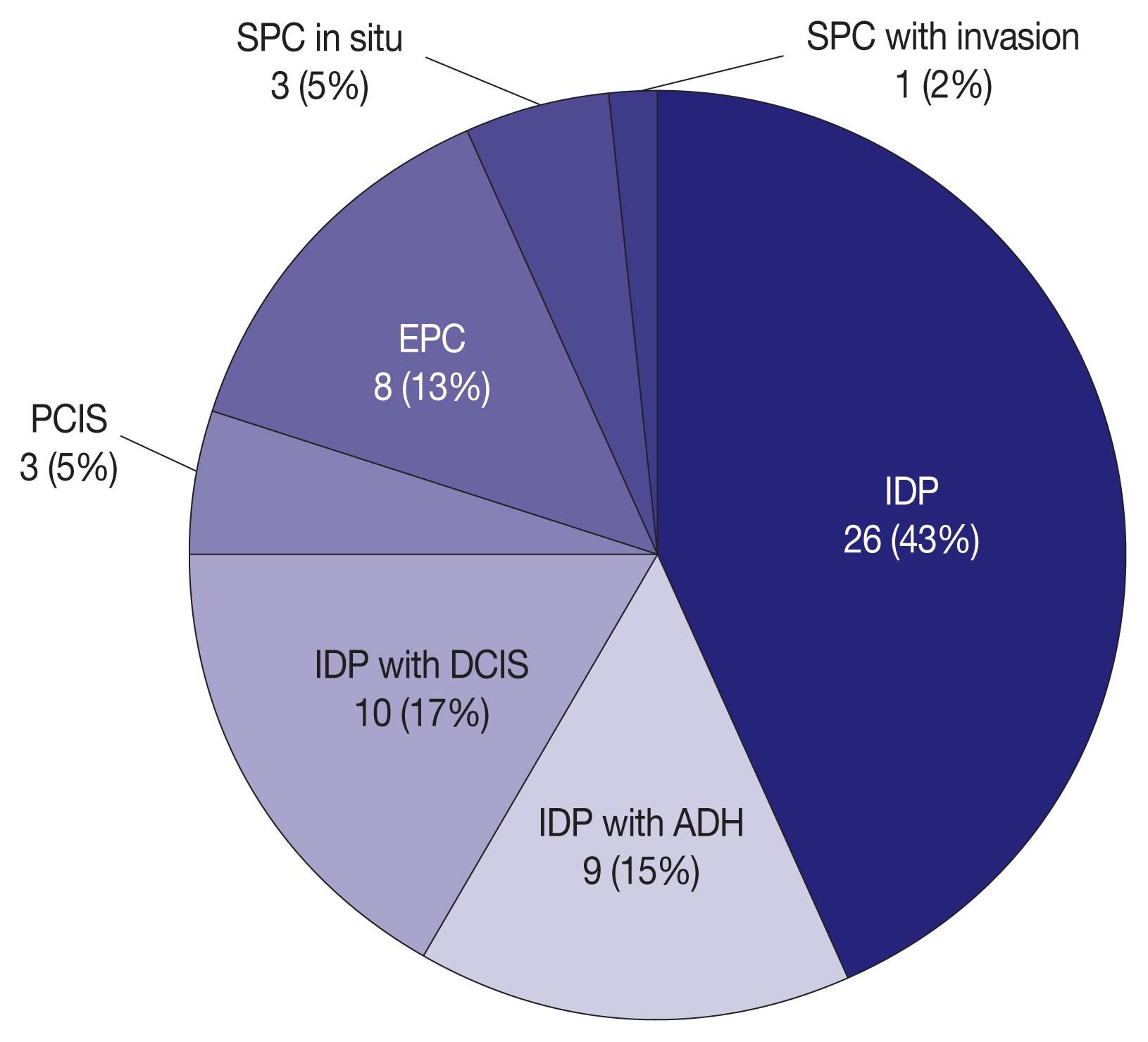
On WHO classification, H&E staining exhibited ‘fair agreement’ (κ = 0.21) with a 47.0% agreement rate. Simple classifications presented improvement in interobserver variability and agreement rate. IHC staining increased the kappa value and agreement rate in all the classifications. Despite IHC staining, the encapsulated/solid papillary carcinoma (EPC/SPC) subgroup (κ = 0.16) exhibited lower agreement compared to the non-EPC/SPC subgroup (κ = 0.35) with WHO classification, which was similar to the results of any other classification systems.
Conclusions
Although the use of IHC staining for CK5 and p63 increased the diagnostic agreement of PBLs in CNB specimens, WHO classification exhibited a higher discordance rate compared to any other classifications. Therefore, this result warrants further intensive consensus studies to improve the diagnostic reproducibility of PBLs with WHO classification. -
Citations
Citations to this article as recorded by
- Beyond the benign: A rare case report of myxoid pleomorphic liposarcoma
Arslan Ahmad, Muhammad Ammar, Muhammad Hasnain Saleem Choudary, Muhammad Nouman Sadiq, Rana Uzair Ahmad, Nouman Aziz
Radiology Case Reports.2025; 20(5): 2500. CrossRef - Invasive papillary carcinoma of the breast
Shijing Wang, Qingfu Zhang, Xiaoyun Mao
Frontiers in Oncology.2024;[Epub] CrossRef - Recommendations for Performance Evaluation of Machine Learning in Pathology: A Concept Paper From the College of American Pathologists
Matthew G. Hanna, Niels H. Olson, Mark Zarella, Rajesh C. Dash, Markus D. Herrmann, Larissa V. Furtado, Michelle N. Stram, Patricia M. Raciti, Lewis Hassell, Alex Mays, Liron Pantanowitz, Joseph S. Sirintrapun, Savitri Krishnamurthy, Anil Parwani, Giovann
Archives of Pathology & Laboratory Medicine.2024; 148(10): e335. CrossRef - Encapsulated papillary carcinoma of the breast: A single institution experience
Liang Xu, Qixin Mao, Qiuming Liu, Yufeng Gao, Lihua Luo, Chungen Guo, Wei Qu, Ningning Yan, Yali Cao
Oncology Letters.2023;[Epub] CrossRef - High-risk and selected benign breast lesions diagnosed on core needle biopsy: Evidence for and against immediate surgical excision
Aparna Harbhajanka, Hannah L. Gilmore, Benjamin C. Calhoun
Modern Pathology.2022; 35(11): 1500. CrossRef
- Beyond the benign: A rare case report of myxoid pleomorphic liposarcoma
- Cytomorphological Features of Hyperchromatic Crowded Groups in Liquid-Based Cervicovaginal Cytology: A Single Institutional Experience
- Youngeun Lee, Cheol Lee, In Ae Park, Hyoung Jin An, Haeryoung Kim
- J Pathol Transl Med. 2019;53(6):393-398. Published online September 16, 2019
- DOI: https://doi.org/10.4132/jptm.2019.08.14
- 12,530 View
- 234 Download
- 9 Web of Science
- 9 Crossref
-
Abstract
PDF
- Background
Hyperchromatic crowed groups (HCGs) are defined as three-dimensional aggregates of crowded cells with hyperchromatic nuclei, and are frequently encountered in cervicovaginal liquid-based cytology (LBC). Here, we aimed to examine the prevalence of HCGs in cervicovaginal LBC and the cytomorphological characteristics of various epithelial cell clusters presenting as HCGs.
Methods
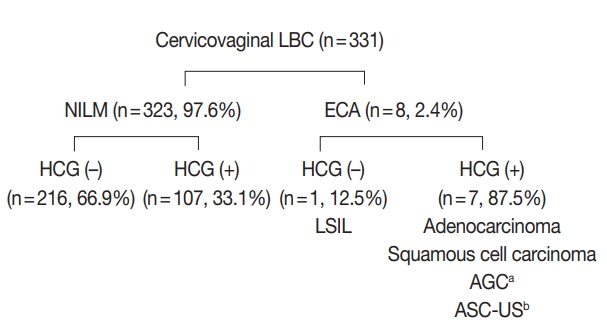
We first examined the prevalence of HCGs in a “routine cohort” of LBC cytology (n=331), consisting of all cervicovaginal LBCs accessioned over 3 days from outpatient clinics (n=179) and the screening population (n=152). Then we examined a second “high-grade epithelial cell abnormalities (H-ECA) cohort” (n=69) of LBCs diagnosed as high-grade squamous intraepithelial lesion (HSIL), squamous cell carcinoma (SCC), or adenocarcinoma during 1 year.
Results
HCGs was observed in 34.4% of the routine cohort and were significantly more frequent in the epithelial cell abnormality category compared to the non-neoplastic category (p=.003). The majority of HCGs represented atrophy (70%). Of the 69 histologically confirmed H-ECA cases, all contained HCGs. The majority of cases were HSIL (62%), followed by SCC (16%). Individually scattered neoplastic cells outside the HCGs were significantly more frequent in SCCs compared to glandular neoplasia (p=.002). Despite the obscuring thick nature of the HCGs, examining the edges and the different focal planes of the HCGs and the background were helpful in defining the nature of the HCGs.
Conclusions
HCGs were frequently observed in cervicovaginal LBC and were mostly non-neoplastic; however, neoplastic HCGs were mostly high-grade lesions. Being aware of the cytomorphological features of different HCGs is important in order to avoid potential false-negative cytology interpretation. -
Citations
Citations to this article as recorded by- Morphologic Evaluation of Hyperchromatic Crowded Groups Present in Cervical Thin Prep Cytology Tests as Identified by the Hologic Genius Digital Diagnostics System: A Descriptive Study
Lakshmi Harinath, Jonee Matsko, Amy Colaizzi, Esther Elishaev, Liron Pantanowitz, Chengquan Zhao
Diagnostic Cytopathology.2026; 54(3): 173. CrossRef - Clinical-grade autonomous cytopathology through whole-slide edge tomography
Nao Nitta, Yuko Sugiyama, Takeaki Sugimura, Takahiko Ito, Koichi Ikebata, Hitoshi Abe, Shuhei Ishii, Hiroyuki Kanao, Nagisa Hosoya, Raihan Ull Islam, Aditya Jain, Meisam Hasani, Joseph Zonghi, Peter Koh, Yukihito Mase, Miki Kanematsu, Noureldin M. Z. Ali,
Nature.2026; 651(8105): 472. CrossRef - Morphological differentiation of hyperchromatic crowded groups (HCG) in cervical cytology. Possible clinical significance
Julio César Villarreal Ramírez, Jesús E. Guaithero Rivas, Lorena Ramírez, Jesús Peña Guillén, Morelva Toro de Méndez
Revista Española de Patología.2026; 59(3): 100883. CrossRef - Diagnostic performance of artificial intelligence models trained on scattered single‐cell images is not preserved for hyperchromatic crowded cell groups in cervical cytology
Shinichi Tanaka, Yudai Yamamoto, Konatsu Yokota, Tamami Yamamoto, Norihiro Teramoto
Cancer Cytopathology.2026;[Epub] CrossRef - Can Mitotic Figures in Hyperchromatic Crowded Groups be Cytodiagnostic Criteria for High-Grade Squamous Intra-epithelial Lesions?
Hisae Suzuki, Yumeno Kondo, Chihiro Oda, Takeshi Nishikawa, Mao Takeuchi, Shigenobu Tatsumi, Sho Hosokawa, Satoshi Irino, Tomoko Uchiyama, Tomomi Fujii, Yoshiaki Norimatsu
Journal of Cytology.2024; 41(2): 116. CrossRef - Quantitative Structural Analysis of Hyperchromatic Crowded Cell Groups in Cervical Cytology: Overcoming Diagnostic Pitfalls
Shinichi Tanaka, Tamami Yamamoto, Norihiro Teramoto
Cancers.2024; 16(24): 4258. CrossRef - Atypical glandular cells (AGC): Cytology of glandular lesions of the uterine cervix
Mir Yousufuddin Ali Khan, Sudeshna Bandyopadhyay, Ahmed Alrajjal, Moumita Saha Roy Choudhury, Rouba Ali-Fehmi, Vinod B. Shidham
Cytojournal.2022; 19: 31. CrossRef - Cytopathologic features of human papillomavirus–independent, gastric-type endocervical adenocarcinoma
Min-Kyung Yeo, Go Eun Bae, Dong-Hyun Kim, In-Ock Seong, Kwang-Sun Suh
Journal of Pathology and Translational Medicine.2022; 56(5): 260. CrossRef - The association of atypical squamous cells, cannot exclude a high grade squamous intraepithelial lesion, hyperchromatic crowded groups and high grade squamous intraepithelial lesions involving endocervical glands
Suzanne M. Selvaggi
Diagnostic Cytopathology.2021; 49(9): 1008. CrossRef
- Morphologic Evaluation of Hyperchromatic Crowded Groups Present in Cervical Thin Prep Cytology Tests as Identified by the Hologic Genius Digital Diagnostics System: A Descriptive Study
- High Cytoplasmic CXCR4 Expression Predicts Prolonged Survival in Triple-Negative Breast Cancer Patients Treated with Adjuvant Chemotherapy
- Bobae Shim, Min‐Sun Jin, Ji Hye Moon, In Ae Park, Han Suk Ryu
- J Pathol Transl Med. 2018;52(6):369-377. Published online October 1, 2018
- DOI: https://doi.org/10.4132/jptm.2018.09.19
- 16,098 View
- 186 Download
- 13 Web of Science
- 14 Crossref
-
Abstract
PDF
- Background
Chemokine receptor CXC chemokine receptor type 4 (CXCR4) and its ligand CXC motif chemokine 12 (CXCL12; stromal cell-derived factor-1) are implicated in tumor growth, metastasis, and tumor cell-microenvironment interaction. A number of studies have reported that increased CXCR4 expression is associated with worse prognosis in triple-negative breast cancer (TNBC), but its prognostic significance has not been studied in TNBC patients treated with adjuvant chemotherapy.
Methods
Two hundred eighty-three TNBC patients who received adjuvant chemotherapy were retrospectively analyzed. Tissue microarray was constructed from formalinfixed, paraffin-embedded tumor tissue and immunohistochemistry for CXCR4 and CXCL12 was performed. Expression of each marker was compared with clinicopathologic characteristics and outcome.
Results
High cytoplasmic CXCR4 expression was associated with younger age (p = .008), higher histologic grade (p = .007) and lower pathologic stage (p = .045), while high CXCL12 expression was related to larger tumor size (p = .045), positive lymph node metastasis (p = .005), and higher pathologic stage (p = .017). The patients with high cytoplasmic CXCR4 experienced lower distant recurrence (p = .006) and better recurrence-free survival (RFS) (log-rank p = .020) after adjuvant chemotherapy. Cytoplasmic CXCR4 expression remained an independent factor of distant recurrence (p = .019) and RFS (p = .038) after multivariate analysis.
Conclusions
High cytoplasmic CXCR4 expression was associated with lower distant recurrence and better RFS in TNBC patients treated with adjuvant chemotherapy. This is the first study to correlate high CXCR4 expression to better TNBC prognosis, and the underlying mechanism needs to be elucidated in further studies. -
Citations
Citations to this article as recorded by- Bisphenol A-induced cancer-associated adipocytes promotes breast carcinogenesis via CXCL12/AKT signaling
Zhiyuan Dong, Liping He, Jinyi Wu, Chunfeng Xie, Shanshan Geng, Jieshu Wu, Caiyun Zhong, Xiaoting Li
Molecular and Cellular Endocrinology.2025; 599: 112473. CrossRef - Dissecting the tumor microenvironment in primary breast angiosarcoma: insights from single-cell RNA sequencing
Peikai Ding, Shengbin Pei, Yi Zhai, Zheng Qu, Yazhe Yang, Xiaolong Feng, Qiang Liu, Xiangyu Wang, Wenxiang Zhang, Zhongzhao Wang, Xiangyi Kong, Jing Wang, Yi Fang
Breast Cancer Research.2025;[Epub] CrossRef - CXCR4 expression in colorectal cancer and tumor stage correlation
Fang Cao, Yang Zhang, Jianhao Xu, Jiarui Min, Jihao Su, Zhe Chen, Jingfeng Gu, Zijie Xu, Song Xu
Gene Reports.2025; 40: 102281. CrossRef - Distinct profiles of proliferating CD8+/TCF1+ T cells and CD163+/PD-L1+ macrophages predict risk of relapse differently among treatment-naïve breast cancer subtypes
Konstantinos Ntostoglou, Sofia D. P. Theodorou, Tanja Proctor, Ilias P. Nikas, Sinclair Awounvo, Athanasia Sepsa, Vassilis Georgoulias, Han Suk Ryu, Ioannis S. Pateras, Christos Kittas
Cancer Immunology, Immunotherapy.2024;[Epub] CrossRef - Unravelling the CXCL12/CXCR4 Axis in breast cancer: Insights into metastasis, microenvironment interactions, and therapeutic opportunities
Priyanka Garg, Venkateswara Rao Jallepalli, Sonali Verma
Human Gene.2024; 40: 201272. CrossRef - New Emerging Chemokine Receptors: CCR5 or CXCR5 on Tumor Is Associated with Poor Response to Chemotherapy and Poor Prognosis in Locally Advanced Triple-Negative Breast Cancer
Neslihan Cabioglu, Semen Onder, Hüseyin Karatay, Aysel Bayram, Gizem Oner, Mustafa Tukenmez, Mahmut Muslumanoglu, Abdullah Igci, Ahmet Dinccag, Vahit Ozmen, Adnan Aydiner, Pınar Saip, Ekrem Yavuz
Cancers.2024; 16(13): 2388. CrossRef - Cancer-Associated-Fibroblast-Mediated Paracrine and Autocrine SDF-1/CXCR4 Signaling Promotes Stemness and Aggressiveness of Colorectal Cancers
Chao-Yang Chen, Shih-Hsien Yang, Ping-Ying Chang, Su-Feng Chen, Shin Nieh, Wen-Yen Huang, Yu-Chun Lin, Oscar Kuang-Sheng Lee
Cells.2024; 13(16): 1334. CrossRef - Associations of CXCL12 polymorphisms with clinicopathological features in breast cancer: a case-control study
Shuai Lin, Yi Zheng, Meng Wang, Linghui Zhou, Yuyao Zhu, Yujiao Deng, Ying Wu, Dai Zhang, Na Li, Huafeng Kang, Zhijun Dai
Molecular Biology Reports.2022; 49(3): 2255. CrossRef - The clinicopathological and prognostic value of CXCR4 expression in patients with lung cancer: a meta-analysis
Liping Qiu, Yuanyuan Xu, Hui Xu, Biyun Yu
BMC Cancer.2022;[Epub] CrossRef - Demystifying the CXCR4 conundrum in cancer biology: Beyond the surface signaling paradigm
Mushtaq Ahmad Nengroo, Muqtada Ali Khan, Ayushi Verma, Dipak Datta
Biochimica et Biophysica Acta (BBA) - Reviews on Cancer.2022; 1877(5): 188790. CrossRef - Targeted dendrimers for antagonizing the migration and viability of NALM-6 lymphoblastic leukemia cells
Chuda Chittasupho, Chaiyawat Aonsri, Witcha Imaram
Bioorganic Chemistry.2021; 107: 104601. CrossRef - CXCR4 and RANK Combination as a Predictor of Breast Cancer Bone Metastasis in Indonesia
Yulian Erwin D
Journal of Surgery and Surgical Research.2021; : 020. CrossRef - CXCL12/CXCR4 axis in the microenvironment of solid tumors: A critical mediator of metastasis
Keywan Mortezaee
Life Sciences.2020; 249: 117534. CrossRef - Impact of the Chemokine Receptors CXCR4 and CXCR7 on Clinical Outcome in Adrenocortical Carcinoma
Irina Chifu, Britta Heinze, Carmina T. Fuss, Katharina Lang, Matthias Kroiss, Stefan Kircher, Cristina L. Ronchi, Barbara Altieri, Andreas Schirbel, Martin Fassnacht, Stefanie Hahner
Frontiers in Endocrinology.2020;[Epub] CrossRef
- Bisphenol A-induced cancer-associated adipocytes promotes breast carcinogenesis via CXCL12/AKT signaling
Case Study
- Cytologic Diagnosis of Metastatic Alveolar Rhabdomyosarcoma in Cerebrospinal Fluid: A Case Report
- Bobae Shim, Jiwon Koh, Ji Hye Moon, In Ae Park, Han Suk Ryu
- J Pathol Transl Med. 2018;52(4):262-266. Published online June 14, 2018
- DOI: https://doi.org/10.4132/jptm.2018.05.15
- 10,112 View
- 127 Download
- 3 Web of Science
- 3 Crossref
-
Abstract
PDF
- Rhabdomyosarcoma is a malignant soft tissue tumor which shows skeletal muscle differentiation. Leptomeningeal metastasis can occur as a late complication, but currently there are no reports that have documented the cytologic features in cerebrospinal fluid (CSF). We report a case of metastatic alveolar rhabdomyosarcoma diagnosed in the CSF of a 28-year-old male who was originally diagnosed with rhabdomyosarcoma on the neck, and that went through systemic therapy. The tumor was positive for anaplastic lymphoma kinase, but progressed despite additional therapy with crizotinib. The CSF specimen revealed small round cells, large atypical cells with abundant cytoplasm and eccentric nuclei, and cells with horseshoe-shaped nuclei. These cytologic findings were in agreement with previous literature and well-correlated with histopathology. This is the first report to document the cytologic feature of rhabdomyosarcoma in CSF. In many cases it is difficult to perform ancillary tests in a CSF specimen and cytopathologists should be aware of the cytomorphologic characteristics to avoid misdiagnosis.
-
Citations
Citations to this article as recorded by- A Review of Effusion Cytomorphology of Small Round Cell Tumors
Lucy M. Han, Christopher J. VandenBussche, Mads Abildtrup, Ashish Chandra, Poonam Vohra
Acta Cytologica.2022; 66(4): 336. CrossRef - Cytologic diagnosis of metastatic embryonal rhabdomyosarcoma in cerebrospinal fluid: A case report
Muxia Yan, Ying Wu, Jianqing Xia, Xiaohong Zhang, Yiqian Wang
Diagnostic Cytopathology.2021;[Epub] CrossRef - Effusion cytology of epithelioid rhabdomyosarcoma
Andrew A. Renshaw, Edwin W. Gould
Diagnostic Cytopathology.2019; 47(10): 1042. CrossRef
- A Review of Effusion Cytomorphology of Small Round Cell Tumors
Brief Case Report
- WITHDRAWN:Uterine Arteriovenous Malformation Accompanied with a Uterine Stromomyoma
- Yul Ri Chung, Dohee Kwon, Sehui Kim, Hee Young Na, Nayoung Han, Hyo Jin Kim, Min A Kim, In Ae Park
- Received May 13, 2016 Accepted September 23, 2016 Published online August 4, 2017
- DOI: https://doi.org/10.4132/jptm.2016.09.24
- 3,811 View
- 33 Download
Original Article
- Diagnostic Accuracy of Endoscopic Ultrasound-Guided Fine Needle Aspiration Cytology of Pancreatic Lesions
- Hae Woon Baek, Min Jee Park, Ye-Young Rhee, Kyoung Bun Lee, Min A Kim, In Ae Park
- J Pathol Transl Med. 2015;49(1):52-60. Published online January 15, 2015
- DOI: https://doi.org/10.4132/jptm.2014.10.26
- 14,626 View
- 97 Download
- 35 Web of Science
- 34 Crossref
-
Abstract
PDF
- Background
Endoscopic ultrasound–guided fine needle aspiration cytology (EUS-FNAC) is currently the most commonly used procedure for obtaining cytologic specimens of the pancreas. It is accurate, minimally invasive, safe and cost-effective. However, there is discrepancy between cytological and surgical diagnoses. This study was aimed at evaluating the diagnostic accuracy of EUS-FNAC of the pancreas. Methods: We performed a retrospective review of 191 cases of pancreatic lesions initially diagnosed by EUS-FNAC with subsequent histological diagnosis between 2010 and 2012 in the Department of Pathology, Seoul National University Hospital. Cytologic and surgical diagnoses were categorized into five groups: negative, benign, atypical, malignant, and insufficient for diagnosis. Subsequently, 167 cases with satisfactory yield in both surgical and cytology specimens were statistically analyzed to determine correlations with diagnosis. Results: In comparison to surgical diagnoses, cytologic diagnoses were true-positive in 103 cases (61.7%), true-negative in 28 cases (16.8%), false-positive in 9 cases (5.4%), and false-negative in 27 cases (16.1%). The diagnostic accuracy was 78.4%, sensitivity was 79.2%, and specificity was 75.7%. The positive predictive value was 92.0%, and negative predictive value was 50.9%. Conclusions: EUS-FNAC has high accuracy, sensitivity, specificity and positive predictive value. Overcoming the limitations of EUS-FNAC will make it a useful and reliable diagnostic tool for accurate evaluation of pancreatic lesions. -
Citations
Citations to this article as recorded by- Diagnostic efficacy of endoscopic ultrasound-guided fine needle aspiration cytology in pancreatic lesions
Pranita Mohanty, Priyadarshini Dehuri, Jimmy Narayan
Scientific Reports.2026;[Epub] CrossRef - miR-6855-5p Enhances Radioresistance and Promotes Migration of Pancreatic Cancer by Inducing Epithelial-Mesenchymal Transition via Suppressing FOXA1: Potential of Plasma Exosomal miR-6855-5p as an Indicator of Radiosensitivity in Patients with Pancreatic
Hiroki Ueda, Hidenori Takahashi, Shogo Kobayashi, Masahiko Kubo, Kazuki Sasaki, Yoshifumi Iwagami, Daisaku Yamada, Yoshito Tomimaru, Tadafumi Asaoka, Takehiro Noda, Junzo Shimizu, Yuichiro Doki, Hidetoshi Eguchi
Annals of Surgical Oncology.2025; 32(2): 720. CrossRef - Combating false negatives in pancreatic cancer: A deep learning approach for aiding fine needle aspiration via accurate subregion identification
Ms Jasmine Chhikara, Nidhi Goel, Neeru Rathee
Engineering Applications of Artificial Intelligence.2025; 157: 111347. CrossRef - Grading pancreatic adenocarcinomas on fine needle aspiration cytology. The outstanding issues
Mrinmay Kumar Mallik, Laila Rafiq Qadan, Asit Kumar Mohanty, Ali Alali, Kusum Kapila
Cytopathology.2024; 35(2): 256. CrossRef - Reporting Pancreatic FNAC using the Papanicolaou System: Still a Diagnostic Challenge
Parul Verma, Saloni Goyal, Ruchita Tyagi, Mehar Ghuman, Ramit Mahajan, Arshneet Kaur Selhi, Harpreet Kaur, Pavneet Kaur Selhi
Journal of Cytology.2024; 41(2): 123. CrossRef - Preoperative treatment response prediction for pancreatic cancer by multiple microRNAs in plasma exosomes: Optimization using machine learning and network analysis
Hiroki Ueda, Hidenori Takahashi, Ryoto Sakaniwa, Tetsuhisa Kitamura, Shogo Kobayashi, Yoshito Tomimaru, Masahiko Kubo, Kazuki Sasaki, Yoshifumi Iwagami, Daisaku Yamada, Tadafumi Asaoka, Takehiro Noda, Junzo Shimizu, Yuichiro Doki, Hidetoshi Eguchi
Pancreatology.2024; 24(7): 1097. CrossRef - Comparison of Endoscopic Ultrasound-Guided Fine-Needle Aspiration with Fine-Needle Biopsy for Solid Gastrointestinal Lesions: A Randomized Crossover Single-Center study
Shivaraj Afzalpurkar, Vijay Kumar Rai, Nikhil Sonthalia, Gajanan Rodge, Awanesh Tewary, Mahesh Goenka
Journal of Digestive Endoscopy.2023; 14(01): 014. CrossRef - Diagnosing and monitoring pancreatic cancer through cell-free DNA methylation: progress and prospects
María Victoria García-Ortiz, Pablo Cano-Ramírez, Marta Toledano-Fonseca, Enrique Aranda, Antonio Rodríguez-Ariza
Biomarker Research.2023;[Epub] CrossRef - The impact of preoperative EUS-FNA for distal resectable pancreatic cancer: Is it really effective enough to take risks?
Jin-Seok Park, Jae Hoon Lee, Tae Jun Song, Joune Seup Lee, Seok Jung Jo, Dong Wook Oh, Ki Byung Song, Dae Wook Hwang, Do Hyun Park, Sang Soo Lee, Song Cheol Kim, Dong Wan Seo, Sung Koo Lee, Myung-Hwan Kim
Surgical Endoscopy.2022; 36(5): 3192. CrossRef - Magnetic Resonance Imaging Radiomics‐Based Nomogram From Primary Tumor for Pretreatment Prediction of Peripancreatic Lymph Node Metastasis in Pancreatic Ductal Adenocarcinoma: A Multicenter Study
Zhenshan Shi, Chengle Ma, Xinming Huang, Dairong Cao
Journal of Magnetic Resonance Imaging.2022; 55(3): 823. CrossRef - Role of Pathologist in the Era of Image-Guided and EUS-Guided Aspirations: A 10-Year Study at a Single Tertiary Care Oncology Institute in North India
Gurudutt Gupta, Anila Sharma, Meenakshi Kamboj, Anurag Sharma, Sunil Pasricha, Garima Durga, Anurag Mehta, Avinash Rao
Acta Cytologica.2022; 66(3): 187. CrossRef - Predicting Factors for Pancreatic Malignancy with Computed Tomography and Endoscopic Ultrasonography in Chronic Pancreatitis
Jian-Han Lai, Keng-Han Lee, Chen-Wang Chang, Ming-Jen Chen, Ching-Chung Lin
Diagnostics.2022; 12(4): 1004. CrossRef - Phenotypic profiling of pancreatic ductal adenocarcinoma plasma-derived small extracellular vesicles for cancer diagnosis and cancer stage prediction: a proof-of-concept study
Wei Zhang, Ling Wang, Dan Li, Douglas H. Campbell, Bradley J. Walsh, Nicolle H. Packer, Qing Dong, Erkang Wang, Yuling Wang
Analytical Methods.2022; 14(23): 2255. CrossRef - Cancer-derived small extracellular vesicles: emerging biomarkers and therapies for pancreatic ductal adenocarcinoma diagnosis/prognosis and treatment
Wei Zhang, Douglas H. Campbell, Bradley J. Walsh, Nicolle H. Packer, Dingbin Liu, Yuling Wang
Journal of Nanobiotechnology.2022;[Epub] CrossRef - Single Cell RNA Sequencing: A New Frontier in Pancreatic Ductal Adenocarcinoma
Maroun Bou Zerdan, Malek Shatila, Dhruv Sarwal, Youssef Bouferraa, Morgan Bou Zerdan, Sabine Allam, Merima Ramovic, Stephen Graziano
Cancers.2022; 14(19): 4589. CrossRef - Molecular Subtyping and Precision Medicine for Pancreatic Cancer
Fieke Froeling, Raffaella Casolino, Antonio Pea, Andrew Biankin, David Chang
Journal of Clinical Medicine.2021; 10(1): 149. CrossRef - Reshaping preoperative treatment of pancreatic cancer in the era of precision medicine
R. Casolino, C. Braconi, G. Malleo, S. Paiella, C. Bassi, M. Milella, S.B. Dreyer, F.E.M. Froeling, D.K. Chang, A.V. Biankin, T. Golan
Annals of Oncology.2021; 32(2): 183. CrossRef - Endoscopic Ultrasound-Guided Fine Needle Aspiration Cytology of Pancreatic Adenocarcinomas Revisited. A Detailed Cytological Analysis
Mrinmay Kumar Mallik, Kusum Kapila, Asit Kumar Mohanty, Shafi Ahmed Inamdar, Ali AlAli, Abdullah Al Naseer
Journal of Cytology.2021; 38(1): 31. CrossRef - Diagnostic value of various liquid biopsy methods for pancreatic cancer
Yuzhou Zhu, Hao Zhang, Nan Chen, Jianqi Hao, Hongyu Jin, Xuelei Ma
Medicine.2020; 99(3): e18581. CrossRef - Factors affecting cytological results of endoscopic ultrasound guided-fine needle aspiration during learning
Jian-Han Lai, Hsiang-Hung Lin, Ching-Chung Lin
Diagnostic Pathology.2020;[Epub] CrossRef - Comparison between Conventional Smear and Liquid-Based Preparation in Endoscopic Ultrasonography-Fine Needle Aspiration Cytology of Pancreatic Lesions
Soo Hee Ko, Jung-Soo Pyo, Byoung Kwan Son, Hyo Young Lee, Il Whan Oh, Kwang Hyun Chung
Diagnostics.2020; 10(5): 293. CrossRef - Evaluation of Pancreatic Lesions With Endoscopic Ultrasound and Fine Needle Aspiration
Yan Luk, Wong Hoi She, Felix Che Lok Chow, Ka Wing Ma, Simon Hing Yin Tsang, Wing Chiu Dai, Tan To Cheung, Chung Mau Lo
Surgical Innovation.2020; 27(5): 431. CrossRef - The applicability of Papanicolaou Society of Cytopathology system on reporting endoscopic ultrasound‐guided fine needle aspiration cytology specimens of pancreatic lesions in situations with limited availability of ancillary tests. Experience at a single
Mrinmay Kumar Mallik, Laila Rafiq Qadan, Abdullah Al Naseer, Ali AlAli, Taiba Al Ansari, Shafi Ahmed Inamdar Naquib, Dilip Kumar Das, Kusum Kapila
Cytopathology.2020; 31(6): 564. CrossRef - Circulating Cell-Free DNA-Based Liquid Biopsy Markers for the Non-Invasive Prognosis and Monitoring of Metastatic Pancreatic Cancer
Marta Toledano-Fonseca, M. Teresa Cano, Elizabeth Inga, Rosa Rodríguez-Alonso, M. Auxiliadora Gómez-España, Silvia Guil-Luna, Rafael Mena-Osuna, Juan R. de la Haba-Rodríguez, Antonio Rodríguez-Ariza, Enrique Aranda
Cancers.2020; 12(7): 1754. CrossRef - Risk of malignancy in the categories of the Papanicolaou Society of Cytopathology system for reporting pancreaticobiliary cytology
Raza S. Hoda, Elizabeth B. Finer, Ronald N. Arpin, Matthew Rosenbaum, Martha B. Pitman
Journal of the American Society of Cytopathology.2019; 8(3): 120. CrossRef - Endoscopic ultrasound guided fine‐needle aspiration vs core needle biopsy for solid pancreatic lesions: Comparison of diagnostic accuracy and procedural efficiency
Aslam Syed, Olivia Babich, Bharat Rao, Shailendra Singh, Neil Carleton, Abhishek Gulati, Archana Kulkarni, Mrinal Garg, Katie Farah, Gursimran Kochhar, Suzanne Morrissey, Marcia Mitre, Abhijit Kulkarni, Manish Dhawan, Jan F. Silverman, Majed Pharaon, Shya
Diagnostic Cytopathology.2019; 47(11): 1138. CrossRef - Liquid Biopsy as Surrogate for Tissue for Molecular Profiling in Pancreatic Cancer: A Meta-Analysis Towards Precision Medicine
Claudio Luchini, Nicola Veronese, Alessia Nottegar, Vera Cappelletti, Maria G. Daidone, Lee Smith, Christopher Parris, Lodewijk A. A. Brosens, Maria G. Caruso, Liang Cheng, Christopher L. Wolfgang, Laura D. Wood, Michele Milella, Roberto Salvia, Aldo Scar
Cancers.2019; 11(8): 1152. CrossRef - It is necessary to exam bottom and top slide smears of EUS-FNA for pancreatic cancer
Jong-chan Lee, Haeryoung Kim, Hyoung Woo Kim, Jongchan Lee, Kyu-hyun Paik, Jingu Kang, Jin-Hyeok Hwang, Jaihwan Kim
Hepatobiliary & Pancreatic Diseases International.2018; 17(6): 553. CrossRef - Preoperative EUS-guided FNA: effects on peritoneal recurrence and survival in patients with pancreatic cancer
Sun Hwa Kim, Young Sik Woo, Kwang Hyuck Lee, Jong Kyun Lee, Kyu Taek Lee, Joo Kyung Park, Soo Hoon Kang, Ji Won Kim, Jae Keun Park, Sung-Wook Park
Gastrointestinal Endoscopy.2018; 88(6): 926. CrossRef - Cytological characteristics of atypical cells in endoscopic ultrasound-guided fine-needle aspiration specimens obtained from the pancreas
Shikine ESAKA, Yoko MATSUDA, Yuri HAMASHIMA, Masayuki IMAIZUMI, Hiroya KOJIMA, Yuri KISO, Hiroto SHIRAHATA, Mayumi KINOSHITA, Akemi SUZUKI, Tomio ARAI
The Journal of the Japanese Society of Clinical Cytology.2018; 57(4): 199. CrossRef - Performance measures for endoscopic retrograde cholangiopancreatography and endoscopic ultrasound: A European Society of Gastrointestinal Endoscopy (ESGE) Quality Improvement Initiative
Dirk Domagk, Kofi W Oppong, Lars Aabakken, Laszlo Czakó, Tibor Gyökeres, Gianpiero Manes, Peter Meier, Jan-Werner Poley, Thierry Ponchon, Andrea Tringali, Cristina Bellisario, Silvia Minozzi, Carlo Senore, Cathy Bennett, Michael Bretthauer, Cesare Hassan,
United European Gastroenterology Journal.2018; 6(10): 1448. CrossRef - Performance measures for ERCP and endoscopic ultrasound: a European Society of Gastrointestinal Endoscopy (ESGE) Quality Improvement Initiative
Dirk Domagk, Kofi W. Oppong, Lars Aabakken, Laszlo Czakó, Tibor Gyökeres, Gianpiero Manes, Peter Meier, Jan-Werner Poley, Thierry Ponchon, Andrea Tringali, Cristina Bellisario, Silvia Minozzi, Carlo Senore, Cathy Bennett, Michael Bretthauer, Cesare Hassan
Endoscopy.2018; 50(11): 1116. CrossRef - Imaging modalities for characterising focal pancreatic lesions
Lawrence MJ Best, Vishal Rawji, Stephen P Pereira, Brian R Davidson, Kurinchi Selvan Gurusamy
Cochrane Database of Systematic Reviews.2017;[Epub] CrossRef - Percutaneous ultrasound‐guided core needle biopsy of solid pancreatic masses: Results in 250 patients
Guven Kahriman, Nevzat Ozcan, Serap Dogan, Soner Ozmen, Kemal Deniz
Journal of Clinical Ultrasound.2016; 44(8): 470. CrossRef
- Diagnostic efficacy of endoscopic ultrasound-guided fine needle aspiration cytology in pancreatic lesions
Brief Case Report
- Simultaneous Occurrence of Ductal Carcinoma
In Situ within Juvenile Fibroadenoma in Both Breasts: A Brief Case Report - Mi Jung Kwon, Hye-Rim Park, Jinwon Seo, Dong Hoon Kim, Kyoonsoon Jung, Young Ah Lim, Lee Su Kim, Hoonsik Bae, In Ae Park, Soo Kee Min
- Korean J Pathol. 2014;48(2):164-166. Published online April 28, 2014
- DOI: https://doi.org/10.4132/KoreanJPathol.2014.48.2.164
- 9,865 View
- 55 Download
- 1 Crossref
-
PDF
-
Citations
Citations to this article as recorded by- Breast Carcinoma within Fibroadenoma: A Systematic Review
Abdulwahid M. Salih, Lana R.A. Pshtiwan, Mohammed Gh. Hamasaeed, Sami S. Omar, Shaban Latif, Shadi H. Sidiq, Bushra O. Hussein, Hunar A. Hassan, Diyar A. Omar, Sarhang S. Abdalla, Hemn A. Hassan, Yousif M. Mahmood, Marwan N. Hassan, Dahat A.
Barw Medical Journal.2024;[Epub] CrossRef
- Breast Carcinoma within Fibroadenoma: A Systematic Review
Original Articles
- Cytopathologic Diagnosis of Pulmonary Diseases by Transthoracic Fine Needle Aspiration Biopsy.
- In Ae Park, Eui Keun Ham
- J Pathol Transl Med. 1990;1(1):27-35.
- 2,170 View
- 21 Download
-
Abstract
PDF
- The authors report series of 360 cases of transthoracic fine-needle aspiration cytology(TFNA) from Oct, 1982, through Aug. 1986 at the Seoul National University Hospital. A diagnosis of neoplastic lesion was established in 50.3% of the cases. A non-neoplastic diagnosis was made in 38.5%, nondiagnostic one in 6.5% and inadequate one in 4.7% of the total. Statistical findings on cytological diagnoses were as follows. Specificity was 100% ; sensitivity, 92%; predictive value for positive, 1.0 ; predicitive value for negative, 0.9 : concordance rate, 84.2% ; diagnostic accuracy in non-neoplastic lesion, 65.4%, and typing accuracy in malignant tumor, 0.77.
- Fine Needle Aspiration Cytology of the Mediastinal Lesions.
- In Ae Park, Eui Keun Ham
- J Pathol Transl Med. 1990;1(1):43-50.
- 2,191 View
- 15 Download
-
Abstract
PDF
- The authors report 16 cases of mediastinal fine-needle aspiration cytology from Jan. 1985 to Mar. 1988 at the Seoul National University Hospital. Among them, diagnostic materal were obtained in fifteen cases, establishing the diagnosis of 7 thymomas, 2 germinomas, 2 neurogenic tumosr, 1 lymphoma, and 3 meastatic carcinomas. The 9 cytologic diagnoses could be confirmed by histologic examination in 8 patients and by another cytologic method in one patient, allowing concordance rate of 77%.
- Evaluation of cytopathologic diagnosis of lung carcinoma.
- In Ae Park, Eui Keun Ham
- J Pathol Transl Med. 1991;2(1):20-27.
- 2,390 View
- 17 Download
-
Abstract
PDF
- In order to evaluate the role of cytopathologic diagnosis of sputum, bronchial washing and bronchial brushing in the diagnosis of lung cancer, we performed this study. The patients included in this study had undergone sputum, bronchial washing and brushing cytology over the 20-month period of 1985 through 1987. The total number of specimens was 5,495 of 2,242 patients, including 4,830 sputa and 665 bronchial washing and brushings. The average number of sputa and bronchial washings and brushings per case was 2.4 and 1.2 respectively. Among them, about 10% were unsatisfactory specimen, and three-fourths were negative specimens. In sputum cytology, the diagnosis of "atypical cells" was given to 3%, "suspicious for malignancy" was given to 1 %, and "malignancy" was given to 13%. In bronchial washing and brushing cytology, the diagnosis of "atypical cells", "suspicious for malignancy" and malignancy" was given to 6%, 3%, and 20% respectively. The cases diagnosed as "atypical cells" in cytology were actually malignancy in 95% and 84.8% of sputum and bronchial washing and brushings respectively, and the "suspicious for malignancy" were actually malignancy in 100% in both methods. The detection rates of malignancy were 50.4% and 55.2% in sputum and bronchial washing and brushing respectively, and the specificity was 100% in both methods. The accuracy of cell typing was 92% in sputum and 89.7% in bronchial washing and brushing.
- Carcinoma in situ of the urinary bladder in bladder washing cytology.
- Doo Hyun Chung, In Ae Park, Eui Keun Ham
- J Pathol Transl Med. 1991;2(1):51-55.
- 2,389 View
- 13 Download
-
Abstract
PDF
- The diagnosis of carcinoma in situ of urinary bladder is difficult in that the symptoms and cystoscopic findings are nonspecific. The cytology of urine could be helpful for diagnosis of carcinoma in situ of urinary bladder. We present a case of bladder washing cytology of carcinoma in situ. A 54 year old man presented with dysuria for 1 year. Cystoscopic findings revealed multifocal reddish trabeculated lesions. The bladder washing cytology revealed rather uniform tumor cells which were singly scattered or forming syncytium in the clean background. The nuclei were round to oval with inconspicious nucleoli. The cystoscopic biopsy revealed typical histologic features of carcinoma in situ of urinary bladder.
- Cancer Subtypes of Breast Carcinoma with Micropapillary and Mucinous Component Based on Immunohistochemical Profile.
- Sun Young Min, Eun Jung Jung, Hyesil Seol, In Ae Park
- Korean J Pathol. 2011;45(2):125-131.
- DOI: https://doi.org/10.4132/KoreanJPathol.2011.45.2.125
- 5,379 View
- 32 Download
- 4 Crossref
-
Abstract
PDF
- BACKGROUND
Micropapillary carcinoma (MPC) is known to have a worse prognosis than the other subtypes of breast cancer. Occasionally, MPC is observed in association with invasive ductal carcinoma not otherwise specified (IDC NOS), as well as mucinous carcinoma.
METHODS
We examined the immunohistochemical expression of an estrogen receptor, progesterone receptor, and human epidermal growth factor receptor 2 (HER2) in 127 cases of surgically resected MPC or IDC NOS with MPC. Further, we classified these cases based on their immunohistochemical profile.
RESULTS
Among the IDC NOS with MPC cases, 47 were luminal A (62.7%), 10 were luminal B (13.3%), and 9 were HER2 (12.0%). The MPC cases included 4 luminal A (50.0%), 2 luminal B (25.0%) and 1 HER2 (12.5%) subtypes. Of the mucinous carcinomas with MPC, 4 were grouped as luminal A (57.1%), 1 as luminal B (14.3%), and 2 as HER2 (28.6%) subtypes. However, among the mucinous carcinomas, 33 were categorized as luminal A (89.2%), 3 as luminal B (8.1%), and 1 as HER2 (2.7%) subtype, indicating a low incidence of HER2 subtype as compared to the other subtypes.
CONCLUSIONS
The luminal B and HER2 subtypes were prevalent in carcinomas with MPC. This result explains the poor prognosis of breast carcinomas with an MPC pattern. -
Citations
Citations to this article as recorded by- Investigation of Clinical Histopathologic Features and Metabolic Parameters of 18F-FDG PET/CT in Invasive Breast Carcinoma with a Micropapillary Component
Elife Akgün, Göksel Alçın, Esra Canan Kelten Talu, Tevfik Fikret Çermik, Tuçe Söylemez Akkurt, Ebru Şen, Esra Arslan
Molecular Imaging and Radionuclide Therapy.2023; 32(3): 221. CrossRef - Micropapillary Breast Carcinoma: From Molecular Pathogenesis to Prognosis
Georgios-Ioannis Verras, Levan Tchabashvili, Francesk Mulita, Ioanna Maria Grypari, Sofia Sourouni, Evangelia Panagodimou, Maria-Ioanna Argentou
Breast Cancer: Targets and Therapy.2022; Volume 14: 41. CrossRef - Micropapillary variant of mucinous breast carcinoma: A distinct subtype
Katrina Collins, Andrew Ricci
The Breast Journal.2018; 24(3): 339. CrossRef - Prognostic Significance of a Micropapillary Pattern in Pure Mucinous Carcinoma of the Breast: Comparative Analysis with Micropapillary Carcinoma
Hyun-Jung Kim, Kyeongmee Park, Jung Yeon Kim, Guhyun Kang, Geumhee Gwak, Inseok Park
Journal of Pathology and Translational Medicine.2017; 51(4): 403. CrossRef
- Investigation of Clinical Histopathologic Features and Metabolic Parameters of 18F-FDG PET/CT in Invasive Breast Carcinoma with a Micropapillary Component
- Transthoracic Fine Needle Aspiration Cytology of the Lung .
- Min Suk Kim, In Ae Park, Sun Hoo Park, Sung Shin Park, Hwal Wong Kim, Kyung Chul Moon, Young Ah Kim, Hye Seung Lee, Ki Wha Park, Jeong wook Seo, Hyun Soon Lee, Eui Keun Ham
- J Pathol Transl Med. 1999;10(1):13-19.
- 2,324 View
- 14 Download
-
Abstract
PDF
- The authors analysed 2,653 cases of transthoracic fine needle aspiration cytology of the lung to evaluate the diagnostic accuracy and its limitation. A comparison was made between the original cytologic and the final histologic diagnoses on 1,149 cases from 1,074 patients. A diagnosis of malignancy was established in 38.3% benign in 48.1%, atypical lesion in 2.3%, and inadequate one in 11.9% of the cases. Statistical data on cytologic diagnoses were as follows; specificity 98.9%: sensitivity of procedure, 76.8%: sensitivity of diagnosis, 95.5%: false positive 5 cases: false negative 18 cases: predictive value for malignancy, 98.8%: predictive value for benign lesion, 79.5%: overall diagnostic efficiency, 87.5%: typing accuracy in malignant tumor, 80%.
- Fine Needle Aspiration Cytology of Thyroid Nodules: Assessment of diagnostic accuracy and evaluation of each cytologic diagnosis .
- In Ae Park, Eui Keun Ham
- J Pathol Transl Med. 1999;10(1):43-53.
- 2,143 View
- 11 Download
-
Abstract
PDF
- We retrospectively reviewed the results of 1,850 fine needle aspiration cytology (FNAC) of thyroid nodules performed from 1990 to 1991 in the Department of Pathology, Seoul National University Hospital. Among 1,528 cases and 322 cases aspirated by clinicians and a pathologist, 465 cases(30.4%) and 13 cases(4.0%) of the aspirates were inadequate, respectively. In 227 cases, correlation of the FNAC diagnosis and histologic diagnosis was done. Excluding the inadequate cases, the sensitivity for the detection of neoplasm(malignancy together with follicular adenoma) was 86.4% and the specificity was 70.7%. The overall diagnostic accuracy was 79.0%. There were 16 false-positive cases(7.0%), and 19 false-negative cases(8.4%). The predictive value of each cytologic diagnosis was 92% in papillary carcinoma, and 100% in Hashimoto's thyroiditis. The expectancy of malignancy was 52.8% in "suspicious malignancy" and 26.7% in "atypical lesion".
Case Report
- Hamartoma of the Breast A report of two cases.
- Sung Suk Paeng, In Ae Park, Woo Kyoung Moon, Dong Young Noh, Eui Keun Ham
- Korean J Pathol. 1999;33(3):199-203.
- 2,357 View
- 16 Download
-
Abstract
PDF
- Hamartoma of the breast is a rare benign lesion presenting as palpable mass. They are, however, sometimes misdiagnosed by pathologist due to their resemblance to other benign or physiologic conditions of the breast. We report two cases of hamartomas of the breast. The clinical diagnosis was fibroadenoma in both cases. One patient was a 49-year-old woman presented with palpable mass for the duration of 5 months. Mammography showed a well demarcated round mass with homogeneous density which is slightly greater than the surrounding glandular tissue. Grossly it was a 3.5 3.0 2.0 cm sized round firm mass covered by thin fibrous tissue. Microscopically it was a well defined mass composed of variable amount of breast lobules, dilated ducts and adipose tissue surrounded by dense hyalinized connective tissue. The adipose tissue accounted for 30% of the entire lesion. Cellular atypism was not found. The other patient was a 18-year-old woman presented with palpable mass of the duration of 3 years, which was increased in size recently. Mammography demonstratesd a well delimited lobulated mass with lucent halo. Ultrasonography showed a well encapsulated low echoic mass admixed with high echoic areas. Grossly, it was a 4.0 4.0 2.0 cm sized well demarcated oval-shaped firm mass with translucent thin fibrous capsule.. Microscopic findings were similar to the former. The amount of adipose tissue was 20%.
- Curschmann's spirals in cervico-vaginal smears.
- In Ae Park, Eui Keun Ham
- J Pathol Transl Med. 1991;2(1):56-61.
- 3,415 View
- 10 Download
-
Abstract
- Curschmann' spirals morphologically similar to those seen in sputum were found in cervico-vaginal smears of six patients ranged from 28 to 40 years of age, during 18 months from January. 1985 to June. 1986. The prevalence was 1 in 2147 smears in that period. All of them had gynecologic disorders without systemic effect such as chronic cervictis in three, leiomyoma in one, pelvic inflammatory disorder in one, and primary infertility in one. The Curshmann' spirals in the smear showed varying degrees of maturation from wavy incipient ones to highly coiled mature ones, admixed with thick mucinous background, suggesting of their production in the uterine cervix itself. Also the recent history of undergone cryocautery, electrocautery or parturition suggest its production in the endocervical gland due to mechanical obstruction and/or change in biochemical composition of mucus.
Original Articles
- Differential Diagnosis of Ovarian Mucinous, Serous, and Endometrioid Adenocarcinoma in Peritoneal Washing Cytology .
- Shi Nae Lee, In Ae Park
- J Pathol Transl Med. 2000;11(2):83-88.
- 4,090 View
- 78 Download
-
Abstract
PDF
- This study presents the cytologic features of peritoneal washings, with particular emphasis on the cytologic discrimination among serous, mucinous, and endometrioid adenocarcinoma of the ovary. We selected histologically confirmed 27 cases of peritoneal washing : 8 cases of serous cystadenocarcinomas, 5 cases of mucinous cystadenocarcinomas, and 14 cases of endometrioid adenocarcinomas. The most frequent cytologic pattern of three tumors was clusters. Ball pattern was found in serous cystadenocarcinoma(36%) and acinar pattern in endometrioid adenocarcinoma (36%). Mucinous adenocarcinoma showed mucoid background(100%) and endometrioid adenocarcinoma revealed inflammatory background(43%). The cytoplasmic vacuoles were noted in 80%, 13%, and 43% of mucinous, serous, and endometrioid adenocarcinoma, respectively. The endometrioid adenocarcinoma showed prominent nucleoli(64%). In conclusion, the cytologic findings of mucinous cystadenocarcinoma were different from that of serous and endometrioid carcinomas, such as mucoid background, abundant cytoplasm with vacuolated cytoplasm, and peripherally located cytoplasm. Although endometrioid carcinoma showed acinar pattern and prominent nucleoli, the differential diagnosis between serous cystadenocarcinoma and endometrioid adenocarcinoma in peritoneal washing cytology was not always possible.
- Cytopathologic diagnosis of bile obtained by percutaneous biliary drainage.
- In Ae Park, Eui Keun Ham
- J Pathol Transl Med. 1992;3(1):1-11.
- 2,567 View
- 11 Download
- The Cytologic Analysis of Microinvasive Squamous Cell Carcinoma of the Uterine Cervix on Cervical Smear .
- Hyun Joo Choi, In Ae Park
- J Pathol Transl Med. 2001;12(1):31-37.
- 3,316 View
- 31 Download
-
Abstract
PDF
- While cytologic characteristics of squamous dysplasia, carcinoma in situ, and invasive squamous cell carcinoma of the uterine cervix are well documented, relatively few studies have dealt with the cellular features of microinvasive carcinoma. In order to describe the cellular characteristics of microinvasive squamous cell carcinoma, we retrospectively reviewed 45 cervovaginal smears(15 carcinoma in situ, 15 microinvasive cancer, 15 invasive cancer) which were confirmed by histologic examination of specimens obtained by hysterectomy at the Seoul National University Hospital during 5 years from 1995 to 1999. The cytologic features about tumor diathesis, inflammatory background, cell arrangement, anisonucleosis, nuclear membrane irregularity, nuclear chromatin pattern, and nucleoli were observed. The cytologic characteristics of microinvasive squamous cell carcinoma of the uterine cervix are syncytial pattern, mild tumor diathesis, the irregularity of nuclear membrane, irregularly distributed nuclear chromatin, and occurrence of micronucleoli. But, correlation between the depth of invasion and the cytologic feature had limited value.
- A Multiinstitutional Consensus Study on the Pathologic Diagnosis of Endometrial Hyperplasia and Carcinoma.
- Kwang Sun Suh, Insun Kim, Moon Hyang Park, Geung Hwan Ahn, Jin Hee Sohn, In Ae Park, Hye Kyoung Yoon, Kyu Rae Kim, Hee Jung An, Dong Won Kim, Mi Jin Kim, Hee Jae Joo, Eun Kyung Kim, Young Hee Choi, Chong Woo Yoo, Kyung Un Choi, Sang Yeop Yi, Hye Sun Kim, Sung Ran Hong, Hee Jeong Lee, Sun Lee
- Korean J Pathol. 2008;42(2):87-93.
- 2,684 View
- 26 Download
-
Abstract
PDF
- BACKGROUND
The purpose of this study was to examine the reproducibility of both the diagnosis of endometrial hyperplasia (EH) or adenocarcinoma, and the histologic grading (HG) of endometrioid adenocarcinoma (EC).
METHODS
Ninety-three cases of EH or adenocarcinomas were reviewed independently by 21 pathologists of the Gynecologic Pathology Study Group. A consensus diagnosis was defined as agreement among more than two thirds of the 21 pathologists.
RESULTS
There was no agreement on the diagnosis in 13 cases (14.0%). According to the consensus review, six of the 11 EH cases (54.5%) were diagnosed as EH, 48 of the 57 EC cases (84.2%) were EC, and 5 of the 6 serous carcinomas (SC) (83.3%) were SC. There was no consensus for the 6 atypical EH (AEH) cases. On the HG of EC, there was no agreement in 2 cases (3.5%). According to the consensus review, 30 of the 33 G1 cases (90.9%) were G1, 11 of the 18 G2 cases (61.1%) were G2, and 4 of the 4 G3 cases (100.0%) were G3.
CONCLUSIONS
The consensus study showed high agreement for both EC and SC, but there was no consensus for AEH. The reproducibility for the HG of G2 was poor. We suggest that simplification of the classification of EH and a two-tiered grading system for EC will be necessary.
- Immunohistochemical Study of Calponin, Smooth Muscle Myosin Heavy Chain, Cytokeratin 34E12, and p53 in Papillary Neoplasm of the Breast.
- Jaejung Jang, In Ae Park
- Korean J Pathol. 2001;35(5):408-415.
- 2,851 View
- 56 Download
-
Abstract
PDF
- BACKGROUND
The most important feature distinguishing intraductal papilloma (IDP) from papillary carcinoma is the presence of uniform myoepithelial cells (MECs) within the lesion.
METHODS
Immunohistochemistry (IHC) for calponin, smooth muscle myosin heavy chain (SMMHC), cytokeratin 34E12, and p53 were performed on 37 IDP, 4 intraductal papillary carcinomas (IDPCA), 5 microinvasive papillary carcinomas, and 5 invasive papillary carcinomas (IPCA), respectively.
RESULTS
The mean age of the patients was 43 (43.3+/-11.6) years. Cytokeratin 34E12 was expressed in epithelial cells (84%) as well as in MECs (23%) of IDP. The expression of SMMHC was significantly reduced in the intraductal and invasive papillary carcinoma (p=0.001). The expression of calponin was also significantly reduced (P<0.001) as IDP 95%, IDPCA 76%, microinvasive papillary carcinoma 39%, and IPCA 8%, respectively. p53 over-expression was noted in 3 (one IDP and two IPCA) of 51 cases.
CONCLUSIONS
Because MECs were significantly reduced with malignant progression, calponin and SMMHC were very useful markers for differentiating between benign and malignancy in the papillary neoplasm. Calponin was more sensitive than SMMHC and was an excellent ancillary test for assessing MECs and for detecting microinvasion.
- Percutaneous fine needle aspiration cytology of thymoma.
- Weon Seo Park, In Ae Park, Sang Kook Lee, Eui Keun Ham
- J Pathol Transl Med. 1993;4(1):16-24.
- 2,401 View
- 12 Download
Case Reports
- Myxoma of the Ovary with Uncertain Malignant Potential: A Case Report.
- Min A Kim, Ji Hoon Kim, Jae Y Ro, Geunghwan Ahn, In Ae Park
- Korean J Pathol. 2004;38(6):434-437.
- 3,249 View
- 42 Download
-
Abstract
PDF
- Primary ovarian myxoid tumor such as myxoma, myxoid liposarcoma and myxoid leiomyosarcoma is extremely rare neoplasm. We experienced a case of unusual myxoid tumor of the ovary in a 25 year-old woman. She was admitted for an incidentally found ovarian mass during antenatal check. Radiologic studies revealed a 5.5x5 cm-sized solid mass in left ovary and she was undertaken left oophorectomy. Grossly, the round ovarian mass was measuring 8x6x5 cm, and the cut surface was predominantly solid with myxoid appearance. Microscopically, the tumor was surrounded by thick collagenous capsule and had moderate cellularity and rich vascularity. The tumor cells were stellate-shaped with abundant extracellular myxoid material without atypia. We initially thought this lesion as myxoma, but the cellularity was too high as an ordinary myxoma. Myxoid liposarcoma could also be considered as the differential diagnosis, however there was no convincing lipoblast. So, we diagnosed that tumor as myxoma with uncertain malignant potential.
- Ovarian Sertoliform Endometrioid Carcinoma.
- Han Seong Kim, Won Ae Lee, In Ae Park, Eui Keun Ham
- Korean J Pathol. 1997;31(7):683-687.
- 2,616 View
- 71 Download
-
Abstract
PDF
- Sertolifonn endometrioid carcinoma (SEC) is a very rare malignant neoplasm arising from the surface epithelium of the ovary. We report one case of SEC occuring in the left ovary of a 73-year-old woman. The left ovary was totally replaced by a yellowish tan lobulated solid mass with focal cystic areas. Small tubules and elongated solid cord-like structures resembling a Sertoli-Leydig cell tumor or a Sertoli cell tumor were found microscopically. In some areas, confluent typical endometrioid carcinoma, adenofibromatous stroma, squamoid foci, and lutenizing stromal cell nests were noted. The tumor also demonstrated strong immunoreactivity with EMA (epithelial membrane antigen). Certain points of differentiation between SEC and SertoliLeydig or Sertoli cell tumors are discussed.
Original Articles
- Observation on sputum cytology in pulmonary tuberculosis.
- In Ae Park, Eui Keun Ham, Sang Kook Lee
- J Pathol Transl Med. 1993;4(2):100-104.
- 3,007 View
- 43 Download
- Fine needle aspiration cytology of salivary gland lesions.
- Seung Sook Lee, In Ae Park, Eui Keun Ham, Sang Kook Lee
- J Pathol Transl Med. 1993;4(2):111-120.
- 1,936 View
- 12 Download
- Fine needle aspiration cytology of malignant ameloblastoma metastasized to the lung-a case report-.
- Yun Kyung Kang, In Ae Park, Chang Yun Lim, Eui Keun Ham, Sang Kook Lee
- J Pathol Transl Med. 1993;4(2):167-170.
- 1,999 View
- 10 Download
-
Abstract
- No abstract available.
- Comparison of the Expression of Variants of CD44 between Node-positive and Node-negative Breast Carcinomas.
- In Ae Park, Ho Chang Lee, Soo Youn Cho
- Korean J Pathol. 2005;39(3):172-180.
- 2,317 View
- 19 Download
-
Abstract
PDF
- BACKGROUND
The purpose of this study is to determine the value of CD44 and its splice variants as markers for the metastatic potential of infiltrating ductal carcinomas of the breast.
METHODS
Tissue samples of infiltrating ductal carcinoma of the breast were examined for the expression of standard CD44 (CD44H) and s CD44 isoforms, v3, v4-5 and v6 in 41 node-positive and 31 node-negative cases. The immunohistochemistry results were correlated with other clinicopathologic parameters, and these results were correlated with accompanying high grade and non-high grade DCIS areas of the tumors in both node-positive and node-negative cases.
RESULTS
The expression of CD44 in the invasive tumor areas and in the metastatic foci of the lymph nodes showed a statistically significant correlation. The expression of CD44H in the invasive tumor areas and the DCIS area showed a statistically significant correlation in the lymph node (-) group. There was statistical significance between the CD44 H and CD44v3 expressions and the histologic grade of the invasive tumor in the cases with positive lymph nodes. There was no statistical significance between CD44 expression and lymph node metastasis, tumor size and type of tumor margin.
CONCLUSIONS
We conclude that changes in the CD44 expression in breast cancer occur early in breast carcinogenesis, and this is involved in tumor differentiation, but we could not establish any correlation between the expression of the CD44 variant isoforms and the metastasis of breast cancer.
- Liquid-Based Cytology Using MonoPrep2(TM) System in Cervicovaginal Cytology: Comparative Study with Conventional Pap Smear and Histology.
- Yoon Kyung Jeon, Ok Ran Kim, Ki Wha Park, Soon Beom Kang, In Ae Park
- J Pathol Transl Med. 2004;15(1):33-39.
- 2,442 View
- 22 Download
-
Abstract
PDF
- We compared the diagnostic accuracy of liquid-based cervicovaginal cytology using MonoPrep2(TM) system (Monogen, Herndon, Virginia, USA), a manual system based on membrane filtration method, with conventional Pap smear. Study population included 92 patients visiting the gynecologic department under the suspicion of uterine cervical disease. In thirty of them, surgical biopsy was performed. MonoPrep2(TM) system provided well-preserved monolayer specimen with good nuclear morphology. However, about 19% of specimens were inadequate to interpret due to low cellularity. The detection rate of abnormal cells more than ASCUS (atypical squamous cells of unknown significance) was 23.9% and higher than 19.4 % of conventional Pap smear. Diagnostic concordance rate with conventional Pap smear was 81%, and severe discordance rate influencing on the management of patient was 7.6 %. Among these seven cases, MonoPrep2(TM) system was more diagnostic only in four. In comparison with histology, the sensitivity of diagnosis of MonoPrep2(TM) system was 78.9% and slightly higher than 73.5% of conventional Pap smear. However, the specificity was 81.1% and lower than 90.9% of Pap smear. In conclusion, MonoPrep2(TM) system provided diagnostic accuracies similar to the conventional Pap smear. The inexpertness of slide preparation and the low cellularity were considered to endow a limitation in more accurate evaluation.
- Primary Linitis Plastica of the Rectum: A Clinico-Pathologic Analysis of Five Cases with Special Reference to Comparison with Gastric Form.
- Mee Soo Chang, Yong Il Kim, Woo Ho Kim, In Ae Park
- Korean J Pathol. 1991;25(2):114-122.
- 2,870 View
- 45 Download
-
Abstract
PDF
- Colorectal cancer can have a gross appearance similar to linitis plastica of the stomach. However, most of these cases are not primary colorectal lesions but are, indeed, metastases from other sites. This study was designed to answer the following questions; (1) Why is the linitis plastica of the large intestine so rare compared to that of te stomach? (2) Which part of the large intestine is predominantly affected by linitis plastical form? (3) Is the histogenesis of linitis plastica involving the lagre intestine similar to that involving the stomach? Of the 911 cases of the resected colorectal primary cancer, we found only 4 cases of primary linitis plastica of the intestine (0.4%) and another one case referred from other hospital. All involved the rectum; they were of encircling carcinoma with diffuse transmural infiltration of signet ring cell carcinoma accompanied by marked desmoplasia as in the gastric form. Signet ring cell carcinoma of the large intestine comprised 1.8%(n=16) of the total colorectal cancer(n=911), and predominantly occurred in the rectum(n=8). There was no histologic difference between the linitis plastica in both stomach and colon in terms of desmoplastic reaction, once the tumor infiltrated into the submucosa. We conclude that rarity of signet ring cell carcinoma in the large intestine together with its predominant occurrence in the rectum can explain low incidence of primary colorectal linitis plastica and high preference in the rectum.
- Histological and Immunohistochemical Evaluation of Ductal Carcinoma In Situ Co-Existing with Triple-Negative Carcinoma of the Breast.
- Hyesil Seol, Hyoungsuk Ko, In Ae Park
- Korean J Pathol. 2008;42(6):373-380.
- 2,419 View
- 24 Download
-
Abstract
PDF
- BACKGROUND
Triple-negative breast carcinomas (TNBCs) are associated with high-grade histological tumor and a poor clinical outcome. In this study, we evaluated the histology and immunohistochemical features of DCIS co-existing with TNBC to determine the characteristics of the precursor lesions of TNBC. METHODS: Among the 1,610 cases of breast carcinoma, we selected the TNBCs with DCIS (n=196), and compared the pathological and immunohistochemical findings of the DCIS with those of the invasive carcinoma areas.
RESULTS
Among the 1,610 breast carcinomas, the TNBCs accounted for 330 cases (20.5%) and there were 196 cases with DCIS. The TN-DCIS cases exhibited high nuclear (94.5%) and histological (94.5%) grades, comedo-necrosis (68.9%) and a small extent of the DCIS-involved area. Immunohistochemically, a p53 expression was present in 48.4% of the TN-DCIS cases and a high Ki-67 index was present in 31.5%. The same TN immunohistochemical profiles as the carcinoma were detected in 109 of the 124 (87.9%) cases, but different profiles were observed in 15 of the 124 (12.1%) cases. The 15 discordant cases were associated with a low histological grade (p=0.037), low p53-positivity (p=0.006) and a low Ki-67 index (p=0.026), as compared to the invasive carcinomas. CONCLUSIONS: The results of this study suggest that TN DCIS is a highly probable, but not obligate, precursor lesion of TNBC.
Case Reports
- A Case of Ocular Neurofibromatosis.
- Je G Chi, In Ae Park
- Korean J Pathol. 1987;21(1):62-65.
- 2,277 View
- 21 Download
-
Abstract
PDF
- Neurofibromatosis is one of the neurocristopathies that involve many system or tissues forming various types of lesion. Almost every tissue or organ can be involved by this disease. However, the eyeball itself is very rarely affected by this process. The findings seen in our case indicate the diversity of lesions in neurofibromatosis, and also suggest hamartomatous nature. Heterotopic ganglion cells and glial cells in uveal tract are not easily understood. We reported here a case of intra-occular neurofibromatosis with its characteristic involvement of the uveal tract, in a 21 year old female. Her ocular symptoms began at her age of 11 as poor vision and were slowly progressive together with multiple facial neurofibromas. The involved left eyeball showed many ganglioneuroglial cell nests in iris, ciliary body and retina. Minute plexiform neurofibromas were also seen in small nerve twigs around the eyeball.
- Uterine Low Grade Endometrial Stromal Sarcoma Presented as Extrauterine Masses: A Case Report.
- Sun Young Jun, Hongil Ha, In Ae Park, Kyu Rae Kim
- Korean J Pathol. 2002;36(4):262-265.
- 2,695 View
- 37 Download
-
Abstract
PDF
- Endometrial stromal sarcoma (ESS) is a mesenchymal neoplasm that usually occurs as a primary tumor of the uterine corpus, but rarely arises in other sites, such as the ovary, the pelvic cavity, mesentery, omentum, and serosal or intramural portions of the large intestine. We present a case in which multiple nodules of ESS involving the taenia coli of the ascending colon were accompanied by grossly and radiologically unrecognized small, endometrial stromal lesions (less than 0.5 cm in the greatest dimension) with only focal marginal irregularities in the subsequent hysterectomy specimen. Whether this small sized endometrial stromal tumor is an incidentally associated endometrial stromal nodule (ESN) or a small sized, low grade ESS that was preceded by metastatic lesion is debatable. However, endometrial stromal tumors with tongue-like protrusions and associated fibroblastic stromal reaction around the tumor strongly favored these nodules being the small uterine ESS mimicking ESN. We propose that meticulous search for the detection of uterine ESS is mandatory before making a diagnosis of primary extrauterine ESS even in cases having a grossly or radiologically normal uterus and that the extent of focal irregularities of ESN should be more clearly defined for the correct diagnosis of ESS and ESN.
Original Articles
- Pathologic Analysis of 2159 Cases of Appendix.
- Chan Sik Park, Mee Soo Chang, In Ae Park, Yong Il Kim, Gheeyoung Choe
- Korean J Pathol. 2000;34(1):39-49.
- 3,094 View
- 49 Download
-
Abstract
PDF
- We reviewed 2159 consecutive cases of surgically resected appendices. The appendectomy specimen consisted of 91 cases of acute focal appendicitis (5.4%), 926 cases of acute suppurative appendicitis (55.1%), 228 cases of acute gangrenous appendicitis (13.6%), 63 cases of periappendicitis (3.8%), 13 cases of pure fibrous obliteration of the lumen (FOL; 0.8%), 18 cases of other diseases (7 mucoceles, 2 mucinous cystic neoplasms, 4 carcinoids, 2 metastatic carcinomas, 2 tuberculous appendicitides, and 1 eosinophilic appendicitis; 1%), and 342 cases with no diagnostic abnormality (20.3%). Patients having acute appendicitis ranged from 3 to 84 years of age, and patients in their 10's and 20's occupied over half of 2159 cases. Diagnostic accuracy of the acute appendicitis was 79.7%. Incidence of the acute appendicitis was suspected to be 7.2/100,000/year. Twenty eight cases of acute appendicitis were associated with diverticula. In the former acute primary diverticulitis led to acute appendicitis in 14 of 28 cases. Among 478 incidental appendectomy cases, there were 3 acute focal appendicitides, 1 acute suppurative appendicitis, 1 eosinophilic appendicitis, 32 periappendicitides, 1 mucocele, 40 pure FOLs, 1 deciduosis, 1 endometriosis, and 1 diverticulosis without inflammation. There were 69 cases of FOL (32 complete forms and 37 incomplete forms), among which 13 cases were associated with acute appendicitis. FOL was more frequent in female patients as well as patients over 40 years of age. Incomplete FOL was considered to progress to complete form with age. The incidence of appendiceal diverticula was higher, whereas the incidences of carcinoid tumor and FOL were lower compared with that in the western report. In 14 of 28 cases the appendiceal diverticulum was the site in which acute appendicitis began.
- Fine Needle Aspiration Cytology of Ovarian Cysts.
- In Ae Park, Eui Keun Ham
- J Pathol Transl Med. 1996;7(1):51-58.
- 3,571 View
- 139 Download
-
Abstract
PDF
- The cytologic samples of 26 ovarian cystic lesions from 25 women, aspirated under guide by trans-vaginal ultrasound, were evaluated for clinicopathologic correlation. Clinically 20 women were seeking medical assistance for infertility problems, and trans-vaginal cyst aspiration was done during follow-up of ovulation induction. Among them seven cases were histologically confirmed. Twenty cases of "benign cyst" in cytologic diagnosis were follicullar cyst and two cases of "endometriotic cyst" in cytology were histologically also proven in one case. One false positive diagnosis was given to corpus luteum cyst. It is emphasized that because the cysts are aspirated transvaginally and mature squamous epithelial cells occasionally could be mixed in the asmple, attention should be given not to diagnose such cases as mature cystic teratoma. According to this study, ovarian aspiration cytology is useful in the management of cystic ovarian lesions, particularly in young women.
- The Current Practice of the Autopsy Services and the Autopsy Records at the Seoul National University Hospital.
- Jeong Wook Seo, Yoon Sung Lee, Je Geun Chi, Ghee Young Choe, Soong Deok Lee, Chong Jai Kim, In Ae Park, Woo Ho Kim, Ja June Jang, Chul Woo Kim, Seong Hoe Park, Jung Bin Lee, Hyun Soon Lee, Yong Il Kim, Eui Keun Ham, Sang Kook Lee
- Korean J Pathol. 1998;32(6):453-459.
- 2,572 View
- 10 Download
-
Abstract
- This study outlines the current status of the autopsy practice and the medical records for autopsies at the Department of Pathology, Seoul National University Hospital. Total number of autopsy cases from 1954 to 1995 was 3,131. Adults aged over 17 were 371 cases and children were 2,515 cases. The demographic data in 245 cases was not available. The number of adult autopsies and its proportion among total number of autopsies during 10-year periods decreased from 144 cases (40%) during the 10-year-period from 1956 to 52 cases (3%) during the 10-year-period from 1986. The number of children cases during the same period groups increased slightly from 210 cases (58%) to 393 cases (25%). But the number of fetal cases increased rapidly from 7 cases (2%) to 1,146 cases (72%). Among fetal autopsies the proportion of fetuses died earlier than 24 weeks of gestation increased and this figure exceeds that of fetuses that died later than 24 weeks of gestation from 1992. Forty percent of the cases were submitted from the clinical departments of the Seoul National University Hospital but the remainders were referred from 73 hospitals. Final autopsy diagnoses were analysed according to the Korean Standard Classification of Disease (KCD)-3 coding system and by searching key words for all cases. Common diagnoses as coded among cases from 1990 were P9, P0, P2, Q2 and Q0. Common diseases by key words for adult cases were liver disease, tuberculosis and pneumonia. Common diseases for children cases were pneumonia, hyaline membrane disease, meningitis and tuberculosis. Through this study we could show the importance of autopsy services for fetuses. We could also establish a regular registration system for autopsies at general hospitals.
Case Report
- Bilateral Mammary Metastasis of Alveolar Soft Part Sarcoma: A Case Report.
- Soo Youn Cho, Ho Chang Lee, Chong Jai Kim, Min Suk Kim, Sun Hoo Park, Eui Keun Ham, In Ae Park
- Korean J Pathol. 2003;37(5):365-368.
- 2,516 View
- 14 Download
-
Abstract
PDF
- An alveolar soft part sarcoma(ASPS) is a rare malignant soft tissue tumor, which metastasizes to the lung, bone and brain. Recently, we encountered an unusual case of a metastatic ASPS to the bilateral breasts in a 27-year-old woman. She had undergone surgery for an ASPS in her right thigh two years ago, which metastasized to the breast on three occasions, 15 months, 20 months and two years after surgery.
Original Article
- Elastofibroma.
- Sang Yong Song, In Ae Park, Yong Il Kim
- Korean J Pathol. 1992;26(4):420-422.
- 2,173 View
- 10 Download
-
Abstract
PDF
- Elastofibroma is a rare benign tumorous growth presenting as a slowly growing ill-defined mass of fibroblastic tissue occurring in elderly persons and arising mainly form the connective tissue between the lower portion of the scapula and the chest wall. Its pathogenesis is not well established but it may be the result of nonneoplastic reactive hyperplasia taking place with constitutional predisposition in the background. A case of elastofibroma occurring in the subscapular area of a 65-year-old female cook is presented. The mass, 6x5x3 cm in maximum dimensions, was poorly circumscribed, solid, hard, pale fleshy and pray-white fibrous tumor. Microscopically, it was composed of numerous small globular and linear elastic fibers embedded in collagenous matrix. To our knowledge, it is the first case of elastofibroma in Korea.
Case Report
- Endometrial Mucinous Adenocarcinoma with Extensive Squamous Differentiation: A Case Report.
- Ho chang Lee, Pil Gyu Hwang, Soo Youn Cho, Young S Park, In Ae Park
- Korean J Pathol. 2003;37(6):438-441.
- 2,716 View
- 39 Download
-
Abstract
PDF
- Endometrial mucinous adenocarcinoma occurs in 1-9% of endometrial adenocarcinomas and adenocarcinoma with squamous differentiation in approximately 25%. We report a rare case of mucinous adenocarcinoma with squamous differentiation in a 53-year-old woman. Curetting biopsies of the endometrial lesion were taken twice after hormone replacement therapy, which lasted for four months. Because the squamous differentiation was so extensive, the initial diagnosis based on each curetting specimen was squamous papilloma. A total hysterectomy was performed and the tumor was revealed to be a mucinous adenocarcinoma with squamous differentiation. We subsequently discussed the pathogenesis and prognosis of this type of tumor.
Original Article
- Changes in Protein Expression in Breast Cancer after Anthracycline-Based Chemotherapy.
- Ho chang Lee, Jae Ok Lee, In Ae Park
- Korean J Pathol. 2007;41(3):165-170.
- 2,560 View
- 23 Download
-
Abstract
PDF
- Background
: Anthracyclines are the standard agents used to treat patients with advanced breast carcinoma. Some molecules are reportedly associated with anthracycline resistance; however, there has been some controversy surrounding these claims. The gain or loss of certain molecules after chemotherapy can explain the discrepancies in the results.
Methods
: We evaluated the expression levels of the estrogen receptor (ER), p53, and bcl-2 in specimens obtained from twenty patients with advanced breast cancer before and after anthracyclinebased chemotherapy using immunohistochemistry (IHC). We also examined HER2/neu expression in these specimens using IHC and fluorescence in situ hybridization (FISH) analysis.
Results
: After chemotherapy, one of the twenty cases (5%) showed decreased ER expression, one (5%) showed decreased p53 expression, and one (5%) showed increased bcl-2 expression. IHC and FISH analysis in pre- and post-chemotherapy specimens showed that the expression of HER2/neu changed from equivocal to negative in one case (5%).
Conclusion
: Our results showed that the expression levels of HER2/neu, ER, p53 and bcl-2 remained stable after chemotherapy, although the statistical significance of these results may not be validated due to the small number of cases. We also suggested that the resistance to anthracycline-based chemotherapy might not be associated with the modification of these molecules.
 First
First Prev
Prev



