
 E-submission
Search
- Page Path
- HOME > Search
Case Study
- Adrenal hemangioblastoma
- Joo-Yeon Koo, Kyung-Hwa Lee, Joon Hyuk Choi, Ho Seok Chung, Chan Choi
- J Pathol Transl Med. 2022;56(3):161-166. Published online February 28, 2022
- DOI: https://doi.org/10.4132/jptm.2021.12.28
- 6,072 View
- 159 Download
- 1 Web of Science
- 1 Crossref
-
 Abstract
 PDF
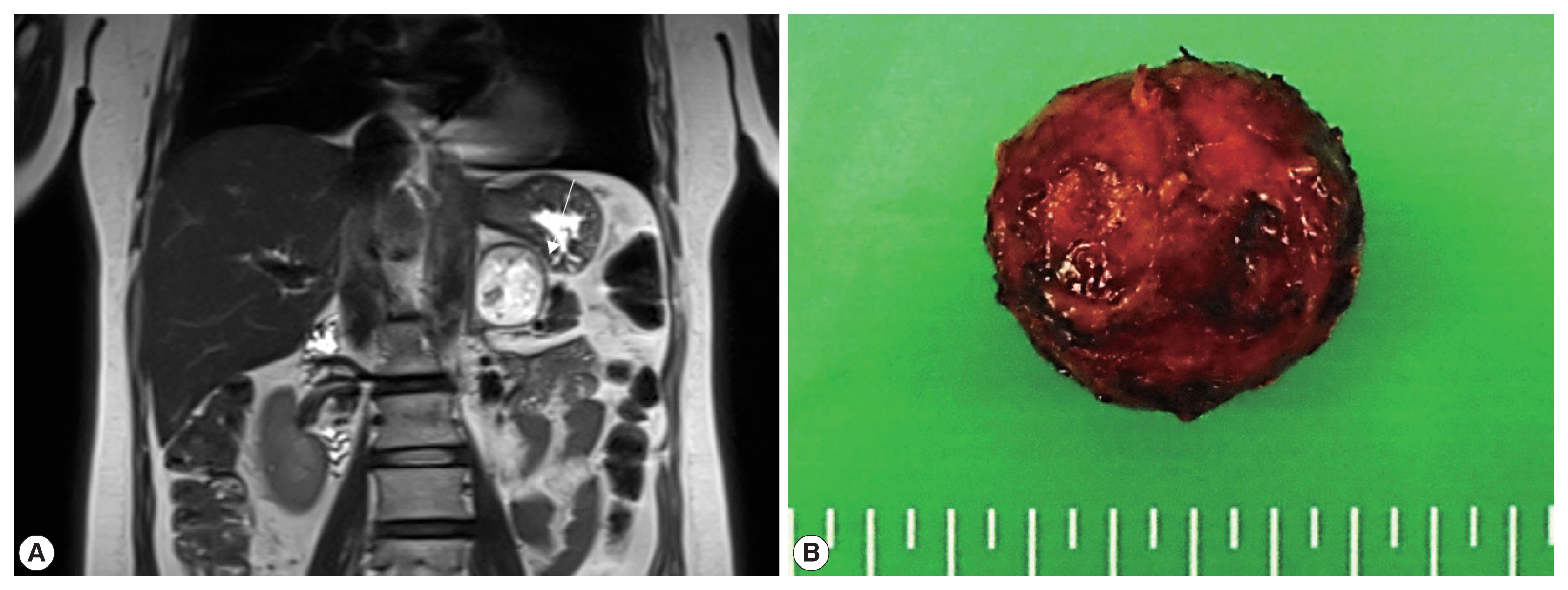
PDF - Hemangioblastoma (HB) is a rare benign tumor that most commonly occurs in the cerebellum. HB is composed of neoplastic stromal cells and abundant small vessels. However, the exact origin of stromal cells is controversial. Extraneural HBs have been reported in a small series, and peripheral HBs arising in the adrenal gland are extremely rare. Herein, we report a case of sporadic adrenal HB in a 54-year-old woman. The tumor was a well-circumscribed, yellow mass measuring 4.2 cm in diameter. Histologically, the tumor was composed of small blood vessels and vacuolated stromal cells with clear cytoplasm. On immunohistochemical stain, the stromal cells were positive for S-100 protein, neuron-specific enolase, and synaptophysin. The tumor did not reveal mutation of VHL alleles. We herein present a case of HB of the adrenal gland and review of the literature.
-
Citations
Citations to this article as recorded by
- Familial Von Hippel–Lindau Disease: A Case Series of Cerebral Hemangioblastomas with MRI, Histopathological, and Genetic Correlations
Claudiu Matei, Ioana Boeras, Dan Orga Dumitriu, Cosmin Mutu, Adriana Popescu, Mihai Gabriel Cucu, Alexandru Calotă-Dobrescu, Bogdan Fetica, Diter Atasie
Life.2025; 15(11): 1649. CrossRef
- Familial Von Hippel–Lindau Disease: A Case Series of Cerebral Hemangioblastomas with MRI, Histopathological, and Genetic Correlations
Original Article
- Clinicopathologic implication of PD-L1 gene alteration in primary adrenal diffuse large B cell lymphoma
- Ki Rim Lee, Jiwon Koh, Yoon Kyung Jeon, Hyun Jung Kwon, Jeong-Ok Lee, Jin Ho Paik
- J Pathol Transl Med. 2022;56(1):32-39. Published online November 16, 2021
- DOI: https://doi.org/10.4132/jptm.2021.10.05
- 5,973 View
- 170 Download
- 2 Web of Science
- 1 Crossref
-
Abstract
PDF
- Background
Primary adrenal (PA) diffuse large B cell lymphoma (DLBCL) was previously reported as an aggressive subset of DLBCL, but its genetic features were not sufficiently characterized. From our previous study of DLBCL with programmed death-ligand 1 (PD-L1) gene alterations, we focused on PD-L1 gene alterations in PA-DLBCL with clinicopathologic implications.
Methods
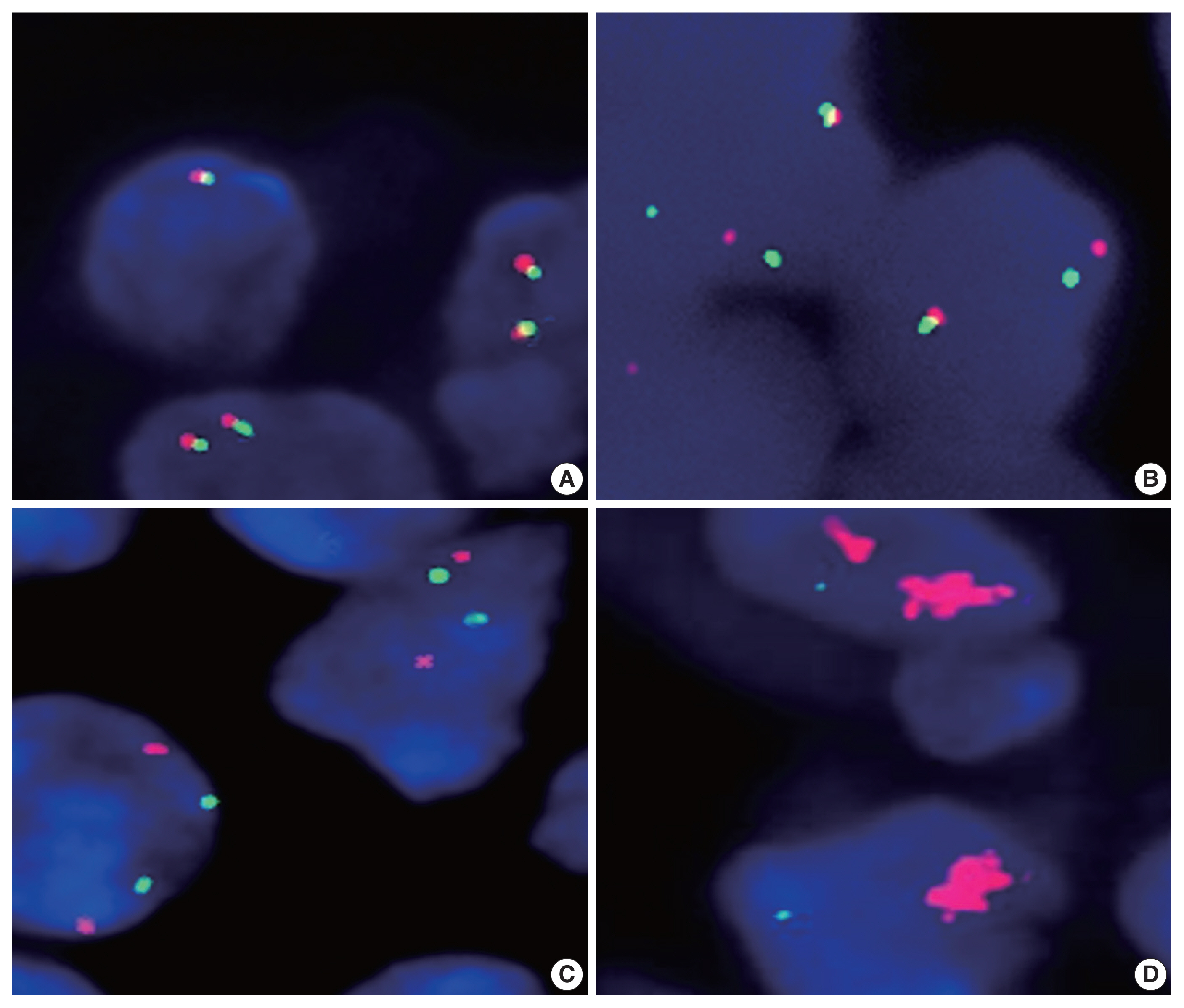
We performed fluorescence in situ hybridization for PD-L1 gene translocation and amplification in PA-DLBCL (n = 18) and comparatively analyzed clinicopathologic characteristics with systemic non-adrenal (NA)-DLBCL (n = 90).
Results
PA-DLBCL harbored distinctive features (vs. NADLBCL), including high international prognostic index score (3–5) (72% [13/18] vs. 38% [34/90], p = .007), poor Eastern Cooperative Oncology Group performance score (≥ 2) (47% [7/15] vs. 11% [10/90], p = .003), elevated serum lactate dehydrogenase (LDH) (78% [14/18] vs. 51% [44/87], p = .035) and MUM1 expression (87% [13/15] vs. 60% [54/90], p = .047). Moreover, PA-DLBCL showed frequent PD-L1 gene alterations (vs. NA-DLBCL) (39% [7/18] vs. 6% [5/86], p = .001), including translocation (22% [4/18] vs. 3% [3/87], p = .016) and amplification (17% [3/18] vs. 2% [2/87], p = .034). Within the PA-DLBCL group, PD-L1 gene–altered cases (vs. non-altered cases) tended to have B symptoms (p = .145) and elevated LDH (p = .119) but less frequent bulky disease (≥ 10 cm) (p = .119). In the survival analysis, PA-DLBCL had a poor prognosis for overall survival (OS) and progression-free survival (PFS) (vs. NA-DLBCL; p = .014 and p = .004). Within the PA-DLBCL group, PD-L1 translocation was associated with shorter OS and PFS (p < .001 and p = .012).
Conclusions
PA-DLBCL is a clinically aggressive and distinct subset of DLBCL with frequent PD-L1 gene alterations. PD-L1 gene translocation was associated with poor prognosis in PA-DLBCL. -
Citations
Citations to this article as recorded by- Case Report: Diagnostic value of spectral CT in primary adrenal lymphoma
Xiang Zhuang, Xi xi Jin, Li wen Feng, Hui Zhang
Frontiers in Oncology.2026;[Epub] CrossRef
- Case Report: Diagnostic value of spectral CT in primary adrenal lymphoma
Case Studies
- Adrenal Cortical Neoplasm with Uncertain Malignant Potential Arising in the Heterotopic Adrenal Cortex in the Liver of a Patient with Beckwith-Wiedemann Syndrome
- Eun Na Kim, Dong Eun Song, Hee Mang Yoon, Beom Hee Lee, Chong Jai Kim
- J Pathol Transl Med. 2019;53(2):129-135. Published online November 26, 2018
- DOI: https://doi.org/10.4132/jptm.2018.11.13
- 8,176 View
- 110 Download
- 5 Web of Science
- 5 Crossref
-
Abstract
PDF
- Patients with Beckwith-Wiedemann syndrome (BWS) are predisposed to developing embryonal tumors, with hepatoblastoma being the most common type. Our patient showed hemihypertrophy, macroglossia, and paternal uniparental disomy in chromosome 11 and was diagnosed with BWS. When the patient was 9 months old, a 2.5×1.5 cm oval hypoechoic exophytic mass was detected in the inferior tip of his right liver. Preoperative imaging identified it as hepatoblastoma; however, histologic, immunohistochemistry, and electron microscopic findings were compatible with adrenal cortical neoplasm with uncertain malignant potential. The origin of the adrenal tissue seemed to be heterotopic. Here, we describe for the first time an adrenal cortical neoplasm with uncertain malignant potential arising in the heterotopic adrenal cortex located in the liver of a patient with BWS.
-
Citations
Citations to this article as recorded by- Adrenocortical tumors and hereditary syndromes
Kanakamani Jeyaraman, Paola Concolino, Henrik Falhammar
Expert Review of Endocrinology & Metabolism.2025; 20(1): 1. CrossRef - Functional adrenocortical carcinoma with adrenohepatic fusion: A case report
Pastor Escárcega-Fujigaki, Guillermo Hernández-Peredo Rezk, José de Jesús Loeza- Oliva, Anallely Luna-Hernández, Bethsaida Natali Arreguín-Cortés, Rafael López-Cruz
Journal of Pediatric Surgery Case Reports.2024; 107: 102841. CrossRef - Molecular and Clinical Features of Adrenocortical Tumors in Beckwith–Wiedemann Spectrum
Diana Carli, Federico Rondot, Maria Luca, Anna Campello, Stefano Gabriele Vallero, Elisa Tirtei, Andrea Gazzin, Simona Cardaropoli, Francesca Montanari, Claudio Graziano, Paola Quarello, Abu Saadat, Angela Sparago, Giovanni Battista Ferrero, Franca Fagiol
Cancers.2024; 16(23): 3967. CrossRef - Beckwith–Wiedemann syndrome: Clinical, histopathological and molecular study of two Tunisian patients and review of literature
Hela Sassi, Yasmina Elaribi, Houweyda Jilani, Imen Rejeb, Syrine Hizem, Molka Sebai, Nadia Kasdallah, Habib Bouthour, Samia Hannachi, Jasmin Beygo, Ali Saad, Karin Buiting, Dorra H’mida Ben‐Brahim, Lamia BenJemaa
Molecular Genetics & Genomic Medicine.2021;[Epub] CrossRef - Adrenocortical Tumors in Children With Constitutive Chromosome 11p15 Paternal Uniparental Disomy: Implications for Diagnosis and Treatment
Emilia Modolo Pinto, Carlos Rodriguez-Galindo, Catherine G. Lam, Robert E. Ruiz, Gerard P. Zambetti, Raul C. Ribeiro
Frontiers in Endocrinology.2021;[Epub] CrossRef
- Adrenocortical tumors and hereditary syndromes
- An Intrarenal Adrenocortical Carcinoma Arising in an Adrenal Rest
- Ji Hee Lee, Young Deuk Choi, Nam Hoon Cho
- J Pathol Transl Med. 2018;52(6):416-419. Published online October 1, 2018
- DOI: https://doi.org/10.4132/jptm.2018.07.20
- 7,714 View
- 98 Download
- 3 Web of Science
- 4 Crossref
-
Abstract
PDF
- We describe a case of a 61-year-old Korean man who was diagnosed with renal cell carcinoma that was discovered on abdominopelvic computed tomography obtained after the patient complained of back pain. A radical nephrectomy was performed, and the surgical specimen showed a relatively well-circumscribed and yellowish lobulated hard mass. Microscopically, the tumor showed sheets and nests of hypercellular pleomorphic cells with thick fibrous septation, frequent mitoses, and areas of adrenal cortical-like tissue. Immunohistochemical staining revealed that the tumor cells were positive for inhibin-α, vimentin, synaptophysin, and melan A. It also revealed that the tumor cells were negative for pan-cytokeratin, epithelial membrane antigen, paired box 8, α-methylacyl-coenzyme A racemase, CD10, cytokeratin 7, carbonic anhydrase 9, c-Kit, renal cell carcinoma, transcription factor E3, human melanoma black 45, desmin, smooth muscle actin, S-100, chromogranin A, CD34, anaplastic lymphoma kinase, and integrase interactor 1. Based on these histopathological and immunohistochemical findings, we diagnosed the tumor as intrarenal adrenocortical carcinoma arising in an adrenal rest. Several cases of intrarenal adrenocortical carcinoma have been reported, although they are very rare. Due to its poor prognosis and common recurrence or metastasis, clinicians and pathologists must be aware of this entity.
-
Citations
Citations to this article as recorded by- Non-functional Adrenocortical Carcinoma in the Wall of the Small Bowel
Shu-Juan Lin, Yan Gao, Chun-Juan Sun
Current Medical Imaging Reviews.2023;[Epub] CrossRef - Ectopic adrenal tissue in the kidney: A systematic review
Davide De Marchi, Alessandro Tafuri, Guglielmo Mantica, Aliasger Shakir, Federico Scarfò, Giovanni Passaretti, Salvatore Smelzo, Silvia Proietti, Lorenzo Rigatti, Roberta Luciano, Alessandro Antonelli, Vincenzo Pagliarulo, Rosario Leonardi, Gu
Archivio Italiano di Urologia e Andrologia.2021; 93(4): 481. CrossRef - Extra-adrenal, non-functional adrenocortical carcinoma presenting with acute abdomen: a case report
Alireza Mirsharifi, Mohammad Vasei, Ehsan Sadeghian, Ali Ghorbani-Abdehgah, Sara Naybandi Atashi
Journal of Medical Case Reports.2020;[Epub] CrossRef - Testicular Adrenal Rest Tumors: Current Insights on Prevalence, Characteristics, Origin, and Treatment
Manon Engels, Paul N Span, Antonius E van Herwaarden, Fred C G J Sweep, Nike M M L Stikkelbroeck, Hedi L Claahsen-van der Grinten
Endocrine Reviews.2019; 40(4): 973. CrossRef
- Non-functional Adrenocortical Carcinoma in the Wall of the Small Bowel
Case Reports
- Mature Teratoma in the Adrenal Gland.
- Eun Jung Cha
- Korean J Pathol. 2011;45:S98-S100.
- DOI: https://doi.org/10.4132/KoreanJPathol.2011.45.S1.S98
- 3,953 View
- 50 Download
-
Abstract
PDF
- A teratoma is a germ-cell tumor composed of tissue components representing derivatives of three germ layers. A teratoma in the region of adrenal gland is a rare retroperitoneal tumor. We now report a case of a primary adrenal teratoma. A 38-year-old woman presented with an incidentally detected adrenal mass. The computed tomography scan revealed a 9x8x7.5 cm fat density mass with calcification in the left adrenal gland. The surgically resected tumor was round and well circumscribed and the adrenal gland was present at the periphery of the tumor. The cut surface contained fat tissue and a hair containing cyst. Microscopically, the tumor consisted of adipose tissue, hair, skin appendage, nerve, muscle bundle and bone.
- Composite Pheochromocytoma or Paraganglioma of Adrenal Gland: A Case Report with Immunohistochemical Studies and Electron Microscopic Examination.
- Hyeyoon Chang, Hoiseon Jeong, Younghye Kim, Sung Hye Park, Aeree Kim
- Korean J Pathol. 2011;45(3):306-310.
- DOI: https://doi.org/10.4132/KoreanJPathol.2011.45.3.306
- 4,981 View
- 39 Download
- 1 Crossref
-
Abstract
PDF
- Composite pheochromocytoma or paraganglioma of the adrenal gland is a well-recognized, yet extremely rare tumor with only one case reported in Korea. We report a case of incidentally found composite pheochromocytoma and ganglioneuroma of the adrenal gland in a 44-year-old female composed of intermingled components of pheochromocytom, ganglioneuroma, and cells with intermediate features. On immunohistochemical staining, the pheochromocytoma component was positive for synaptophysin and chromogranin, but negative for S-100 protein. Staining for the S-100 protein revealed sustentacular cells which formed a peripheral coat around the "Zellballen" and Schwann cells. The Fontana-Masson stain defined neuromelanin granules of ganglion cells and the ganglion cells expressed neural markers such as neurofilament proteins. Ultrastructural findings revealed pheochromocytes with a round or ovoid nucleus and occasionally prominent nucleolus containing numerous adrenaline and noradrenaline granules.
-
Citations
Citations to this article as recorded by- Bilateral pheochromocytoma with ganglioneuroma component associated with multiple neuroendocrine neoplasia type 2A: a case report
Boubacar Efared, Gabrielle Atsame-Ebang, Soufiane Tahirou, Khalid Mazaz, Nawal Hammas, Hinde El Fatemi, Laila Chbani
Journal of Medical Case Reports.2017;[Epub] CrossRef
- Bilateral pheochromocytoma with ganglioneuroma component associated with multiple neuroendocrine neoplasia type 2A: a case report
- Functional Adrenocortical Oncocytoma: A Case Report of Rare Neoplasm of Uncertain Malignant Potential.
- Jamshid Abdul-Ghafar, Keum Seok Bae, Kwang Hwa Park
- Korean J Pathol. 2011;45(2):212-216.
- DOI: https://doi.org/10.4132/KoreanJPathol.2011.45.2.212
- 3,927 View
- 26 Download
-
Abstract
PDF
- Adrenocortical oncocytoma is a rare adrenal neoplasm with only 25 cases having been reported in the English medical literature, of which only seven were functional tumors. Since these adrenal tumors are usually nonfunctional, they are mostly incidentally detected, and most of them are benign. Herein, we report on a rare case of a functional adrenocortical oncocytoma of an uncertain malignant potential and this tumor was located in the left adrenal gland in a 59-year-old woman who presented with hypertension. The tumor size was large with foci of necrosis in the cut surface and it exclusively had oncocytic histologic features.
- Jugulotympanic Paraganglioma, Mimicking a Vascular Tumor: A Brief Case Report.
- Ji Youn Sung, Chang Il Cha, Yong Koo Park
- Korean J Pathol. 2010;44(5):543-546.
- DOI: https://doi.org/10.4132/KoreanJPathol.2010.44.5.543
- 3,711 View
- 28 Download
-
Abstract
PDF
- Jugulotympanic paragangliomas (JTPs) known as glomus tumors, are neoplasms of variable invasiveness that arise from the paraganglia situated around the jugular bulb or middle ear. We now report a rare case of JTP in an 18-year-old male. Preoperative diagnoses through external auditory canal biopsy and radiologic examination both failed. Even using a frozen section, an informative finding was not obtained because mostly granulation tissue was present along with associated squeezing artifacts. On permanent histologic examination, small cell nests between many ectatic small vessels and fibrotic stroma were seen, and those cells were positive for CD56, synaptophysin and chromogranin. Because JTPs are rare and have rather different histologic findings - higher vascularity, smaller and less uniform tumor cells than other paragangliomas - they are easy to misdiagnose. However, remembering those differences may help the physician avoid missing JTPs.
- Malignant Peripheral Nerve Sheath Tumors of the Bilateral Adrenal Glands: Are They Metachronous Primary Tumors: A Case Report.
- Jae Hong Park, Seung Yeon Ha, Hyun Yee Cho
- Korean J Pathol. 2009;43(5):471-474.
- DOI: https://doi.org/10.4132/KoreanJPathol.2009.43.5.471
- 3,817 View
- 25 Download
- 2 Crossref
-
Abstract
PDF
- Malignant peripheral nerve sheath tumors (MPNSTs) have rarely been reported to occur in the adrenal gland and all of the reported cases were associated with neurofibromatosis, pheochromocytoma or ganglioneuroma. We present here a case of MPNST in the bilateral adrenal glands without any history of neurofibromatosis or combined tumor. Histologic examination showed the tumor cells had a spindle to ovoid shape, they were arranged in sweeping fascicles and there were frequent mitotic figures. The immunohistochemical and ultrastructural features of the tumor are also presented. To the best of our knowledge, this is the first report in the English medical literature about MPNSTs in the bilateral adrenal glands without any history of neurofibromatosis or combined tumor.
-
Citations
Citations to this article as recorded by- Malignant Peripheral Nerve Sheath Tumor of the Adrenal Gland
Raiz A. Misgar, Mohammad S. Baba, Mir I. Bashir, Arshad I. Wani
Indian Journal of Endocrinology and Metabolism.2022; 26(4): 395. CrossRef - Malignant peripheral nerve sheath tumor of adrenal gland with heterologus osseous differentiation in a case of Von Recklinghausen′s disease
Manas R. Baisakh, Nachiketa Mohapatra, Samiran D. Adhikary, Debasis Routray
Indian Journal of Pathology and Microbiology.2014; 57(1): 130. CrossRef
- Malignant Peripheral Nerve Sheath Tumor of the Adrenal Gland
- Adrenocortical Oncocytoma: A Case Report.
- Hun Soo Kim, Dae Young Kang
- Korean J Pathol. 2007;41(5):329-333.
- 2,099 View
- 18 Download
-
Abstract
PDF
- Adrenocortical oncocytomas have rarely been reported on in the medical literature, and most of them have been nonfunctional and benign. We report here on a case of a 43-year-old man with a left abdominal mass. The patient showed no signs of hypertension or hormonal imbalance. The abdominal CT scans showed a huge mass that measured 11 cm in diameter, and it was located at the left adrenal area. Grossly, the tumor was well encapsulated and homogenous with central necrosis. Microscopically, the tumor was composed of oncocytes with abundant granular cytoplasm. Immunohistochemically, these cells were diffusely positive for cytokeratin and focally positive for synaptophysin and NSE. The ultrastructural studies showed numerous mitochondria in the cytoplasm. We will discuss the criteria that indicates malignancy as presented by Weiss et al. and we summarize the difference between conventional and oncocytic adrenocortical neoplasm. This case showed some features of malignancy based on the criteria presented by Weiss et al.
- Congenital Neuroblastoma of the Adrenal with Metastasis to Liver, Contralateral Adrenal and Pituitary: Report of an autopsy case.
- Na Hye Myong, Sang Yong Song, Je G Chi
- Korean J Pathol. 1993;27(2):169-174.
- 2,429 View
- 22 Download
-
Abstract
PDF
- Neoplasms presenting at birth or within the first month of life are defined as congenital tumors. The principal components of this congenital tumors are neuroblastoma, leukemia, brain tumors and sarcomas. The neuroblastoma is the most common accounting for 15~50% of all tumors in this group. It most often presents with an abdominal mass due to adrenal-retroperitoneal primary or hepatomegaly resulting from extensive metastasis. Most often the primary site is adrenal but other loci include the retroperitoneum, mediastinum, pelvis, etc. This 2-day-old female presented with hepatomegaly and a left adrenal mass at birth, first detected by ultrasonography. On the first day, she suffered from hematemesis and bradycardia. She died on the second day. Postmortem examination revealed massive metastatic tumor nodules in the liver and a well-demarcated round mass, 4 cm, in the left adrenal, with necrosis and hemorrhage. Microscopic findings revealed largely undifferentiated neuroblastoma with focal neuronal differentiation and areas of necrosis and calcification in the background of fine fibrovascular stroma. Other metastatic foci were detected in the right adrenal and pituitary gland.
- Neuroendocrine Differentiation in Adrenal Cortical Tumor of Chidhood: A case report.
- Sang Yong Song, Seung Sook Lee, Na Hye Myung, Je G Chi
- Korean J Pathol. 1993;27(2):175-180.
- 1,969 View
- 14 Download
-
Abstract
PDF
- Although neuroendocrine differentiation is a characteristic feature of tumors of the adrenal medulla, cortical tumors may also rarely be differentiated into medullary element. Recently we experienced such a case of adrenal cortical tumor having features of both cortical and medullary tumor. The patient was an 11-year-old girl who was incidentally found to have a left adrenal mass. Laboratory results showed elevated serum cortisol, aldosterone, renin, and epinephrine with high excretion of urinary metanephrine. Urine vanillyl mandelic acid and 17-ketosteroid remained within normal limits. Histologic featuresof a 6 cm round yellowish tumor were ambiguous to decide the orgin of this neoplasm. Cortical element predominated in the tumor with minor areas of pheochromocytomatous feature. Immunohistochemically, the tumor cells were positive for vimentin, neuron specific enolase, and epithelial membrane antigen. Ultrastructural examination revealed scattered membrane bound dense core granules in the tumor cells of medullary differentiation, measuring 150~500 nm in average diameter. Cortical tumor element showed corresponding ultrastructural features. These results indicate that this is a case of adrenal cortical tumor with features of neuroendocrine differentiation.
- Adrenocortical Oncocytoma: A case report.
- Hee Joung Cha, Yeon Lim Suh, Jung Hyun Yang
- Korean J Pathol. 1999;33(6):463-466.
- 2,164 View
- 14 Download
-
Abstract
PDF
- Adrenal gland is a rare location for an oncocytic neoplasm. In English literature less than 10 cases of adrenocortical oncocytoma have been reported. We have experienced a case of adrenocortical oncocytoma in a 35-year-old man which was detected incidentally during the ultra-sonographic evaluation of the abdomen for a routine physical examination. This case did not demonstrate any clinical evidence of adrenocortical abnomalities, such as virilization or hypertension. Grossly, the tumor was light to dark tan on cut surface. Light-microscopic examination revealed tumor cells with abundant lipid- sparse eosinophilic cytoplasm and occasional pleomorphic nuclei. Mitotic figures were less than 5/50 HPFs. Tumor cells were positive for vimentin but negative for pancytokeratin, CAM 5.2, chromogranin and synaptophysin. Ultrastructural examination demonstrated abundant mitochondria containing occasional intramitochondrial dense bodies or inclusions.
- Schwannoma of the Adrenal Gland: A case report.
- Yong Chan Chun, Sun Hee Sung, Chan Il Park
- Korean J Pathol. 1993;27(4):424-426.
- 2,026 View
- 16 Download
-
Abstract
PDF
- Retroperitoneum is often the site of occurrence of schwannoma, but reports on schwanoma of the adrenal gland is exceptional and only 4 cases have been documented in the literature. This report is to add one such case occurred in a 53 year-old male who had anorexia, nausea and indigestion for one month. Whole body bone scan and abdominal CT scan revealed a 10 cm sized solid mass at upper pole of the left kidney. Under the impression of renal cell carcinoma, an operation was performed. The tumor was well encapsulated and appeared not to involve the kidney. The cut surfaces were light yellow and seemed to be composed of several hard lobules with areas of mucoid, cystic and calcific changes. No adrenal gland was identified grossly. But microscopically, the tumor was found to be partly surrounded by a small portion of adrenal cortical tissue. Histologically the tumor was a typical schwannoma with Verocay bodies, although modified in some extents by mucoid degeneration, cystic change, hyaline change and focal calcification. It is worthwhile to remember that the retroperitoneal schwannoma commonly had a huge size, sometimes involving the adjacent structures.
- Primary Leiomyosarcoma of Adrenal Gland: A Case Report.
- Heejeong Lee, Jinyoung Yoo, Seok Jin Kang, Byung Kee Kim
- Korean J Pathol. 2002;36(3):191-194.
- 2,371 View
- 21 Download
-
Abstract
PDF
- Primary mesenchymal neoplasm of the adrenal gland is very rare. Recently we experienced a case of leiomyosarcoma of the adrenal gland in a 47-year-old female patient. The resected adrenal gland showed a large lobulated mass, which replaced the entire gland. The cut surface was firm and whitish gray with foci that showed hemorrhage and necrosis. Histologically, the tumor was composed of intersecting fascicles of pleomorphic spindle cells with numerous giant cells and mitotic figures. Some of the tumor cells showed elongated nuclei. Immunohistochemical studies were strongly positive for vimentin and smooth muscle actin. Cytokeratin, desmin, alpha-1-antitrypsin and lysozyme were all negative. To the best of our knowledge, this is the first case reported in Korea.
Original Article
- Adrenal Pseudocyst as a Result of Longterm Intake of Steroid Hormone.
- Woo Sung Moon, So Yeong Oh, Myoung Jae Kang, Dong Geun Lee, Ho Yeul Choi, Sang Ho Kim
- Korean J Pathol. 1996;30(4):355-357.
- 2,116 View
- 15 Download
-
Abstract
PDF
- Adrenal pseudocysts are uncommon lesions which usually occur as a result of hemorrhage within the adrenal tissue. Adrenal hemorrhage is usually associated with severe stress, sepsis, pregnancy, syphilis, leukemia, or anticoagulant therapy but during steroid therapy, it is very rare. We report a case of adrenal pseudocyst that resulted from hemorrhage into the adrenal gland and is probably related to the exogenous administration of steroids. The patient was a 57-year-old woman who was treated with oradexon for 20 years for the treatment of a maculopapular lesion on her thigh as well as for arthritis. She underwent a right adrenalectomy due to the adrenal cystic mass. The wall of the cystic mass was composed of a thick layer of hyalinized fibrous tissue with remnants of adrenal cortical tissue on the outer aspect. The inner surface had no lining cells and the wall of the cyst contained many calcified plaques with hemosiderin pigment.
Case Reports
- Two Cases of Black Adenoma of the Adrenal Cortex Associated with Cushing's Syndrome.
- So Yeon Yu, Youn Wha Kim, Yong Koo Park, Ju Hie Lee, Moon Ho Yang
- Korean J Pathol. 1991;25(3):245-249.
- 2,182 View
- 24 Download
-
Abstract
PDF
- Black adenoma is known to be a rare variant of adrenal cortical adenoma containing characteristic abundant lipofuscin pigments in the cytoplasm. Almost all of them are nonfunctioning and only occasionally they are associated with Cushing's syndrome or primary hyperaldosteronism. We present two cases of black cortical adenoma of the adrenal gland associated with Cushing's syndrome in a 24-year-old woman and a 64-year-old man. This report dealt with clinical and pathologic presentation including ultrastructural identification of lipofuscin pigment.
- Percutaneous Fine Needle Aspiration Cytology of Adrenal Cortical Carcinoma: A Case Report.
- Myoung Ja Jeong, Ho Lee, Myoung Jae Kang, Dong Geun Lee, Ho Yeul Choi, Sang Ho Kim
- J Pathol Transl Med. 1995;6(1):58-61.
- 2,088 View
- 21 Download
-
Abstract
PDF
- Fine needle aspiration(FNA) biopsy has become the procedure of choice for initial diagnosis of adrenal masses. However, there have been relatively few reports discussing the FNA cytologic features of adrenal cortical carcinoma. Recently, we experienced a case of FNA cytology of bilateral adrenal cortical carcinoma in a 61-year old man. The smear revealed loosely cohesive pleomorphic tumor cells with hemorrhagic and necrotic background. The tumor cells showed oval to spindle hyperchromatic nuclei and prominent nucleoli with frequent mitotic figures. The cytoplasm of tumor cells was relatively abundant and sometimes vacuolated. These cytologic findings were interpreted as an adrenal cortical carcinoma, undifferentiated pattern.
- Adreno-Hepatic Fusion: A case report.
- Kyung Moo Yang, Young Nyun Park, Chan Il Park
- Korean J Pathol. 1998;32(5):385-387.
- 2,753 View
- 10 Download
-
Abstract
- Adreno-hepatic fusion is rare condition defined as adhesion of the liver and right adrenal cortex with close intermingling of the respective parenchyme. It is suggested to be an aging phenomenon, because its incidence is much higher in older age group. Clinically it may pose a problem of operability of the organ involved. We report a case of incidentally found adreno-hepatic fusion in a 49 year old female patient with adenocarcinoma of the sigmoid colon. The segementectomy of VIII segement of the liver was done due to a 6 4 cm sized metastatic nodule of adenocarcioma. Pathological examination of the liver revealed an ovoid shaped, 1 0.5 cm sized adrenal cortical tissue. It was subcapsularly located and about 1cm apart from the metastatic adenocarcinoma with an intervening normal hepatic tissue. The adrenal tissue was mainly composed of zona fasciculata without medullary tissue. In the interphase, the adrenal tissue and liver tissue were admixed closely and partially septated by thin fibrous tissue. There was no inflammatory response to the heterotropically located adrenal tissue and there was no symptom related to the adrenal gland.
- Endothelial Cyst of the Adrenal Gland: Report of a case.
- Sung Chul Lim, Mi Sook Lee, Yun Sin Kim, Keun Hong Kee, Yu Kyung Jeong, Mi Ja Lee, Soon Bong Chung
- Korean J Pathol. 1996;30(8):742-745.
- 2,763 View
- 62 Download
-
Abstract
PDF
- Adrenal cysts are rare lesion that usually present themselves as an incidental finding during surgery, or at the time of autopsy. The cysts are usually small, seldom exceeding 10cm in diameter, and are generally asymptomatic. However, they present a difficult problem in differentiation between benign and malignant lesions of the adrenal gland. In the differential diagnosis, other cystic lesions of the upper abdomen must also be considered, including hepatic, splenic, renal and pancreatic cysts. Herein we report a case of endothelial cyst of lymphangiomatous type of the adrenal gland which was detected in a 44-year-old male patient during a routine health examination by ultrasonography as a pancreatic pseudocyst. Gross examination revealed multiple separate but continuous cysts, measuring 10.6x8x7cm in dimension. Within the wall, compressed adrenal cortex was noted. Microscopically, fibrous wall containing hypertrophied smooth muscle lined by endothelial cells was also noted. We reviewed literatures of the adrenal cyst and report a case.
- Hemorrhagic Pseudocyst of the Adrenal Gland: A case report.
- Kyoung Mee Kim, Anhi Lee, Kyung Myung Sohn, Seung Man Park, Sang In Shim
- Korean J Pathol. 1998;32(7):543-545.
- 2,135 View
- 10 Download
-
Abstract
- Adrenal pseudocysts are rare benign cystic lesions resulting from a hemorrhage into a normal parenchyme of the adrenal gland. Although the frequency of adrenal cysts are increasing due to improved radiologic imaging techniques, only two cases have been reported in Korean literatures. A 63-year-old man was presented with a 10-year history of a mass in the right abdomen. Abdominal computed tomogram and a magnetic resonance image study showed a 9 cm sized well defined heterogeneous low attenuated mass in the right suprarenal area. Gross examination revealed an ovoid rubbery mass measuring 10 9 8 cm and weighing 355 gm. The content of this lesion was tan to deep brown, necrotic, and creamy with myxoid areas. Histologic examination revealed compressed, thin layers of adrenal cortex embedded in the fibrous tissue, and the cystic contents were eosinophilic fibrinoid materials with a few dilated cavernous vascular spaces lined by endothelial cells.
- Pediatric Adrenal Cortical Neoplasm with Histologic Malignancy: A Case Report with Review of Literature.
- So Hyung Park, Daeyeon Kim, Gyungyub Gong
- Korean J Pathol. 2006;40(5):370-372.
- 2,107 View
- 18 Download
-
Abstract
PDF
- Adrenal cortical neoplasm, especially carcinoma, is extremely rare in pediatric patients. We describe here a rare pediatric case of adrenal cortical neoplasm. A 2-year-old girl presented with an enlarged clitoris. The other physical findings and laboratory tests were nonspecific. The magnetic resonance imaging showed a 4 cm-sized heterogeneously enhancing soft tissue mass with calcification in the left adrenal gland. The mass was removed by laparoscopic operation. Grossly, several fragments of reddish tan soft tissue were present, and they weighed 19 gm in total. Microscopically, there were capsular invasion, diffuse/solid growth pattern with focal necrosis, high cellularity, cytoplasmic eosinophilia, marked nuclear pleomorphism, high N/C ratio, prominent nucleoli, atypical mitotic figures and calcifications, which all suggested adrenal cortical neoplasm of histologic malignancy. On immunohistochemistrical staining, there were positive reactivities to pancytokeratin, cytokeratin 7/20, CEA, inhibin and p53. The Ki-67 labeling index was about 6%. All these findings were indicative of adrenal cortical neoplasm of histologic malignancy.
- Adreno-Hepatic Fusion.
- So Yeong Oh, Woo Sung Moon, Ho Yeul Choi
- Korean J Pathol. 1998;32(12):1095-1097.
- 2,157 View
- 10 Download
-
Abstract
- We report a rare case of adreno-hepatic fusion in a 63-year-old man with a traumatic hepatic rupture. The adrenal tissue was located beneath the Glisson's capsule of the liver, and measured 3.5x2x0.3 cm. On histologic examination, the ectopic tissue was composed of both adrenal cortex and medulla surrounded by a delicate capsule of connective tissue.
 First
First Prev
Prev



