
 E-submission
Search
- Page Path
- HOME > Search
- BRCA-mutated gastric adenocarcinomas are associated with chromosomal instability and responsiveness to platinum-based chemotherapy
- Ji Hyun Oh, Chang Ohk Sung, Hyung-Don Kim, Sung-Min Chun, Jihun Kim
- J Pathol Transl Med. 2023;57(6):323-331. Published online November 14, 2023
- DOI: https://doi.org/10.4132/jptm.2023.10.22
- 8,842 View
- 275 Download
- 10 Web of Science
- 10 Crossref
-
 Abstract
 PDF
PDF Supplementary Material
 - Background
Homologous recombination defect is an important biomarker of chemotherapy in certain tumor types, and the presence of pathogenic or likely pathogenic mutations involving BRCA1 or BRCA2 (p-BRCA) mutations is the most well-established marker for the homologous recombination defect. Gastric cancer, one of the most prevalent tumor types in Asia, also harbors p-BRCA mutations.
Methods
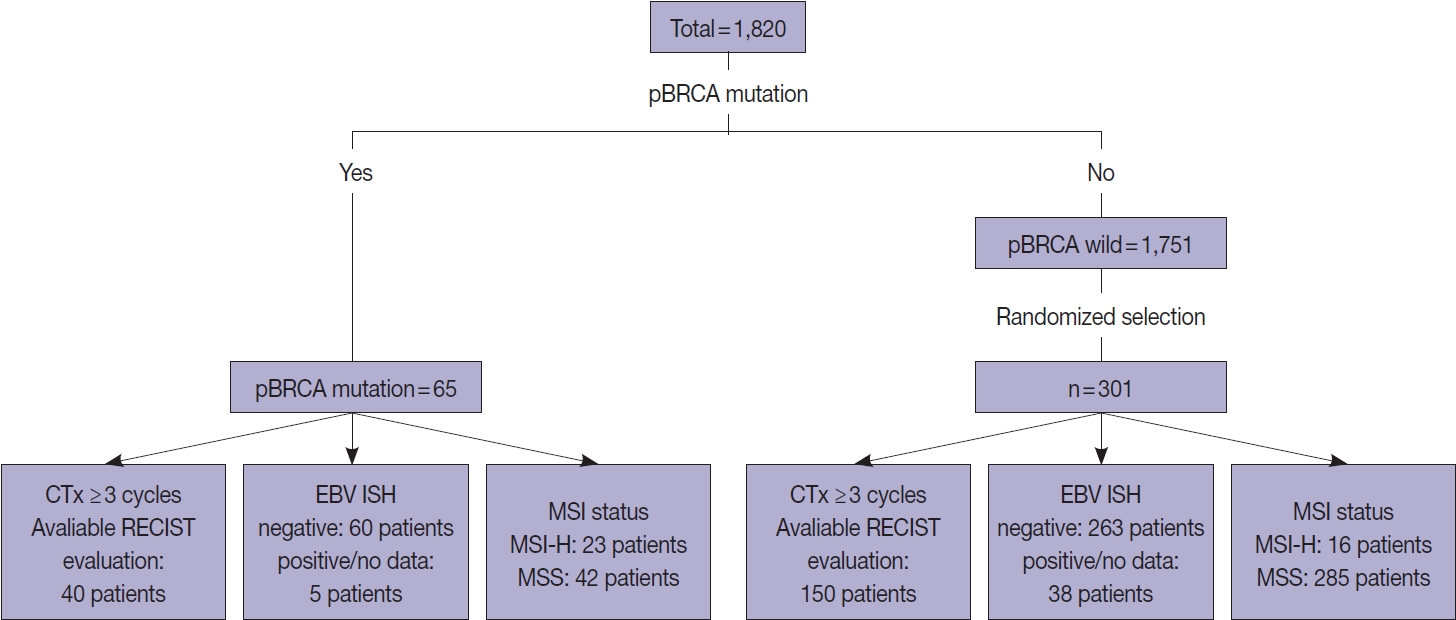
To investigate the clinical significance of p-BRCA mutations, we analyzed 366 gastric cancer cases through next-generation sequencing. We determined the zygosity of p-BRCA mutations based on the calculated tumor purity through variant allelic fraction patterns and investigated whether the presence of p-BRCA mutations is associated with platinum-based chemotherapy and a certain molecular subtype.
Results
Biallelic p-BRCA mutation was associated with better response to platinum-based chemotherapy than heterozygous p-BRCA mutation or wild type BRCA genes. The biallelic p-BRCA mutations was observed only in the chromosomal instability subtype, while all p-BRCA mutations were heterozygous in microsatellite instability subtype.
Conclusions
In conclusion, patients with gastric cancer harboring biallelic p-BRCA mutations were associated with a good initial response to platinum-based chemotherapy and those tumors were exclusively chromosomal instability subtype. Further investigation for potential association with homologous recombination defect is warranted. -
Citations
Citations to this article as recorded by
- Malignant Hepatocellular Neoplasm, Not Otherwise Specified, Displays Poorer Chemoresponsiveness and Postoperative Prognosis Than Hepatoblastoma
In Hye Song, Sujin Gang, Hee Mang Yoon, Pyeong Hwa Kim, Bokyung Ahn, Jihun Kim, Deok Hoon Kim, Jung-Man Namgoong, Kyung-Nam Koh
Cancer Research and Treatment.2026; 58(2): 642. CrossRef - BRCA1/2 Pathogenic Variants in a Turkish Cohort: Clinical Spectrum, Novel Truncating Variants, and Non-Canonical Cancers in the Aegean Region
Zehra Manav Yiğit, Nurdamla Sandal Filikci, Salih Burak Erarslan, Gökay Bozkurt, Evren Gumus
Clinical and Experimental Health Sciences.2026; 16(2): 316. CrossRef - Molecular profiling of pancreatic acinar cell carcinoma and amphicrine‐like carcinoma: high frequency of homologous recombination deficiency and molecular heterogeneity
Chankyung Kim, Hyun‐Nam Yun, Deokhoon Kim, Byung‐Kwan Jeong, Jinho Shin, Changhoon Yoo, Dongwook Oh, Kyu‐Pyo Kim, Tae Jun Song, Ki Byung Song, Seung Soo Lee, Song Cheol Kim, Seung‐Mo Hong
Histopathology.2026;[Epub] CrossRef - Artificial Intelligence in Gastric Cancer: Diagnostic, Prognostic, and Predictive Developments, Evidence Maturity, and Translational Challenges
Chong Chen, Weisong Xu, Tong Wu, Junpeng Zhao, Xuebing Xu, Mingbing Xiao, Kang Xu
Cancer Reports.2026;[Epub] CrossRef - BRCA1 Mutations and Their Consequences in Multiple Cancers: Molecular Insights and Emerging Therapeutic Strategies
Swaroop Kumar Pandey, Swarnima Paliwal, Braj Bhushan Mall
Current Cancer Therapy Reviews.2026; 22(5): 521. CrossRef - Risk prediction criteria for the primary hepatic perivascular epithelioid cell tumour family, including angiomyolipoma: analysis of 132 cases with a literature review
Youngeun Yoo, Jihun Kim, In Hye Song
Histopathology.2025; 86(6): 979. CrossRef - Presence of RB1 or Absence of LRP1B Mutation Predicts Poor Overall Survival in Patients with Gastric Neuroendocrine Carcinoma and Mixed Adenoneuroendocrine Carcinoma
In Hye Song, Bokyung Ahn, Young Soo Park, Deok Hoon Kim, Seung-Mo Hong
Cancer Research and Treatment.2025; 57(2): 492. CrossRef - Predictive value of homologous recombination-related gene mutations in survival outcomes of first-line nivolumab plus chemotherapy for gastric cancer
Yuna Lee, Hyung-Don Kim, Sun Young Lee, Hyungeun Lee, Jaewon Hyung, Meesun Moon, Jinho Shin, Young Soo Park, Tae Won Kim, Min-Hee Ryu
Gastric Cancer.2025; 28(6): 1158. CrossRef - Association of RAD51 expression with response to neoadjuvant treatment and prognosis in locally advanced gastric cancer
Serhat Sekmek, Serhat Ozan, Fahriye Tugba Kos, Hayriye Tatli Dogan, Mehmet Akif Parlar, Didem Sener Dede
Expert Review of Anticancer Therapy.2025; 25(12): 1433. CrossRef - Artificial intelligence algorithm for neoplastic cell percentage estimation and its application to copy number variation in urinary tract cancer
Jinahn Jeong, Deokhoon Kim, Yeon-Mi Ryu, Ja-Min Park, Sun Young Yoon, Bokyung Ahn, Gi Hwan Kim, Se Un Jeong, Hyun-Jung Sung, Yong Il Lee, Sang-Yeob Kim, Yong Mee Cho
Journal of Pathology and Translational Medicine.2024; 58(5): 229. CrossRef
- Malignant Hepatocellular Neoplasm, Not Otherwise Specified, Displays Poorer Chemoresponsiveness and Postoperative Prognosis Than Hepatoblastoma
- Rosette-forming epithelioid osteosarcoma in the rib: a rare case of location and morphology
- Sun-Ju Oh
- J Pathol Transl Med. 2021;55(6):406-409. Published online August 3, 2021
- DOI: https://doi.org/10.4132/jptm.2021.06.22
- 7,261 View
- 145 Download
- 2 Web of Science
- 3 Crossref
-
Abstract
PDF
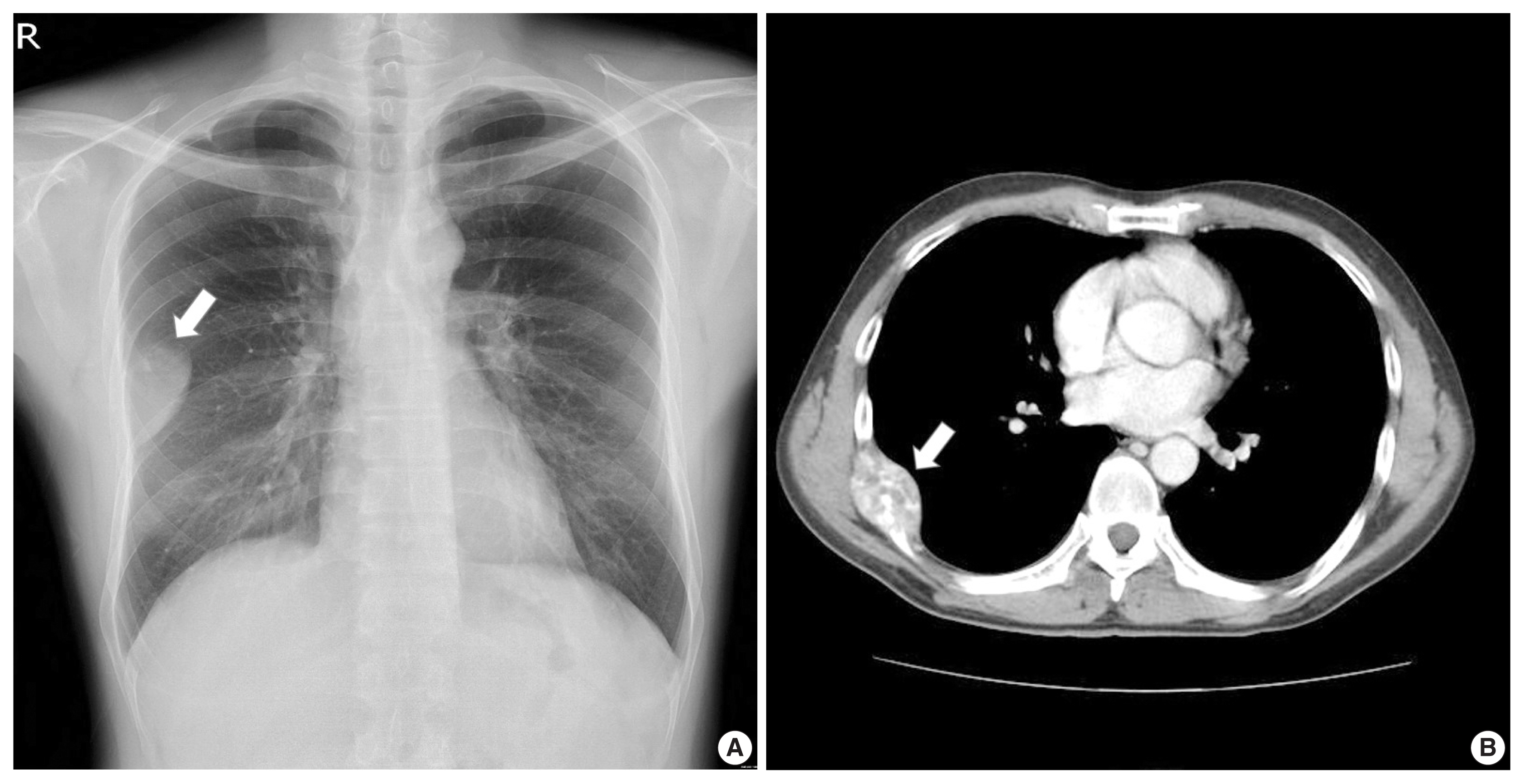
- The rib is an unusual location for osteosarcoma and is reported in only 2% of all cases. The major histological variants of osteosarcoma are osteoblastic, chondroblastic, and fibroblastic, with a few rare variants including one epithelioid type. This report describes a 44-year-old male with an osteolytic mass in the right seventh rib. Histological examination revealed osteosarcoma with unique features of epithelioid appearance and rosette structures. To the best of our knowledge, this is the first reported case of a rosette-forming osteosarcoma of the rib that showed epithelioid morphology. Despite successful surgery, the patient’s prognosis was poor because this malignancy had an unusual location within the axial skeleton and was a rare histological variant.
-
Citations
Citations to this article as recorded by- Cytohistologic Diagnosis of Rosette‐Forming Epithelioid Osteosarcoma
Brant G. Wang
Diagnostic Cytopathology.2026;[Epub] CrossRef - Large pleural effusion as atypical presentation of extraosseous osteosarcoma of the rib
Radwan Zeidan, Ricardo El Ward, Karam Karam, Zarouhie Bedoyan, George Juvelekian
Medical Reports.2026; 17: 100447. CrossRef - Clinicopathological correlations and prognostic insights in osteosarcoma: a retrospective analysis
Ştefan Adrian Niculescu, Alexandru Florian Grecu , Alex Emilian Stepan , Mădălina Iuliana Muşat , Aritina-Elvira Moroşanu , Tudor Adrian Bălşeanu , Michael Hadjiargyrou , Dan Cristian Grecu
Romanian Journal of Morphology and Embryology.2025; 65(4): 723. CrossRef
- Cytohistologic Diagnosis of Rosette‐Forming Epithelioid Osteosarcoma
- A case of cribriform carcinoma of the skin: a newly described rare condition
- Hyun Lee, Chong-Hyun Won, Chan-Sik Park
- J Pathol Transl Med. 2021;55(1):68-74. Published online December 3, 2020
- DOI: https://doi.org/10.4132/jptm.2020.10.05
- 8,487 View
- 161 Download
- 7 Web of Science
- 8 Crossref
-
Abstract
PDF
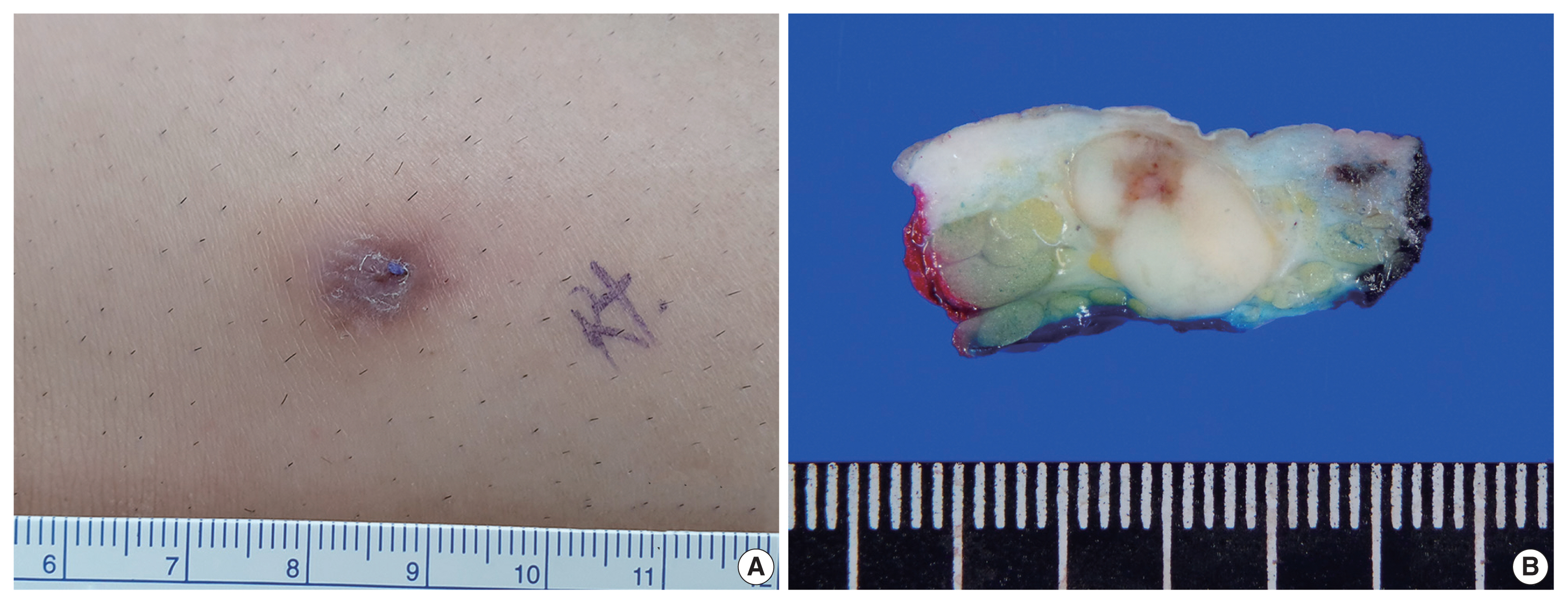
- Primary cribriform carcinoma of the skin is an indolent, rare, adnexal tumor. Although its malignant potential remains uncertain, no recurrence or metastasis has been reported. A 33-year-old man presented with a solitary, erythematous, subcutaneous nodule on the right knee. The clinical impression was epidermal cyst, and the resected tumor demonstrated a well-circumscribed mass in the dermis and subcutis. The tumor was composed of two regions: a solid component and a cribriform component. The solid component (90%) showed multiple solid nests of epithelial cells. Individual cells had large, oval-to-round, hyperchromatic, pleomorphic nuclei with a nuclear groove. The cribriform component (10%) showed similar neoplastic cells with many prominent lumina. Some lumina had an eosinophilic substance that exhibited a positive periodic acid-Schiff reaction. No recurrence or metastasis was observed within a followup period of eight months after excision. In conclusion, we report the first case of primary cribriform carcinoma of the skin in Korea.
-
Citations
Citations to this article as recorded by- Primary Cutaneous Apocrine Carcinoma With Locoregional Disease
Rishi Kumar, Maxim Devine, Christopher M. Angel, Vachara Niumsawatt, Angela Webb
Annals of Plastic Surgery.2026; 97(2): 218. CrossRef - Cribriform tumors of the skin: CD38 expression distinguishes from histologic mimics in a multi-institutional series
Taylor Kalomeris, Jeffrey M Cloutier, Shira Ronen, Cecilia Lezcano, Melissa P Pulitzer, Andrea P Moy, Joyce M Chen, Yanming Zhang, Carina A Dehner, Eric C Honaker, Alina Bridges, Cynthia M Magro, Klaus J Busam, Konstantinos Linos
Virchows Archiv.2026;[Epub] CrossRef - Primary cutaneous cribriform tumor: A case report and literature review
Doukou Jiang, Yongzhen Tian, Jiabin Tian, Hui Liu, Yang Guan
Journal of Cutaneous Pathology.2025; 52(1): 9. CrossRef - Primary cutaneous cribriform tumor in uncommon locations
Ting-Ting Cheng, Yu Yu
Dermatologica Sinica.2025; 43(4): 346. CrossRef - Primary Cutaneous Cribriform Apocrine Carcinoma: A Case Report and Narrative Review
Robyn Okereke, Anthony Linfante
BioMed.2025; 5(4): 26. CrossRef - Mohs micrographic surgery for the management of primary cutaneous cribriform carcinoma of the back
Min Jae Kim, Je‐Ho Mun
JDDG: Journal der Deutschen Dermatologischen Gesellschaft.2024; 22(4): 584. CrossRef - Mikrographische Chirurgie nach Mohs bei einem primär kutanen kribriformen Karzinom am Rücken
Min Jae Kim, Je‐Ho Mun
JDDG: Journal der Deutschen Dermatologischen Gesellschaft.2024; 22(4): 584. CrossRef - Rare skin appendage tumour on the right leg: a case of primary cutaneous cribriform carcinoma
Kashini Andrew, James M Carr, Claudia Roberts
BMJ Case Reports.2023; 16(5): e254781. CrossRef
- Primary Cutaneous Apocrine Carcinoma With Locoregional Disease
- Cytomorphological Findings and Histological Correlation of Low-Grade Cribriform Cystadenocarcinoma of Salivary Gland in Fine-Needle Aspiration: A Case Study
- Young Sin Ko, Ja Seung Koo
- Korean J Pathol. 2013;47(6):592-595. Published online December 24, 2013
- DOI: https://doi.org/10.4132/KoreanJPathol.2013.47.6.592
- 10,609 View
- 71 Download
- 13 Crossref
-
Abstract
PDF
Low-grade cribriform cystadenocarcinoma (LGCCC) of the salivary gland is a rare tumor. We report the cytologic features and histologic correlation of a patient with LGCCC. A 57-year-old man had a hardly palpable, nontender mass in the right cheek area followed over nine months. Radiologic analysis revealed a 1.2 cm multiseptated, cystic, solid nodule in an anterior superficial lobe of the right parotid gland. Fine-needle aspiration cytology revealed many irregular overlapping sheets or clusters of ductal epithelial cells forming solid, pseudopapillary, and cribriform architectures. Nuclei of the tumor cells revealed inconspicuous atypia with minimal size variation. On the basis of these findings, we confirmed a diagnosis of ductal epithelial proliferative lesion, favoring neoplasm, with uncertain malignant potential. Tumor excision was performed, revealing a tiny multicystic nodule (0.7 cm). Histopathologically, this tumor showed the characteristic morphology of LGCCC. This is the first report of cytomorphological findings of LGCCC in Korea.
-
Citations
Citations to this article as recorded by- Duct tales of a parotid gland swelling
Swati Raj, Monika Singh, Mamta Gupta, Naveen Thapliyal
Cytojournal.2023; 20: 22. CrossRef - Salivary Gland Intraductal Carcinoma: How Do 183 Reported Cases Fit Into a Developing Classification
Lester D.R. Thompson, Justin A. Bishop
Advances in Anatomic Pathology.2023; 30(2): 112. CrossRef - Intraductal carcinoma of the parotid gland
Yukiya HIRATA, Kayoko HIGUCHI, Toshitaka NAGAO, Yoko ZUKERAN, Takao KINJO, Naoki WADA
The Journal of the Japanese Society of Clinical Cytology.2022; 61(6): 431. CrossRef - Intraductal carcinomas of the salivary glands: systematic review and classification of 93 published cases
Andrea Palicelli
APMIS.2020; 128(3): 191. CrossRef - What do we know about the cytological features of pure intraductal carcinomas of the salivary glands?
Andrea Palicelli
Cytopathology.2020; 31(3): 185. CrossRef - Diagnosing Recently Defined and Uncommon Salivary Gland Lesions in Limited Cellularity Specimens: Cytomorphology and Ancillary Studies
Esther Diana Rossi, Zubair Baloch, William Faquin, Liron Pantanowitz
AJSP: Reviews and Reports.2020; 25(5): 210. CrossRef - Low-grade intraductal carcinoma of salivary glands: A systematic review of this rare entity
Francesco Giovacchini, Caterina Bensi, Stefano Belli, Maria Elena Laurenti, Martina Mandarano, Daniele Paradiso, Michele Giansanti, Antonio Tullio
Journal of Oral Biology and Craniofacial Research.2019; 9(1): 96. CrossRef - The rare entity of cystadenocarcinoma (CAC) in parotid gland: A single-center experience
Bing Guo, Yu-an Cao, Xingjun Qin, Chunyue Ma
Journal of Cranio-Maxillofacial Surgery.2019; 47(5): 826. CrossRef - Cytopathology approach to rare salivary gland lesions with oncocytic features
Siba El Hussein, Samer N. Khader
Diagnostic Cytopathology.2019; 47(10): 1090. CrossRef - Unicystic high‐grade intraductal carcinoma of the parotid gland: cytological and histological description with clinic–pathologic review of the literature
Andrea Palicelli, Paola Barbieri, Narciso Mariani, Paola Re, Stefania Galla, Raffaele Sorrentino, Francesca Locatelli, Nunzio Salfi, Guido Valente
APMIS.2018; 126(9): 771. CrossRef - Low-grade cribriform cystadenocarcinoma arising from a minor salivary gland: a case report
Masashi Kimura, Shinji Mii, Shinichi Sugimoto, Kosuke Saida, Shojiroh Morinaga, Masahiro Umemura
Journal of Oral Science.2016; 58(1): 145. CrossRef - A Case of Cystadenocarcinoma Arising from Parotid Gland
Jong Chul Hong, Tae Kyoung Koh, Min Gyoung Pak, Heon Soo Park
Korean Journal of Otorhinolaryngology-Head and Neck Surgery.2016; 59(4): 300. CrossRef - Mammary analogue secretory carcinoma of parotid gland
Atsuko NASU, Sakae HATA, Masaru FUJITA, Toyoko YAMAUCHI, Satoko NAKAMURA, Takehiro TANAKA, Kouichi ICHIMURA, Hiroyuki YANAI
The Journal of the Japanese Society of Clinical Cytology.2016; 55(2): 112. CrossRef
- Duct tales of a parotid gland swelling
- Fine-Needle Aspiration Cytology of Low-Grade Cribriform Cystadenocarcinoma with Many Psammoma Bodies of the Salivary Gland
- Ji Yun Jeong, Dongbin Ahn, Ji Young Park
- Korean J Pathol. 2013;47(5):481-485. Published online October 25, 2013
- DOI: https://doi.org/10.4132/KoreanJPathol.2013.47.5.481
- 9,946 View
- 50 Download
- 12 Crossref
-
Abstract
PDF
Low-grade cribriform cystadenocarcinoma (LGCCC) is a rare salivary gland tumor that was recently defined as a variant of cystadenocarcinoma by the 2005 World Health Orgazniation (WHO) classification system. We report cytologic findings of an unusual case of LGCCC with many psammoma bodies. A 90-year-old man presented a palpable mass on his left parotid gland. Fine-needle aspiration (FNA) cytology showed tumor cells that were arranged in clusters and dispersed individually. The tumor cells showed mild atypia and had clear or dense cytoplasm with some vacuoles. Numerous psammoma bodies were noted. After surgical resection, the histologic examination revealed a mixed solid and cystic mass showing intraductal growth with focal stromal invasion. The S-100 protein expressed in the tumor cells, but smooth muscle actin and p63 were positive only in myoepithelial cells. Although LGCCCs resemble other salivary gland tumors, differentiating LGCCC during preoperative FNA is important to avoid unnecessary overtreatment.
-
Citations
Citations to this article as recorded by- Salivary Gland Intraductal Carcinoma: How Do 183 Reported Cases Fit Into a Developing Classification
Lester D.R. Thompson, Justin A. Bishop
Advances in Anatomic Pathology.2023; 30(2): 112. CrossRef - Duct tales of a parotid gland swelling
Swati Raj, Monika Singh, Mamta Gupta, Naveen Thapliyal
Cytojournal.2023; 20: 22. CrossRef - Intraductal carcinoma of the parotid gland
Yukiya HIRATA, Kayoko HIGUCHI, Toshitaka NAGAO, Yoko ZUKERAN, Takao KINJO, Naoki WADA
The Journal of the Japanese Society of Clinical Cytology.2022; 61(6): 431. CrossRef - Intraductal carcinoma of the retromolar trigone found with elevated serum CEA and CA19-9 levels: a case report
Mao KAWAKAMI, Nobuhiro UEDA, Yuka TAKAHASHI, Sho ARIKAWA, Nobuhiro YAMAKAWA, Tadaaki KIRITA
Japanese Journal of Oral and Maxillofacial Surgery.2021; 67(5): 292. CrossRef - Endoscopic trans‐pterygoid resection of a low‐grade cribriform cystadenocarcinoma of the infratemporal fossa
Vikram G. Ramjee, Landon J. Massoth, John P. Richards, Kibwei A. McKinney
World Journal of Otorhinolaryngology - Head and Neck Surgery.2020; 6(2): 115. CrossRef - Psammoma Bodies in a Large Myoepithelioma
Marcela Pessoa de Melo, Diego Filipe Bezerra Silva, Rodrigo Alves Ribeiro, Tony Santos Peixoto, Daliana Queiroga de Castro Gomes, Pollianna Muniz Alves, Cassiano Francisco Weege Nonaka, Bárbara Vanessa de Brito Monteiro
Journal of Craniofacial Surgery.2020; 31(4): e326. CrossRef - Low-grade intraductal carcinoma of salivary glands: A systematic review of this rare entity
Francesco Giovacchini, Caterina Bensi, Stefano Belli, Maria Elena Laurenti, Martina Mandarano, Daniele Paradiso, Michele Giansanti, Antonio Tullio
Journal of Oral Biology and Craniofacial Research.2019; 9(1): 96. CrossRef - What is your diagnosis? Submandibular mass in a dog
Julie Allen, Ashley M. Talley, Carol B. Grindem, Jennifer A. Neel
Veterinary Clinical Pathology.2018; 47(4): 676. CrossRef - Primary acinic cell carcinoma of the lung with psammoma bodies: A case report and review of literature
Xiu-Peng Zhang, Gui-Yang Jiang, Qing-Fu Zhang, Hong-Tao Xu, Qing-Chang Li, En-Hua Wang
Pathology - Research and Practice.2017; 213(4): 405. CrossRef - Cytology of low‐grade cribriform cystadenocarcinoma in salivary glands: Cytological and immunohistochemical distinctions from other salivary gland neoplasms
Yoshiki Ohta, Yuko Hirota, Yohko Kohno, Koji Kishimoto, Tomoko Norose, Nobuyuki Ohike, Masafumi Takimoto, Akira Shiokawa, Hidekazu Ota
Diagnostic Cytopathology.2016; 44(3): 241. CrossRef - Low-grade cribriform cystadenocarcinoma arising from a minor salivary gland: a case report
Masashi Kimura, Shinji Mii, Shinichi Sugimoto, Kosuke Saida, Shojiroh Morinaga, Masahiro Umemura
Journal of Oral Science.2016; 58(1): 145. CrossRef - A Case of Cystadenocarcinoma Arising from Parotid Gland
Jong Chul Hong, Tae Kyoung Koh, Min Gyoung Pak, Heon Soo Park
Korean Journal of Otorhinolaryngology-Head and Neck Surgery.2016; 59(4): 300. CrossRef
- Salivary Gland Intraductal Carcinoma: How Do 183 Reported Cases Fit Into a Developing Classification
- Congenital Peribronchial Myofibroblastic Tumor: A Case Study and Literature Review
- Yuil Kim, Ha Young Park, Junhun Cho, Joungho Han, Eun Yoon Cho
- Korean J Pathol. 2013;47(2):172-176. Published online April 24, 2013
- DOI: https://doi.org/10.4132/KoreanJPathol.2013.47.2.172
- 11,251 View
- 63 Download
- 10 Crossref
-
Abstract
PDF
Congenital peribronchial myofibroblastic tumor (CPMT) is a benign pulmonary spindle cell neoplasm of intrauterine and perinatal period, which is thought to arise from primitive peribronchial mesenchyme. We present a case detected incidentally in a one-month-old infant. The solid and partially necrotic tumor involved the right middle and lower lobes of the lung with extension to the diaphragm. Histologically, the tumor was composed of fasciculated monotonous spindle cells, proliferating peribronchiolar cartilage and round cells with rich vasculature, and high mitotic activity was identified in the round cell area. Immunohistochemical and electron microscopic studies showed that the spindle cells were myofibroblastic in phenotype. Although the tumor showed several malignant pathological features, recurrence was not observed in the two-year follow-up period, consistent with the benign clinical behavior of CPMT.
-
Citations
Citations to this article as recorded by- Congenital Peribronchial Myofibroblastic Tumor: Clinical Features, Pathology, and Surgical Considerations
Kavya Rajesh, Drew Bolster, Mariam Naqvi, Sonya Fabricant, Raghavendra Pillappa, Andrew Brownlee, Carlos Pelayo, Eugene Kim, David Bliss, Eveline Shue
Pediatric Blood & Cancer.2026;[Epub] CrossRef - Congenital Peribronchial Myofibroblastic Tumors Harbor a Recurrent EGFR Kinase Domain Duplication
Sheren Younes, Carlos J. Suarez, Jennifer Pogoriler, Tricia Bhatti, Archana Shenoy, Raya Saab, Lea F. Surrey, Serena Y. Tan
Modern Pathology.2025; 38(2): 100661. CrossRef - EGFR‐KDD Myofibroblastic Neoplasm or Congenital Peribronchial Myofibroblastic Tumor (CPMT)? Report of a Congenital Myofibroblastic Neoplasm With Unusual Histologic Features
Emma Rullo, Sabina Barresi, Sabrina Rossi, Sara Patrizi, Evelina Miele, Marta Barisella, Michela Casanova, Andrea Ferrari, Stefano Chiaravalli, Gloria Pelizzo, Rita Alaggio
Genes, Chromosomes and Cancer.2025;[Epub] CrossRef - Congenital peribronchial myofibroblastic tumor (CPMT): a case report with long term follow-up and next-generation sequencing (NGS)
Ping Zhou, Shuang Li, Weiya Wang, Yuan Tang, Lili Jiang
BMC Pediatrics.2023;[Epub] CrossRef - Neonatal congenital lung tumors — the importance of mid-second-trimester ultrasound as a diagnostic clue
Stephan L. Waelti, Laurent Garel, Dorothée Dal Soglio, Françoise Rypens, Michael Messerli, Josée Dubois
Pediatric Radiology.2017; 47(13): 1766. CrossRef - Congenital peribronchial myofibroblastic tumor: Case report and review of literature
Jolanta Jedrzkiewicz, Eric Scaife, Bo Hong, Sarah South, Mouied Alashari
Journal of Pediatric Surgery Case Reports.2015; 3(4): 154. CrossRef - Perinatal Thoracic Mass Lesions: Pre- and Postnatal Imaging
Evan J. Zucker, Monica Epelman, Beverley Newman
Seminars in Ultrasound, CT and MRI.2015; 36(6): 501. CrossRef - Prenatal imaging and immunohistochemical analysis of congenital peribronchial myofibroblastic tumor
Y.‐A. Tu, W.‐C. Lin, H.‐J. Chen, J.‐C. Shih
Ultrasound in Obstetrics & Gynecology.2015; 46(2): 247. CrossRef - A Congenital Peribronchial Myofibroblastic Tumor Detected in a Premature Infant at 28 Weeks but That Resolved in the Late Stage of Pregnancy
Bo Xia, Gang Yu, Chun Hong, Lei Zhang, Jing Tang, Cuifen Liu
Medicine.2015; 94(42): e1842. CrossRef - Congenital peribronchial myofibroblastic tumor
Yuka Hotokebuchi, Kenichi Kohashi, Satoshi Toyoshima, Naoko Matsumoto, Toshinori Nakashima, Yoshinao Oda
Pathology International.2014; 64(4): 189. CrossRef
- Congenital Peribronchial Myofibroblastic Tumor: Clinical Features, Pathology, and Surgical Considerations
- Invasive Cribriform Carcinoma Arising in Malignant Phyllodes Tumor of Breast: A Case Report
- Yoomi Choi, Kyoung Yul Lee, Min Hye Jang, Hyesil Seol, Sung-Won Kim, So Yeon Park
- Korean J Pathol. 2012;46(2):205-209. Published online April 25, 2012
- DOI: https://doi.org/10.4132/KoreanJPathol.2012.46.2.205
- 10,798 View
- 60 Download
- 6 Crossref
-
Abstract
PDF
Phyllodes tumor is an uncommon fibroepithelial neoplasm of the breast. And it is characterized by expanded stroma with increased cellularity and elongated epithelium-lined clefts. Mammary carcinomas within phyllodes tumors have been rarely reported. To date, however, no reports have described the invasive cribriform carcinoma arising in malignant phyllodes tumor. Here, we report a 62-year-old woman who presented with a large breast mass. Microscopically, the mass was a typical malignant phyllodes tumor showing well developed leaf-like architecture and stromal overgrowth with high cellularity and nuclear pleomorphism. In a portion of the tumor, however, the epithelial component showed a cribriform pattern of proliferation in the absence of myoepithelial cells, suggestive of the invasive cribriform carcinoma. To our knowledge, this is rare and it is difficult to make a differential diagnosis of it. Here, we report our case with a review of literatures.
-
Citations
Citations to this article as recorded by- Management of Concurrent Malignant Phyllodes Tumor and Invasive Breast Carcinoma
Jie Jane Chen, Iowis Zhu, Akshat Patel, Gregor Krings, Yunn-Yi Chen, Florence Yuen, Rita A. Mukhtar, Michelle Melisko, Lisa Singer, Catherine C. Park, Nicolas D. Prionas
Advances in Radiation Oncology.2024; 9(5): 101448. CrossRef - High-grade ductal carcinoma in-situ detected by microcalcification within borderline phyllodes tumor: Report of a case and literature review
Wing Nam Yuen, Joshua J.X. Li, Man Yi Chan, Gary M. Tse
Human Pathology Reports.2023; 31: 300697. CrossRef - Cribriform carcinoma arising in a benign phyllodes tumor
Elia Shazniza Shaaya, Nurwahyuna Rosli, Nurismah M D Isa
Journal of Research in Medical Sciences.2023;[Epub] CrossRef - Unexpectedly High Coexistence Rate of In Situ/Invasive Carcinoma In Phyllodes Tumors. 10-Year Retrospective and Review Study
Öykü Dila Gemci, Serdar Altınay, Rümeysa İlbar Tartar, Sina Ferahman
European Journal of Breast Health.2022; 18(4): 343. CrossRef - A Case of Phyllodes Tumor Combined with Lobular Carcinoma of the Breast with Microinvasion
Daiki IMANISHI, Satoru NODA, Tsutomu TAKASHIMA, Yukie TAUCHI, Shinya NOMURA, Hiroshi OHTANI, Noriko SAKAIDA
Nihon Rinsho Geka Gakkai Zasshi (Journal of Japan Surgical Association).2022; 83(12): 2049. CrossRef - Invasive ductal carcinoma within borderline phyllodes tumor with lymph node metastases: A case report and review of the literature
DI WU, HAIPENG ZHANG, LIANG GUO, XU YAN, ZHIMIN FAN
Oncology Letters.2016; 11(4): 2502. CrossRef
- Management of Concurrent Malignant Phyllodes Tumor and Invasive Breast Carcinoma
- The Effect of Antibody and Gene Therapy for Transforming Growth Factor- 1 on Scar Formation.
- Jun Hyung Kim, Ki Hwan Han, Jong Duck Ahn, In Kyu Lee, Eun Joo Kim, Mee Yul Hwang, Kwan Kyu Park
- Korean J Pathol. 2001;35(5):424-432.
- 2,264 View
- 13 Download
-
Abstract
PDF
- BACKGROUND
Transforming growth factor (TGF)- has a large variety of biological functions, including the modulation of inflammation and the immune system, and is presumed to play important roles in repairing wounds and reducing scarring. The objective of this study is to examine the effects of TGF-1 on healing wounds and reducing scarring. We have also analysed the ability of the hemagglutinating virus of Japan (HVJ) liposome mediated antisense oligodeoxynucleotides (ODNs) to specifically inhibit wound-induced expressions of TGF-1 proteins and mRNA in the rat skin.
METHODS
Skin wounds were created on the backs of 80 anesthetized rats. The first group of wounds, as the controls, was unmanipulated. The second group of wounds, as positive controls or an excessive scarring model, was injected with TGF-1 subcutaneously. The third group of wounds was injected with anti-TGF-1 antibody subcutaneously. The fourth group of wounds was injected with HVJ liposome mediated antisense ODNs for TGF-1 subcutaneously. The wounds of all groups were bisected and analysed histologically 5, 10, 15, 30, and 50 days after the wounds were made.
RESULTS
All control wounds (TGF-1 or no injection) healed with scarring, whereas the wounds treated with the antibody or antisense ODNs healed with less scar formation compared to the control group. The wounds treated with the antibody or antisense ODNs had fewer macrophages, less collagen and fibronectin contents than the other wounds. Northern blotting and in situ hybridization analysis showed that wound sites treated with HVJ liposome mediated antisense ODNs for TGF-1 exhibited decreased levels of TGF-1 mRNA after injury.
CONCLUSIONS
These findings suggest an important new approach to controlling scarring in normal wound healing, complementing the practice of adding exogenous growth factors to chronic wounds in the attempt to inhibit collagen deposition.
- Cribriform-Morular Variant of Papillary Thyroid Carcinoma: A Report of Two Cases.
- Young Ran Shim, Young Kyung Bae, Joon Hyuk Choi, Mi Jin Kim, Won Hee Choi
- Korean J Pathol. 2005;39(1):48-53.
- 2,772 View
- 27 Download
-
Abstract
PDF
- Cribriform-morular variant of papillary thyroid carcinoma is an unusual and peculiar subtype of papillary thyroid carcinomas. It occurs both sporadically and in association with familial adenomatous polyposis. We report here on two cases of cribriform-morular variant of papillary thyroid carcinoma in a 33-year-old woman and in a 21-year-old woman. On gross examination, both cases were multicentric. The first case showed two well-encapsulated yellow solid masses in the right (2.0 cm) and the left lobes of the thyroid gland (0.5 cm). The second case showed four well-encapsulated gray-white solid lobulating masses and nodules in the right (4.5 and 1.2 cm) and the left lobes (1.1 and 0.8 cm) of the thyroid gland. Microscopically, both cases exhibited an intricate blending of papillary, cribriform, trabecular, spindle, and solid patterns of growth with morular areas. Typical nuclear features of papillary carcinomas were focally seen. Immunohistochemically, the tumor cells were positive for thyroglobulin, thyroid transcription factor-1 (TTF-1), and beta-catenin, but were negative for calcitonin.
- Manganese Intoxication in the Rat A neuropathologic study and distribution of manganese in rat brain.
- Tae Jung Jang, Jung Ran Kim, Jong Im Lee, Dong Hoon Kim, Ki Kwon Kim, Ji Yong Kim, Hae Kwan Cheong, Hyun Sul Lim
- Korean J Pathol. 1999;33(9):662-674.
- 2,430 View
- 19 Download
-
Abstract
PDF
- We investigated a topographical distribution of managanese, and immunohistochemical density of tyrosine hydroxylase (TH), and histopathologic findings in globus pallidus and substantia nigra according to manganese dose and time course in the brain of rats which received MnCl2 intravenously. Topographical distribution of manganese was also investigated after injection of FeCl2. The manganese concentrations of brain in control and experimental group were highest in pituitary gland and thalamus, and lowest in the cerebral cortex. The manganese concentration of blood was increased proportionally to the dose administered, and the biological half-life of blood manganese was between 21 and 42 days. The manganese concentrations of brain were increased proportionally to the dose, and increase rate was highest in olfactory bulb, and the biological half-lives of brain manganese ranged from 42 days to 90 or more days; the longest were observed in pituitary gland, medulla oblongata and cerebral cortex. In case of administration of FeCl2, the manganese concentrations of brain were higher than that of control group in dose of 2.5 mg/kg, and decreased proportionally to the administered dose, resulting in lower level compared with control group in high dose of FeCl2 administered. Significantly decreased number of nerve cell and increased gliosis in globus pallidus were observed in experimental group, which were closely correlated with the duration after manganese injection, but no significant change of number of nerve cell expressing TH and gliosis were observed in substantia nigra. Density of immunohistochemical reaction for TH in globus pallidus made little difference between control and experimental group. These results suggest that pathology of manganese intoxication is caused by the loss of nerve cells in globus pallidus, and closely correlated with the duration after manganese exposure.
- Fine Needle Aspiration Cytology of Chondroblastoma Arising in the Rib: Report of A Case.
- Kye Hyun Kwon, So Young Jin, Dong Wha Lee
- J Pathol Transl Med. 1994;5(1):61-64.
- 2,267 View
- 14 Download
-
Abstract
PDF
- Chondroblastoma is a benign bone tumor accounting for less than 1% of bone tumor. It infrequently involves the flat bones, among which ribs are particularly rare. On fine needle aspiration cytology, the diagnostic smear consists of chondroblasts, osteoclast-like giant cells, and chondroid matrix. The cytologic hallmark to differentiate from other giant cell-containing lesions is chondroblasts.
- A study of Digital Image Analysis of Chromatin Texture for Discrimination of Thyroid Neoplastic Cells.
- Sang Woo Juhng, Jae Hyuk Lee, Eun Kyung Bum, Chang Won Kim
- J Pathol Transl Med. 1996;7(1):23-30.
- 2,401 View
- 23 Download
-
Abstract
PDF
- Chromatin texture, which partly reflects nuclear organization, is evolving as an important parameter indicating cell activation or transformation. In this study, chromatin pattern was evaluated by image analysis of the electron micrographs of follicular and papillary carcinoma cells of the thyroid gland and tested for discrimination of the two neoplasms. Digital grey images were converted from the electron micrographs; nuclear images, excluding nucleolus and intranuclear cytoplasmic inclusions, were obtained by segmentation; grey levels were standardized; and grey level histograms were generated. The histograms in follicular carcinoma showed Gaussian or near-Gaussian distribution and had a single peak, whereas those in papillary carcinoma had two peaks(bimodal), one at the black zone and the other at the white zone. In papillary carcinoma. the peak in the black zone represented an increased amount of heterochromatin particles and that at the white zone represented decreased electron density of euchromatin or nuclear matrix. These results indicate that the nuclei of follicular and papillary carcinoma cells differ intheir chromatin pattern and the difference may be due to decondensed chromatin and/or matrix substances.
- Fine Needle Aspiration Cytology of Angiosarcoma of the Rib: A Case Report.
- Hee Jung Kim, Mee Yon Cho, Soon Hee Jung, Kwang Gil Lee
- J Pathol Transl Med. 1996;7(2):207-212.
- 2,171 View
- 17 Download
-
Abstract
PDF
- Angiosarcoma of the bone is rare with an incidence of 0.13%. It may be solitary or multiple. Its cytologic findings by FNA have rarely been reported. We report a case of angiosarcoma of the rib in a 66 year-old man. FNA revealed single or clusters of round to oval shaped cells in a hemorrhagic and myxoid background. The large central nuclei had irregular nuclear membrane, chromatin clumping and prominent nucleoli. The cytoplasm was scanty with an eosinophilic distinct cytoplasmic border. Erythrophagocytosis by malignant cells was also found. Histopathologic examination confirmed the diagnosis of angiosarcoma revealing irregular and com- plex anastomosing vascular channels lined by malignant round tumor cells, protruding into the lumen. Immunohistochemical staining revealed diffuse strong positive reaction to factor VIII-related antigen and CD31.
- Methylation Patterns of Small Nuclear Ribonucleoprotein Polypeptide N (SNRPN) Related to the Germ Cell Differentiation of Human Germ Cell Tumors.
- Sun Young Jun, Kyu Rae Kim, Jene Choi, Jae Y Ro
- Korean J Pathol. 2007;41(1):21-29.
- 2,481 View
- 20 Download
-
Abstract
PDF
- BACKGROUND
The histogenesis and interrelationship of the various types of germ cell tumors (GCTs) have been proposed. Dysgerminoma/seminoma (D/S) is a primitive GCT that has not acquired the potential for further differentiation, whereas other types of GCTs are in a dynamic process of differentiation towards a somatic or extraembryonal direction. A primordial germ cell giving rise to a GCT undergoes a developmentally regulated erasure and resetting of imprinted genes, but changes in the imprinting pattern in GCTs as the tumor differentiates have not been well defined. We aimed to investigate the changes of the SNRPN methylation pattern between the germinomas and non-germinomatous GCTs, as compared with the somatic methylation pattern.
METHODS
We used formalin-fixed paraffin-embedded tissue sections of 97 GCTs (18 Ds, 21 Ss, 17 yolk sac tumors (YSTs), 19 immature teratomas, and 22 mature teratomas). DNA methylation was evaluated after bisulfite modification, PCR amplification, and restriction enzyme digestion.
RESULTS
The SNRPN methylation pattern was changed in 53/74 (71.6%) of GCTs as non-somatic patterns. There were significant differences in the methylation pattern between the germinomas and non-germinomatous GCTs, the GCTs being frequently hypo- methylated in Ds/Ss (73.3%), in contrast to the frequent hypermethylation seen in the YSTs and teratomas (47.7%, p<0.05).
CONCLUSIONS
The methylation status of an imprinting gene may be involved in the mechanism causing cellular differentiation and tumorigenesis of GCTs.
- Morphological Changes of Hepatic Microcirculation in N-diethylnitrosamine Induced Cirrhotic Rat Liver.
- Sang Han Lee, Ji Hwa Kim, Ik Su Kim, Jong Min Chae
- Korean J Pathol. 1995;29(2):197-204.
- 2,376 View
- 13 Download
-
Abstract
PDF
- Morphological changes of hepatic microcirculation, especially in the peribiliary plexus, in cirrhotic livers of rats induced by repeated intraperitoneal injections of N-diethyinitrosamine (DEN) (100mg/kg/week) were studied by scanning electron microscopy. Control rats were treated with saline. The livers were perfused with saline and injected with methyl-methacrylated resin (Mercox CL-2B) through the thoracic aorta. Diffuse nodular changes mimicking human cirrhosis were seen in the livers six weeks after injections of DEN. The cirrhotic livers showed an increase of vascular channels composed mainly of venous branches around the regenerating nodules and increased arterioloportal anastonloses. Peribiliary plexi of the cirrhotic livers had more vessels than those of the controls. Many dilated veins and ramificating portal vein branches were also Present. Direct connections between peribiliary plexi and sinusoids or between peribiliary plexi and portal veins were increased in the cirrhotic liver. These results suggest that the peribiliary plexi in experimentally induced cirrhotic liver might play a role in a collateral circulation under a state of portal hypertension.
- Osteochondrodysplasia Pathologic study of 29 autopsy cases.
- Yi Kyeong Chun, Yee Jeong Kim, Sung Ran Hong, Min Suk Kim, Je G Chi
- Korean J Pathol. 1999;33(1):32-41.
- 2,491 View
- 28 Download
-
Abstract
PDF
- Osteochondrodysplasia is a heterogeneous group of disorders appearing short limbed dwarfism. Because many of these entities are lethal and hereditary, an accurate diagnosis is mandatory. The purpose of this study is to define the clinicopathologic features and radiologic findings of osteochondrodysplasia. We reviewed 29 autopsy cases of congenital short limbed dwarfism, consisting of thanatophoric dysplasia (TD) (12 cases), osteogenesis imperfecta (OI) (12 cases), asphyxiating thoracic dysplasia (ATD) (3 cases), short-rib-polydactyly syndrome (SRPS) (1 case) and hypochondrogenesis (1 case). The gestational age ranged from 16 to 41 weeks. Of 6 fetuses that were born alive, 3 were ATD, 2 were TD and 1 was hypochondrogenesis. TD was frequently complicated by hydramnios. Of 8 cases studied chromosomally, only 1 showed chromosomal abnormality -46XY, inv 9. Intrauterine growth retardation was frequently associated with OI. Pulmonary hypoplasia was present in 23 cases (79%), including all cases of ATD, SRPS and hypochondrogenesis, 11 in TD and 7 in OI. Other associated anomalies were present in 17 cases (59%).
 First
First Prev
Prev



