
 E-submission
Search
- Page Path
- HOME > Search
- Response to comment on “A stepwise approach to fine needle aspiration cytology of lymph nodes”
- Yosep Chong, Gyeongsin Park, Hee Jeong Cha, Hyun-Jung Kim, Chang Suk Kang, Jamshid Abdul-Ghafar, Seung-Sook Lee
- J Pathol Transl Med. 2024;58(1):43-44. Published online January 10, 2024
- DOI: https://doi.org/10.4132/jptm.2023.12.04
- 4,461 View
- 98 Download
- A stepwise approach to fine needle aspiration cytology of lymph nodes
- Yosep Chong, Gyeongsin Park, Hee Jeong Cha, Hyun-Jung Kim, Chang Suk Kang, Jamshid Abdul-Ghafar, Seung-Sook Lee
- J Pathol Transl Med. 2023;57(4):196-207. Published online July 11, 2023
- DOI: https://doi.org/10.4132/jptm.2023.06.12
- 59,616 View
- 2,658 Download
- 19 Web of Science
- 21 Crossref
-
 Abstract
 PDF
PDF Supplementary Material
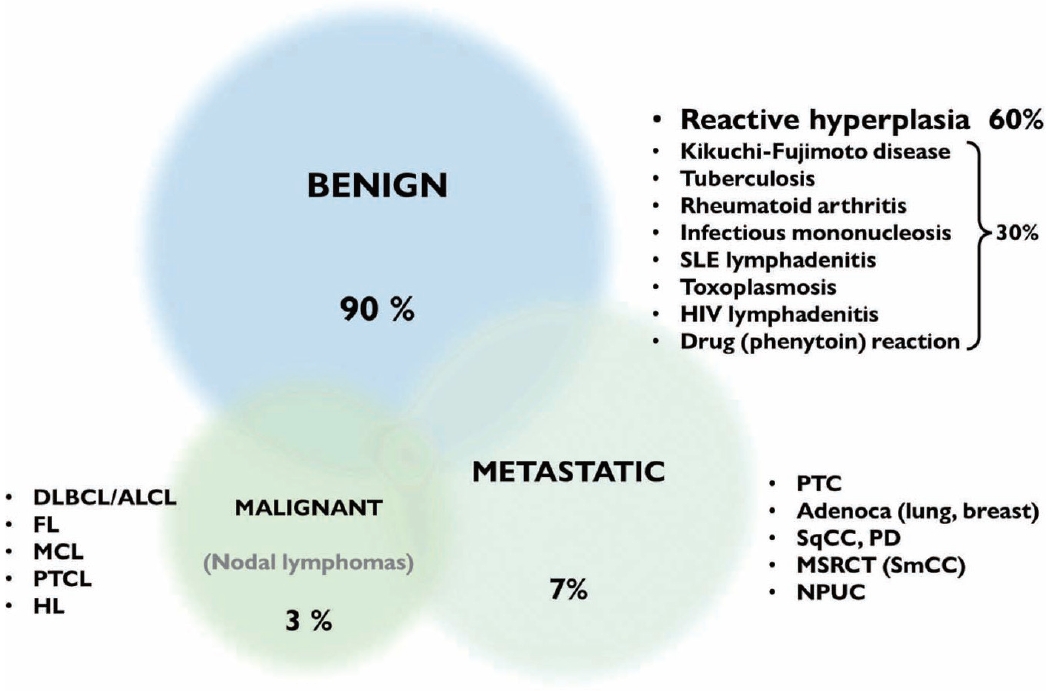
 - The cytological diagnosis of lymph node lesions is extremely challenging because of the diverse diseases that cause lymph node enlargement, including both benign and malignant or metastatic lymphoid lesions. Furthermore, the cytological findings of different lesions often resemble one another. A stepwise diagnostic approach is essential for a comprehensive diagnosis that combines: clinical findings, including age, sex, site, multiplicity, and ultrasonography findings; low-power reactive, metastatic, and lymphoma patterns; high-power population patterns, including two populations of continuous range, small monotonous pattern and large monotonous pattern; and disease-specific diagnostic clues including granulomas and lymphoglandular granules. It is also important to remember the histological features of each diagnostic category that are common in lymph node cytology and to compare them with cytological findings. It is also essential to identify a few categories of diagnostic pitfalls that often resemble lymphomas and easily lead to misdiagnosis, particularly in malignant small round cell tumors, poorly differentiated squamous cell carcinomas, and nasopharyngeal undifferentiated carcinoma. Herein, we review a stepwise approach for fine needle aspiration cytology of lymphoid diseases and suggest a diagnostic algorithm that uses this approach and the Sydney classification system.
-
Citations
Citations to this article as recorded by
- From smear to diagnosis: the impact of ancillary techniques in lymph node fine-needle cytology
Elisabetta Maffei, Giuseppe Di Motta, Angela D’Ardia, Riccardo Ruotolo, Valentina Giudice, Alessandro Caputo, Pio Zeppa
Journal of the American Society of Cytopathology.2026; 15(2): 120. CrossRef - The Critical Role of Ancillary Testing in Fine-Needle Aspiration of Lymph Nodes, Thymus, and Spleen
Diana A. Baptista, Helena Barroca, Fernando C. Schmitt
Acta Cytologica.2026; : 1. CrossRef - Primary cutaneous squamous cell carcinoma of the neck mimicking tuberculous lymphadenitis
Lin Zhang, Zhenjiang Zhang, Huichun Ji
Discover Oncology.2026;[Epub] CrossRef - When Lymph Nodes Don’t Lie: Report of Three Unusual Presentations of Thoracic Tumors
Stefano Lucà, Francesco Barbato, Amedeo Di Maio, Liliana Montella, Stefano Farese, Gaetano Di Guida, Beatrice Leonardi, Rosa Giannatiempo, Rosario Salvi, Marco Montella, Carminia Maria Della Corte, Morena Fasano, Michele Orditura, Alfonso Fiorelli, Floria
Diagnostics.2026; 16(11): 1618. CrossRef - Differences in ultrasonographic features and diagnostic value of biopsy between tuberculous lymphadenitis and reactive lymphadenopathy
Jun Peng, Zengpeng Chi, Jun Zhang, Weifei Li, Juanjuan Ren, Yajun Bi, Wenjing Lu, Meijia Hao
Medicine.2026; 105(30): e49848. CrossRef - Retrospective single-center cytohistologic correlation study of fine-needle aspiration cytology for excised superficial enlarged lymph node lesions in different disease entities
Xiang Shi, Yingyuan Wangsun, Yan Lei, Sanyan Li
Discover Oncology.2026;[Epub] CrossRef - From the Franzen-KIFA Handle up to Digital Cytopathology: The Long Story of Lymph Node Fine-Needle Aspiration Cytology
Elisabetta Maffei, Immacolata Cozzolino, Pio Zeppa, Alessandro Caputo
Acta Cytologica.2026; : 1. CrossRef - Development and Validation of Explainable Artificial Intelligence System for Automatic Diagnosis of Cervical Lymphadenopathy From Ultrasound Images
Ming Xu, Yubiao Yue, Zhenzhang Li, Yinhong Li, Guoying Li, Haihua Liang, Di Liu, Xiaohong Xu, Mohamadreza (Mohammad) Khosravi
International Journal of Intelligent Systems.2025;[Epub] CrossRef - Application of the Sydney system for classification and reporting lymph node cytopathology: a retrospective analysis at a tertiary centre
Ashok Teja Kummari, Pramod Kumar Pamu, Krishna Kiran Ganna, Param Jyothi, Sadashivudu
International Journal of Research in Medical Sciences.2025;[Epub] CrossRef - Diagnostic approach to FNA biopsy of cystic lesions of the head and neck
Stefen Andrianus, Olivia Leung, Zubair Baloch
Cancer Cytopathology.2025;[Epub] CrossRef - Applicability of Fine-Needle Aspiration Biopsy of Lymph Nodes Using WHO Reporting System: Comparison between Pediatric and Adult Brazilian Populations
Leonardo Fávaro Ficoto, Deolino João Camilo Júnior, Gustavo Resende Nora, Vitor Bonetti Valente, Daniel Galera Bernabé, José Cândido Caldeira Xavier-Júnior
Acta Cytologica.2025; 70(3): 289. CrossRef - Intraoperative cytological assessment of sentinel lymph nodes in gynecologic cancer: diagnostic accuracy and limitations
O. V. Pankova, S. V. Vtorushin, M. V. Klimova, D. S. Pismenny, M. O. Ochirov, L. A. Kolomiets, V. M. Perelmuter
Siberian journal of oncology.2025; 24(5): 72. CrossRef - Cytopathologic Diagnosis of Non-Neoplastic Inflammatory Disorders of Lymphoid Organs
Joy M. Hoang, Havva Gokce Terzioglu, Matthew L. Kleinjan, Tatjana Antic, Nalini Gupta, Manish Rohilla, Radhika Srinivasan, Arvind Rajwanshi, Eva M. Wojcik, Güliz A. Barkan, Mark A. Russell, Swati Mehrotra
Acta Cytologica.2025; : 1. CrossRef - Cytological spectrum of suppurative cutaneous and subcutaneous nodules: a one-year retrospective observational study at a tertiary care hospital.
Dr. Lakshmi Saraswathi Boni, Dr. Sasikala Salikanti, Dr. Sandhya Pitla, Dr. Satyanarayana Polisetty
Student's Journal of Health Research Africa.2025; 6(12): 10. CrossRef - Immunocytochemical markers, molecular testing and digital cytopathology for aspiration cytology of metastatic breast carcinoma
Joshua J. X. Li, Gary M. Tse
Cytopathology.2024; 35(2): 218. CrossRef - Response to comment on “A stepwise approach to fine needle aspiration cytology of lymph nodes”
Yosep Chong, Gyeongsin Park, Hee Jeong Cha, Hyun-Jung Kim, Chang Suk Kang, Jamshid Abdul-Ghafar, Seung-Sook Lee
Journal of Pathology and Translational Medicine.2024; 58(1): 43. CrossRef - Comment on “A stepwise approach to fine needle aspiration cytology of lymph nodes”
Elisabetta Maffei, Valeria Ciliberti, Pio Zeppa, Alessandro Caputo
Journal of Pathology and Translational Medicine.2024; 58(1): 40. CrossRef - The Incidence of Thyroid Cancer in Bethesda III Thyroid Nodules: A Retrospective Analysis at a Single Endocrine Surgery Center
Iyad Hassan, Lina Hassan, Nahed Balalaa, Mohamad Askar, Hussa Alshehhi, Mohamad Almarzooqi
Diagnostics.2024; 14(10): 1026. CrossRef - Efficiency of Fine-Needle Aspiration (FNA) in Relation to Tru-Cut Biopsy of Lateral Neck Swellings
Mohammed S Al Olaimat, Fahad S Al Qooz, Zaid R Alzoubi, Elham M Alsharaiah, Ali S Al Murdif, Mohammad O Alanazi
Cureus.2024;[Epub] CrossRef - Pitfalls in the Cytological Diagnosis of Nodal Hodgkin Lymphoma
Uma Handa, Rasheeda Mohamedali, Rajpal Singh Punia, Simrandeep Singh, Ranjeev Bhagat, Phiza Aggarwal, Manveen Kaur
Diagnostic Cytopathology.2024; 52(12): 715. CrossRef - Rapid 3D imaging at cellular resolution for digital cytopathology with a multi-camera array scanner (MCAS)
Kanghyun Kim, Amey Chaware, Clare B. Cook, Shiqi Xu, Monica Abdelmalak, Colin Cooke, Kevin C. Zhou, Mark Harfouche, Paul Reamey, Veton Saliu, Jed Doman, Clay Dugo, Gregor Horstmeyer, Richard Davis, Ian Taylor-Cho, Wen-Chi Foo, Lucas Kreiss, Xiaoyin Sara J
npj Imaging.2024;[Epub] CrossRef
- From smear to diagnosis: the impact of ancillary techniques in lymph node fine-needle cytology
- A machine-learning expert-supporting system for diagnosis prediction of lymphoid neoplasms using a probabilistic decision-tree algorithm and immunohistochemistry profile database
- Yosep Chong, Ji Young Lee, Yejin Kim, Jingyun Choi, Hwanjo Yu, Gyeongsin Park, Mee Yon Cho, Nishant Thakur
- J Pathol Transl Med. 2020;54(6):462-470. Published online August 31, 2020
- DOI: https://doi.org/10.4132/jptm.2020.07.11
- 8,992 View
- 133 Download
- 9 Web of Science
- 11 Crossref
-
Abstract
PDFSupplementary Material
- Background
Immunohistochemistry (IHC) has played an essential role in the diagnosis of hematolymphoid neoplasms. However, IHC interpretations can be challenging in daily practice, and exponentially expanding volumes of IHC data are making the task increasingly difficult. We therefore developed a machine-learning expert-supporting system for diagnosing lymphoid neoplasms.
Methods
A probabilistic decision-tree algorithm based on the Bayesian theorem was used to develop mobile application software for iOS and Android platforms. We tested the software with real data from 602 training and 392 validation cases of lymphoid neoplasms and compared the precision hit rates between the training and validation datasets.
Results
IHC expression data for 150 lymphoid neoplasms and 584 antibodies was gathered. The precision hit rates of 94.7% in the training data and 95.7% in the validation data for lymphomas were not statistically significant. Results in most B-cell lymphomas were excellent, and generally equivalent performance was seen in T-cell lymphomas. The primary reasons for lack of precision were atypical IHC profiles for certain cases (e.g., CD15-negative Hodgkin lymphoma), a lack of disease-specific markers, and overlapping IHC profiles of similar diseases.
Conclusions
Application of the machine-learning algorithm to diagnosis precision produced acceptable hit rates in training and validation datasets. Because of the lack of origin- or disease- specific markers in differential diagnosis, contextual information such as clinical and histological features should be taken into account to make proper use of this system in the pathologic decision-making process. -
Citations
Citations to this article as recorded by- Discovery of Marker Genes in Adult T Cell Leukemia (ATL) Pathogenesis with Machine Learning Models and Performance Comparison
Sabire Kiliçarslan, Sait Can Yücebaş
Karadeniz Fen Bilimleri Dergisi.2025; 15(3): 1046. CrossRef - Revolutionizing Pathology with Artificial Intelligence: Innovations in Immunohistochemistry
Diana Gina Poalelungi, Anca Iulia Neagu, Ana Fulga, Marius Neagu, Dana Tutunaru, Aurel Nechita, Iuliu Fulga
Journal of Personalized Medicine.2024; 14(7): 693. CrossRef - Enhanced Immunohistochemistry Interpretation with a Machine Learning-Based Expert System
Anca Iulia Neagu, Diana Gina Poalelungi, Ana Fulga, Marius Neagu, Iuliu Fulga, Aurel Nechita
Diagnostics.2024; 14(17): 1853. CrossRef - Optimization of diagnosis and treatment of hematological diseases via artificial intelligence
Shi-Xuan Wang, Zou-Fang Huang, Jing Li, Yin Wu, Jun Du, Ting Li
Frontiers in Medicine.2024;[Epub] CrossRef - Artificial intelligence in lymphoma histopathology: a systematic review (Preprint)
Yao Fu, Zongyao Huang, Xudong Deng, Linna Xu, Yang Liu, Mingxing Zhang, Jinyi Liu, Bin Huang
Journal of Medical Internet Research.2024;[Epub] CrossRef - Real-Life Barriers to Diagnosis of Early Mycosis Fungoides: An International Expert Panel Discussion
Emmilia Hodak, Larisa Geskin, Emmanuella Guenova, Pablo L. Ortiz-Romero, Rein Willemze, Jie Zheng, Richard Cowan, Francine Foss, Cristina Mangas, Christiane Querfeld
American Journal of Clinical Dermatology.2023; 24(1): 5. CrossRef - Validation of a Machine Learning Expert Supporting System, ImmunoGenius, Using Immunohistochemistry Results of 3000 Patients with Lymphoid Neoplasms
Jamshid Abdul-Ghafar, Kyung Jin Seo, Hye-Ra Jung, Gyeongsin Park, Seung-Sook Lee, Yosep Chong
Diagnostics.2023; 13(7): 1308. CrossRef - Clinical approaches for integrating machine learning for patients with lymphoma: Current strategies and future perspectives
Dai Chihara, Loretta J. Nastoupil, Christopher R. Flowers
British Journal of Haematology.2023; 202(2): 219. CrossRef - Current Trend of Artificial Intelligence Patents in Digital Pathology: A Systematic Evaluation of the Patent Landscape
Muhammad Joan Ailia, Nishant Thakur, Jamshid Abdul-Ghafar, Chan Kwon Jung, Kwangil Yim, Yosep Chong
Cancers.2022; 14(10): 2400. CrossRef - Recent Application of Artificial Intelligence in Non-Gynecological Cancer Cytopathology: A Systematic Review
Nishant Thakur, Mohammad Rizwan Alam, Jamshid Abdul-Ghafar, Yosep Chong
Cancers.2022; 14(14): 3529. CrossRef - Diagnosis prediction of tumours of unknown origin using ImmunoGenius, a machine learning-based expert system for immunohistochemistry profile interpretation
Yosep Chong, Nishant Thakur, Ji Young Lee, Gyoyeon Hwang, Myungjin Choi, Yejin Kim, Hwanjo Yu, Mee Yon Cho
Diagnostic Pathology.2021;[Epub] CrossRef
- Discovery of Marker Genes in Adult T Cell Leukemia (ATL) Pathogenesis with Machine Learning Models and Performance Comparison
- Epstein-Barr Virus–Associated Lymphoproliferative Disorders: Review and Update on 2016 WHO Classification
- Hyun-Jung Kim, Young Hyeh Ko, Ji Eun Kim, Seung-Sook Lee, Hyekyung Lee, Gyeongsin Park, Jin Ho Paik, Hee Jeong Cha, Yoo-Duk Choi, Jae Ho Han, Jooryung Huh
- J Pathol Transl Med. 2017;51(4):352-358. Published online June 5, 2017
- DOI: https://doi.org/10.4132/jptm.2017.03.15
- 35,454 View
- 1,141 Download
- 72 Web of Science
- 73 Crossref
-
Abstract
PDF
- Epstein-Barr virus (human herpesvirus-4) is very common virus that can be detected in more than 95% of the human population. Most people are asymptomatic and live their entire lives in a chronically infected state (IgG positive). However, in some populations, the Epstein-Barr virus (EBV) has been involved in the occurrence of a wide range of B-cell lymphoproliferative disorders (LPDs), including Burkitt lymphoma, classic Hodgkin’s lymphoma, and immune–deficiency associated LPDs (post-transplant and human immunodeficiency virus–associated LPDs). T-cell LPDs have been reported to be associated with EBV with a subset of peripheral T-cell lymphomas, angioimmunoblastic T-cell lymphomas, extranodal nasal natural killer/T-cell lymphomas, and other rare histotypes. This article reviews the current evidence covering EBV-associated LPDs based on the 2016 classification of the World Health Organization. These LPD entities often pose diagnostic challenges, both clinically and pathologically, so it is important to understand their unique pathophysiology for correct diagnoses and optimal management.
-
Citations
Citations to this article as recorded by- Nodal T-follicular helper cell lymphoma with hodgkin/reed-sternberg-like cells: Clinicopathologic and molecular characterization of 11 cases
Linlin Huang, Jing Li, Huawen Wang, Mei Tang, Min Jing, Xinyi Shi, Yongkun Xiao, Lu Bai, Ling Wang, Dong Liu, Tao Wu, Chao Ding, Jinglong Lv, Huami Ye, Jing Li, Jiamei Fan, Pengchun Wu, Wenbo Zhou, Xiaohui Wu, Hongwei Wang
Pathology - Research and Practice.2026; 278: 156327. CrossRef - ATG Plus Post-Transplantation Cyclophosphamide Improves EBV-DNA Clearance and GVHD in Patients of Adult Chronic Active Epstein-Barr Virus Disease Undergoing Allogeneic HSCT
Min Liu, Qiuxia Yu, Yang Cao, Yaxian Ma, Zetong Hong, Qing Yin, Yan Feng, Tongjuan Li, Yicheng Zhang, Miao Zheng
Journal of Blood Medicine.2026; Volume 17: 1. CrossRef - Central nervous system-limited Epstein–Barr virus-associated lymphomatoid granulomatosis in an immunosuppressed patient
Juan Francisco Muñoz-Osuna, Fernando Leiva-Cepas, Ana Isabel Pérez-Caballero
Medicina Clínica.2026; 166(8): 107479. CrossRef - Anti-interferon-γ autoantibody syndrome mimicking lymphoproliferative disorders: a case series
Dongdong Ren, Liang En Ian Wee, Samuel Shang Ming Lee, Venkata Sreekanth Sampath, Ya Hwee Tan, Monica Chan
International Journal of Infectious Diseases.2026; 170: 108860. CrossRef - Viral-associated hemophagocytic syndrome: a guide for clinicians and pathologists
Maria Eugenia Garcia Thomas, Tayler Van Denakker, Zachary Grimes, Bruce Petersen, Stephanie Wright, Emilia Mia Sordillo, Shafinaz Hussein, Alberto E Paniz Mondolfi
Diagnostic Histopathology.2026; 32(8): 475. CrossRef - Apoptosis-driven chromosomal rearrangements in cancer: CAD cleavage, nuclear architecture, and microhomology-mediated end joining
Sang-Nee Tan
Oncogenesis.2026;[Epub] CrossRef - Central nervous system-limited Epstein–Barr virus-associated lymphomatoid granulomatosis in an immunosuppressed patient
Juan Francisco Muñoz-Osuna, Fernando Leiva-Cepas, Ana Isabel Pérez-Caballero
Medicina Clínica (English Edition).2026; 166(8): 107479. CrossRef - Pathogenesis, treatment and prevention of diseases caused by Epstein–Barr virus
A. G. Rumyantsev
Pediatric Hematology/Oncology and Immunopathology.2025; 22(2): 166. CrossRef - Epstein-Barr virus–driven cardiolipin synthesis sustains metabolic remodeling during B cell transformation
Haixi You, Larissa Havey, Zhixuan Li, Yin Wang, John M. Asara, Rui Guo
Science Advances.2025;[Epub] CrossRef - Epstein-Barr virus-transformed B-cells from a hypoxia model of the germinal center requires external unsaturated fatty acids
Larissa Havey, Haixi You, Huimin Xian, John M. Asara, Rui Guo, Bill Sugden
PLOS Pathogens.2025; 21(11): e1013694. CrossRef - Case Report: Periorbital Edema as an Overlooked Presentation of Epstein-Barr Virus
Simran Ohri, Iden Amiri, Gitanjali M. Fleischman, David Fleischman
Case Reports in Ophthalmology.2025; 16(1): 834. CrossRef - Relationship between Epstein-Barr virus and inflammatory bowel disease
Su-Ying Li, Jia Jia, Lu-Zhou Xu, Kai Zheng
World Journal of Gastroenterology.2025;[Epub] CrossRef - Epstein–Barr virus‐positive monoclonal lymphoplasmacytic proliferation associated with neurosyphilis in an immunocompetent patient: A case report
Takashi Hibiya, Kiyotaka Nagahama, Yoshie Matsumoto, Kuniaki Saito, Nobuyoshi Sasaki, Keiichi Kobayashi, Akiyasu Otsu, Teppei Shimasaki, Kengo Takeuchi, Yoshiaki Shiokawa, Motoo Nagane, Junji Shibahara
Neuropathology.2024; 44(2): 104. CrossRef - Epstein-Barr virus-positive iris diffuse large B-cell lymphoma detected by metagenomic next-generation sequencing
Xiao-na Wang, Jing Hong, Yong-gen Xu, Pei Zhang, Ying-yu Li, Hong-liang Dou, Hai-ping Li
BMC Ophthalmology.2024;[Epub] CrossRef - Coinfection of EBV with other pathogens: a narrative review
Fatemeh Ebrahimi, Reyhaneh Rasizadeh, Shabnam Sharaflou, Parisa Shiri Aghbash, Ali Shamekh, Abolfazl Jafari-Sales, Hossein Bannazadeh Baghi
Frontiers in Virology.2024;[Epub] CrossRef - Pharmacological Modulation of the Crosstalk between Aberrant Janus Kinase Signaling and Epigenetic Modifiers of the Histone Deacetylase Family to Treat Cancer
Al-Hassan M. Mustafa, Oliver H. Krämer
Pharmacological Reviews.2023; 75(1): 35. CrossRef - Autophagy-associated immune dysregulation and hyperplasia in a patient with compound heterozygous mutations in ATG9A
Guowu Hu, Pia J Hauk, Nannan Zhang, Waleed Elsegeiny, Carlos M. Guardia, Amy Kullas, Kevin Crosby, Robin R. Deterding, Michaela Schedel, Paul Reynolds, Jordan K Abbott, Vijaya Knight, Stefania Pittaluga, Mark Raffeld, Sergio D. Rosenzweig, Juan S. Bonifac
Autophagy.2023; 19(2): 678. CrossRef - When to suspect inborn errors of immunity in Epstein–Barr virus–related lymphoproliferative disorders
Keith A. Sacco, Luigi D. Notarangelo, Ottavia M. Delmonte
Clinical Microbiology and Infection.2023; 29(4): 457. CrossRef - Primary head and neck cancer cell cultures are susceptible to proliferation of Epstein-Barr virus infected lymphocytes
Senyao Shao, Lars Uwe Scholtz, Sarah Gendreizig, Laura Martínez-Ruiz, Javier Florido, Germaine Escames, Matthias Schürmann, Carsten Hain, Leonie Hose, Almut Mentz, Pascal Schmidt, Menghang Wang, Peter Goon, Michael Wehmeier, Frank Brasch, Jörn Kalinowski,
BMC Cancer.2023;[Epub] CrossRef - Clinical and genetic characterization of Epstein-Barr virus–associated T/NK-cell lymphoproliferative diseases
Hui Luo, Dan Liu, Wenbing Liu, Jin Jin, Xiaoman Bi, Peiling Zhang, Jia Gu, Miao Zheng, Min Xiao, Xin Liu, Jianfeng Zhou, Qian-Fei Wang
Journal of Allergy and Clinical Immunology.2023; 151(4): 1096. CrossRef - Outcomes of programmed death protein-1 inhibitors treatment of chronic active Epstein Barr virus infection: A single center retrospective analysis
Yaxian Ma, Peiling Zhang, Yuhan Bao, Hui Luo, Jiachen Wang, Liang Huang, Miao Zheng
Frontiers in Immunology.2023;[Epub] CrossRef - Epstein–Barr virus-associated B-cell lymphoproliferative disorder meeting the definition of CAEBV B cell disease: a case report
Yaxian Ma, Yuhan Bao, Miao Zheng
BMC Infectious Diseases.2023;[Epub] CrossRef - Unpacking the CNS Manifestations of Epstein-Barr Virus: An Imaging Perspective
N. Soni, M. Ora, R. Singh, P. Mehta, A. Agarwal, G. Bathla
American Journal of Neuroradiology.2023; 44(9): 1002. CrossRef - Oncoviruses: Induction of cancer development and metastasis by increasing anoikis resistance
Zahra Sobhi Amjad, Ali Shojaeian, Javid Sadri Nahand, Mobina Bayat, Mohammad Taghizadieh, Mosayeb Rostamian, Farhad Babaei, Mohsen Moghoofei
Heliyon.2023; 9(12): e22598. CrossRef - Frequency and association of Epstein-Barr Virus genotype in rheumatoid arthritis patients of Khyber Pakhtunkhwa, Pakistan
Ayesha Munir, Suleman Khan, Sanaullah Khan, Sobia Attaullah, Mehwish Munir, Aisha Saleem, Ijaz Ali, Hideo Kato
PLOS ONE.2023; 18(12): e0295124. CrossRef - Successful treatment by using a modified SMILE regimen and autologous hematopoietic stem cell transplantation in a pediatric primary EBV-positive nodular NK/T cell lymphoma patient
Jian Li, Juxin Ye, Yongren Wang, Jun Wang, Yongjun Fang
Annals of Hematology.2022; 101(2): 433. CrossRef - Genetic errors of immunity distinguish pediatric nonmalignant lymphoproliferative disorders
Lisa R. Forbes, Olive S. Eckstein, Nitya Gulati, Erin C. Peckham-Gregory, Nmazuo W. Ozuah, Joseph Lubega, Nader K. El-Mallawany, Jennifer E. Agrusa, M. Cecilia Poli, Tiphanie P. Vogel, Natalia S. Chaimowitz, Nicholas L. Rider, Emily M. Mace, Jordan S. Ora
Journal of Allergy and Clinical Immunology.2022; 149(2): 758. CrossRef - EBV-positive B-cell ulcerative proliferation in the oral cavity associated with EBV-negative follicular lymphoma in a patient with common variable immunodeficiency: A case report and review of the literature
Waleed A. Alamoudi, Antoine Azar, Stefan K. Barta, Faizan Alawi, Takako I. Tanaka, Eric T. Stoopler, Thomas P. Sollecito
Oral Surgery, Oral Medicine, Oral Pathology and Oral Radiology.2022; 133(1): e10. CrossRef - Necrotizing Follicular Lymphoma of the Inguinal Region with Sternbergoid Cells: Clinical–Pathological Features of a Challenging Entity
Federico Scarmozzino, Marco Pizzi, Marta Sbaraglia, Luisa Santoro, Luca Frison, Silvia Nalio, Laura Bonaldi, Livio Trentin, Angelo Paolo Dei Tos
Applied Sciences.2022; 12(3): 1290. CrossRef - High percentages of peripheral blood T-cell activation in childhood Hodgkin's lymphoma are associated with inferior outcome
Fengqing Cai, Hui Gao, Zhongsheng Yu, Kun Zhu, Weizhong Gu, Xiaoping Guo, Xiaojun Xu, Hongqiang Shen, Qiang Shu
Frontiers in Medicine.2022;[Epub] CrossRef - Case Report of a Novel NFkB Mutation in a Lymphoproliferative Disorder Patient
Khashayar Danandeh, Parnian Jabbari, Elham Rayzan, Samaneh Zoghi, Sepideh Shahkarami, Raul Jimenez Heredia, Ana Krolo, Bibi Shahin Shamsian, Kaan Boztug, Nima Rezaei
Endocrine, Metabolic & Immune Disorders - Drug Targets.2022; 22(10): 1040. CrossRef - EBV-associated diseases: Current therapeutics and emerging technologies
Srishti Chakravorty, Behdad Afzali, Majid Kazemian
Frontiers in Immunology.2022;[Epub] CrossRef - Clinical features and treatment strategies for post-transplant and iatrogenic immunodeficiency-associated lymphoproliferative disorders
Akihiro Ohmoto, Shigeo Fuji
Blood Reviews.2021; 49: 100807. CrossRef - Comparative Study on Epstein-Barr Virus-Positive Mucocutaneous Ulcer and Methotrexate-Associated Lymphoproliferative Disorders Developed in the Oral Mucosa: A Case Series of 10 Patients and Literature Review
Kyoichi Obata, Tatsuo Okui, Sawako Ono, Koki Umemori, Shoji Ryumon, Kisho Ono, Mayumi Yao, Norie Yoshioka, Soichiro Ibaragi, Akira Sasaki
Diagnostics.2021; 11(8): 1375. CrossRef - Primary age‐related EBV‐associated effusion‐based lymphoma successfully treated with rituximab and thoracentesis
Justin J. Kuhlman, Muhamad Alhaj Moustafa, Alexander J. Tun, David M. Menke, Han W. Tun, Liuyan Jiang
Clinical Case Reports.2021;[Epub] CrossRef - Viral Manipulation of the Host Epigenome as a Driver of Virus-Induced Oncogenesis
Shimaa Hassan AbdelAziz Soliman, Arturo Orlacchio, Fabio Verginelli
Microorganisms.2021; 9(6): 1179. CrossRef - Spontaneous Regression of Chronic Epstein –Barr Virus Infection-Related Lymphoproliferative Disease
Bharti Kumari, Akshata Rao, Manicka Saravanan Subramanian, Aparajit Ballav Dey
Journal of the Indian Academy of Geriatrics.2021; 17(1): 40. CrossRef - The Pivotal Role of Viruses in the Pathogeny of Chronic Lymphocytic Leukemia: Monoclonal (Type 1) IgG K Cryoglobulinemia and Chronic Lymphocytic Leukemia Diagnosis in the Course of a Human Metapneumovirus Infection
Jérémy Barben, Alain Putot, Anca-Maria Mihai, Jérémie Vovelle, Patrick Manckoundia
Viruses.2021; 13(1): 115. CrossRef - B cells in multiple sclerosis — from targeted depletion to immune reconstitution therapies
Maria T. Cencioni, Miriam Mattoscio, Roberta Magliozzi, Amit Bar-Or, Paolo A. Muraro
Nature Reviews Neurology.2021; 17(7): 399. CrossRef - Development of Mast Cell and Eosinophil Hyperplasia and HLH/MAS-Like Disease in NSG-SGM3 Mice Receiving Human CD34+ Hematopoietic Stem Cells or Patient-Derived Leukemia Xenografts
Laura J. Janke, Denise M. Imai, Heather Tillman, Rosalinda Doty, Mark J. Hoenerhoff, Jiajie J. Xu, Zachary T. Freeman, Portia Allen, Natalie Wall Fowlkes, Ilaria Iacobucci, Kirsten Dickerson, Charles G. Mullighan, Peter Vogel, Jerold E. Rehg
Veterinary Pathology.2021; 58(1): 181. CrossRef - Viral coinfections in COVID‐19
Parisa S. Aghbash, Narges Eslami, Milad Shirvaliloo, Hossein B. Baghi
Journal of Medical Virology.2021; 93(9): 5310. CrossRef - Genetic predisposition to lymphomas: Overview of rare syndromes and inherited familial variants
Bartosz Szmyd, Wojciech Mlynarski, Agata Pastorczak
Mutation Research/Reviews in Mutation Research.2021; 788: 108386. CrossRef - Acute Epstein‐Barr virus associated haemophagocytosis in an Asian female: What is the diagnosis?
Soumya Ojha, Guiyi Ho, Cheryl X. Q. Lim, Siok B. Ng, Sanjay de Mel
American Journal of Hematology.2021; 96(11): 1541. CrossRef - Epstein Barr Virus: Development of Vaccines and Immune Cell Therapy for EBV-Associated Diseases
Xinle Cui, Clifford M. Snapper
Frontiers in Immunology.2021;[Epub] CrossRef - Recent Advances in Diagnosis and Therapy of Angioimmunoblastic T Cell Lymphoma
Mostafa F. Mohammed Saleh, Ahmed Kotb, Ghada E. M. Abdallah, Ibrahim N. Muhsen, Riad El Fakih, Mahmoud Aljurf
Current Oncology.2021; 28(6): 5480. CrossRef - Post-transplant lymphoproliferative disorder in adult renal transplant recipients: case series and review of literature
Dorota Kamińska, Magdalena Krajewska, Oktawia Mazanowska, Paweł Poznański, Maria Boratyńska, Marian Klinger
Central European Journal of Immunology.2021; 45(4): 498. CrossRef - Intestinal ulcers as an initial finding in EBV-associated lymphoproliferative disorder
Sizhu Wang, Yinghuan Dai, Jie Zhang, Dalian Ou, Chunhui Ouyang, Fanggen Lu
Medicine.2020; 99(3): e18764. CrossRef - Microbes as Master Immunomodulators: Immunopathology, Cancer and Personalized Immunotherapies
Joana R. Lérias, Georgia Paraschoudi, Eric de Sousa, João Martins, Carolina Condeço, Nuno Figueiredo, Carlos Carvalho, Ernest Dodoo, Mireia Castillo-Martin, Antonio Beltrán, Dário Ligeiro, Martin Rao, Alimuddin Zumla, Markus Maeurer
Frontiers in Cell and Developmental Biology.2020;[Epub] CrossRef - Epstein Barr Virus-associated Pediatric Neoplasms
Mozhgan Hashemieh, Fariba Shirvani
Archives of Pediatric Infectious Diseases.2020;[Epub] CrossRef - Novel IRF8 and PD-L1 molecular aberrations in systemic EBV-positive T-cell lymphoma of childhood
Atif Saleem, Rohan Joshi, Li Lei, Lhara Lezama, Shyam S. Raghavan, Nastaran Neishaboori, Mohana Roy, Joe Schroers-Martin, Gregory W. Charville, Christian Kunder, Brent Tan, Beth A. Martin, Yasodha Natkunam
Human Pathology: Case Reports.2020; 19: 200356. CrossRef - Fatal SARS-CoV-2 coinfection in course of EBV-associated lymphoproliferative disease
Luca Roncati, Beatrice Lusenti, Vincenzo Nasillo, Antonio Manenti
Annals of Hematology.2020; 99(8): 1945. CrossRef - Epstein-Barr Virus and the Eye
Emmett T. Cunningham, Manfred Zierhut
Ocular Immunology and Inflammation.2020; 28(4): 533. CrossRef - An atypical systemic form of chronic active EBV infection
Neha Gupta, Adam Bagg
Leukemia & Lymphoma.2020; 61(12): 3030. CrossRef - A Shared TCR Bias toward an Immunogenic EBV Epitope Dominates in HLA-B*07:02–Expressing Individuals
Louise C Rowntree, Thi H O Nguyen, Carine Farenc, Hanim Halim, Luca Hensen, Jamie Rossjohn, Tom C Kotsimbos, Anthony W Purcell, Katherine Kedzierska, Stephanie Gras, Nicole A Mifsud
The Journal of Immunology.2020; 205(6): 1524. CrossRef - Chronic active Epstein–Barr virus infection manifesting as coronary artery aneurysm and uveitis
Haijuan Xiao, Bing Hu, Rongmu Luo, Huili Hu, Junmei Zhang, Weiying Kuang, Rui Zhang, Li Li, Gang Liu
Virology Journal.2020;[Epub] CrossRef - Epstein-Barr Virus (EBV)-induced B-cell Lymphoproliferative Disorder Mimicking the Recurrence of EBV-associated Hemophagocytic Lymphohistiocytosis
Yuki Yatsushiro, Takuro Nishikawa, Aki Saito, Yozo Nakazawa, Ken-Ichi Imadome, Shunsuke Nakagawa, Yuichi Kodama, Yasuhiro Okamoto, Hirokazu Kanegane, Yoshifumi Kawano
Journal of Pediatric Hematology/Oncology.2019; 41(1): e44. CrossRef - Epstein-Barr Virus (EBV)-Related Lymphoproliferative Disorders in Ataxia Telangiectasia: Does ATM Regulate EBV Life Cycle?
Moussab Tatfi, Olivier Hermine, Felipe Suarez
Frontiers in Immunology.2019;[Epub] CrossRef - The factors associated with the early diagnosis of nasal NK/T-cell lymphoma with prominent ocular symptoms and general nasal NKTL
Zhen zhen Hu, Ying Wang
American Journal of Otolaryngology.2019; 40(3): 353. CrossRef - Unusual lymphoid malignancy and treatment response in two children with Down syndrome
Ashley Geerlinks, Jennifer Keis, Bo Ngan, Amer Shammas, Reza Vali, Johann Hitzler
Pediatric Blood & Cancer.2019;[Epub] CrossRef - Extreme Peripheral Blood Plasmacytosis Mimicking Plasma Cell Leukemia as a Presenting Feature of Angioimmunoblastic T-Cell Lymphoma (AITL)
Kelsey Sokol, Saritha Kartan, William T. Johnson, Onder Alpdogan, Neda Nikbakht, Bradley M. Haverkos, Jerald Gong, Pierluigi Porcu
Frontiers in Oncology.2019;[Epub] CrossRef - High-Throughput Sequence Analysis of Peripheral T-Cell Lymphomas Indicates Subtype-Specific Viral Gene Expression Patterns and Immune Cell Microenvironments
Hani Nakhoul, Zhen Lin, Xia Wang, Claire Roberts, Yan Dong, Erik Flemington, Blossom Damania
mSphere.2019;[Epub] CrossRef - Quercetin Interrupts the Positive Feedback Loop Between STAT3 and IL-6, Promotes Autophagy, and Reduces ROS, Preventing EBV-Driven B Cell Immortalization
Marisa Granato, Maria Saveria Gilardini Montani, Claudia Zompetta, Roberta Santarelli, Roberta Gonnella, Maria Anele Romeo, Gabriella D’Orazi, Alberto Faggioni, Mara Cirone
Biomolecules.2019; 9(9): 482. CrossRef - Diffuse Large B-Cell Lymphoma Arising within Ileal Neobladder: An Expanding Spectrum of Diffuse Large B-Cell Lymphoma Associated with Chronic Inflammation
Hyekyung Lee, Hyunbin Shin, Nae Yu Kim, Hyun Sik Park, Jinsung Park
Cancer Research and Treatment.2019; 51(4): 1666. CrossRef - EBV-associated lymphoproliferative disorder involving the gastrointestinal tract which mimic IBD in immunocompetent patients: case reports and literature review
Yanhua Zhou, Yanlin Zhang, Haiying Zhao, Xuan Cui, Yongqiu Wei, Yongdong Wu, Shutian Zhang, Ye Zong
International Journal of Colorectal Disease.2019; 34(11): 1989. CrossRef - Mechanistic Insights into Chemoresistance Mediated by Oncogenic Viruses in Lymphomas
Jungang Chen, Samantha Kendrick, Zhiqiang Qin
Viruses.2019; 11(12): 1161. CrossRef - Rapidly Fatal Encephalitis Associated with Atypical Lymphoid Proliferations of the Basal Ganglia Subsequent to Aneurysmal Subarachnoid Hemorrhage
Ayesha Kar, Evin L. Guilliams, Joshua A. Cuoco, Eric A. Marvin
Clinics and Practice.2019; 9(4): 1187. CrossRef - Clinicopathologic features of adult EBV-associated B-cell lymphoproliferative disease
Sonja Wörner, Hans-Konrad Mueller-Hermelink, Hans-Ullrich Voelker
Pathology - Research and Practice.2018; 214(2): 207. CrossRef - Primary Intestinal Epstein–Barr Virus-associated Natural Killer/T-cell Lymphoproliferative Disorder: A Disease Mimicking Inflammatory Bowel Disease
Zhujun Wang, Wenyan Zhang, Chengxin Luo, Min Zhu, Yu Zhen, Jingxi Mu, Yan Zhang, Renwei Hu, Yufang Wang, Zhonghui Wen, Qin Ouyang, Shuyuan Xiao, Hu Zhang
Journal of Crohn's and Colitis.2018; 12(8): 896. CrossRef - Downregulation of CD5 and dysregulated CD8+ T‐cell activation
Taizo Wada
Pediatrics International.2018; 60(9): 776. CrossRef - Chronic active Epstein-Barr virus infection of T-cell type, systemic form in an African migrant: case report and review of the literature on diagnostics standards and therapeutic options
Maxi Wass, Marcus Bauer, Roald Pfannes, Kerstin Lorenz, Andreas Odparlik, Lutz P Müller, Claudia Wickenhauser
BMC Cancer.2018;[Epub] CrossRef - Aggressive B-cell lymphomas in patients with myelofibrosis receiving JAK1/2 inhibitor therapy
Edit Porpaczy, Sabrina Tripolt, Andrea Hoelbl-Kovacic, Bettina Gisslinger, Zsuzsanna Bago-Horvath, Emilio Casanova-Hevia, Emmanuelle Clappier, Thomas Decker, Sabine Fajmann, Daniela A. Fux, Georg Greiner, Sinan Gueltekin, Gerwin Heller, Harald Herkner, Gr
Blood.2018; 132(7): 694. CrossRef - Gammaherpesviral infections in patients with immunological disorders
Anna Żuk-Wasek, Maciej Przybylski, Natalia Żeber, Grażyna Młynarczyk, Tomasz Dzieciątkowski
Postępy Mikrobiologii - Advancements of Microbiology.2018; 57(2): 145. CrossRef - COMPARATIVE ANALYSIS OF SEROLOGICAL MARKERS OF HERPES VIRUSES AND QUANTITATIVE IMMUNOGLOBULINOPATHIES IN PRIMARY PATIENTS WITH ANGIOIMMUNOBLASTIC T-CELL LYMPHOMA
N. G. Chernova, D. S. Tihomirov, N. P. Soboleva, S. A. Mariina, Y. V. Sidorova, M. N. Sinitsyna, V. N. Dvirnyk, S. M. Kulikov, T. A. Tupoleva, E. E. Zvonkov
Problems of Virology.2018; 63(4): 171. CrossRef
- Nodal T-follicular helper cell lymphoma with hodgkin/reed-sternberg-like cells: Clinicopathologic and molecular characterization of 11 cases
- Histologic Disorderliness in the Arrangement of Tumor Cells as an Objective Measure of Tumor Differentiation
- Sungwook Suh, Gyeongsin Park, Young Sub Lee, Yosep Chong, Youn Soo Lee, Yeong Jin Choi
- Korean J Pathol. 2014;48(5):339-345. Published online October 27, 2014
- DOI: https://doi.org/10.4132/KoreanJPathol.2014.48.5.339
- 8,587 View
- 68 Download
-
Abstract
PDF
- Background: Inter-observer and intra-observer variation in histologic tumor grading are well documented. To determine whether histologic disorderliness in the arrangement of tumor cells may serve as an objective criterion for grading, we tested the hypothesis the degree of disorderliness is related to the degree of tumor differentiation on which tumor grading is primarily based. Methods: Borrowing from the statistical thermodynamic definition of entropy, we defined a novel mathematical formula to compute the relative degree of histologic disorderliness of tumor cells. We then analyzed a total of 51 photomicrographs of normal colorectal mucosa and colorectal adenocarcinoma with varying degrees of differentiation using our formula. Results: A one-way analysis of variance followed by post hoc pairwise comparisons using Bonferroni correction indicated that the mean disorderliness score was the lowest for the normal colorectal mucosa and increased with decreasing tumor differentiation. Conclusions: Disorderliness, a pathologic feature of malignant tumors that originate from highly organized structures is useful as an objective tumor grading proxy in the field of digital pathology.
- Mesenchymal Stromal Cells Promote Tumor Progression in Fibrosarcoma and Gastric Cancer Cells
- Byunghoo Song, Bokyung Kim, Se-Ha Choi, Kyo Young Song, Yang-Guk Chung, Youn-Soo Lee, Gyeongsin Park
- Korean J Pathol. 2014;48(3):217-224. Published online June 26, 2014
- DOI: https://doi.org/10.4132/KoreanJPathol.2014.48.3.217
- 11,326 View
- 57 Download
- 8 Crossref
-
Abstract
PDF
Background Extensive evidence has accumulated regarding the role of mesenchymal stromal cells (MSCs) in tumor progression, but the exact effects and mechanisms underlying this role remain unclear. We investigated the effects of MSC-associated tumor progression in MSC-sarcoma models and a gastric cancer metastatic model.
Methods We conducted an
in vitro growth kinetics assay and anin vivo tumor progression assay for sarcoma cells and gastric cancer cells in the presence or absence of MSCs.Results MSC-cocultured human fibrosarcoma cells (HT1080) showed accelerated growth compared with HT1080 alone (79- vs 37-fold change, p<.050). For HT1080, human MSC-coinjected tumors showed significantly greater and highly infiltrative growth compared to those of HT1080 alone (p=.035). For mouse fibrosarcoma cells (WEHI164), mouse MSC-coinjected tumors had greater volume than those of WEHI164 alone (p=.141). For rat sarcoma cells (RR1022), rat MSC-coinjected tumors exhibited greater volume and infiltrative growth than those of RR1022 alone (p=.050). For human gastric cancer cells (5FU), tumors of 5FU alone were compact, nodular in shape, and expansile with good demarcation and no definite lung metastatic nodules, whereas tumors grown in the presence of human MSCs showed highly desmoplastic and infiltrative growth and multiple lung metastasis.
Conclusions We observed morphological evidence for MSC-associated tumor progression of fibrosarcomas and gastric cancer cells.
-
Citations
Citations to this article as recorded by- Transition between canonical to non-canonical Wnt signaling during interactions between mesenchymal stem cells and osteosarcomas
Asulin Masha, Ghedalia-Peled Noa Ben, Erez Ifat Cohen, Ventura Yvonne, Vago Razi
Open Journal of Orthopedics and Rheumatology.2020; : 037. CrossRef - Mesenchymal stem-cell therapy for perianal fistulas in Crohn’s disease: a systematic review and meta-analysis
F. Cheng, Z. Huang, Z. Li
Techniques in Coloproctology.2019; 23(7): 613. CrossRef - Human mesenchymal stromal cells do not promote recurrence of soft tissue sarcomas in mouse xenografts after radiation and surgery
PAOLA A. FILOMENO, KYUNG-PHIL KIM, NARA YOON, IRAN RASHEDI, VICTOR DAYAN, RITA A. KANDEL, XING-HUA WANG, TANIA C. FELIZARDO, ELLIOT BERINSTEIN, SALOMEH JELVEH, ANDREA FILOMENO, JEFFREY A. MEDIN, PETER C. FERGUSON, ARMAND KEATING
Cytotherapy.2018; 20(8): 1001. CrossRef - Review article: mesenchymal stromal cell therapy for inflammatory bowel diseases
C. Grégoire, C. Lechanteur, A. Briquet, É. Baudoux, F. Baron, E. Louis, Y. Beguin
Alimentary Pharmacology & Therapeutics.2017; 45(2): 205. CrossRef - Effect of hGC-MSCs from human gastric cancer tissue on cell proliferation, invasion and epithelial-mesenchymal transition in tumor tissue of gastric cancer tumor-bearing mice
Lin Song, Xin Zhou, Hong-Jun Jia, Mei Du, Jin-Ling Zhang, Liang Li
Asian Pacific Journal of Tropical Medicine.2016; 9(8): 796. CrossRef - BMP9 inhibits the growth and migration of lung adenocarcinoma A549 cells in a bone marrow stromal cell-derived microenvironment through the MAPK/ERK and NF-κB pathways
JING WANG, YAGUANG WENG, MINGHAO ZHANG, YA LI, MENGTIAN FAN, YANGLIU GUO, YANTING SUN, WANG LI, QIONG SHI
Oncology Reports.2016; 36(1): 410. CrossRef - Comparative proteomic analysis of fibrosarcoma and skin fibroblast cell lines
Ogunc Meral, Hamdi Uysal
Tumor Biology.2015; 36(2): 561. CrossRef - Involvement of Wnt/β-catenin signaling in the mesenchymal stem cells promote metastatic growth and chemoresistance of cholangiocarcinoma
Weiwei Wang, Wei Zhong, Jiahui Yuan, Congcong Yan, Shaoping Hu, Yinping Tong, Yubin Mao, Tianhui Hu, Bing Zhang, Gang Song
Oncotarget.2015; 6(39): 42276. CrossRef
- Transition between canonical to non-canonical Wnt signaling during interactions between mesenchymal stem cells and osteosarcomas
- Detection Limit of Monoclonal B-Cells Using Multiplex PCR and Laser-Induced Fluorescence Capillary Electrophoresis.
- Sung Hak Lee, Yeonsook Moon, Byunghoo Song, Hyung Nam Lee, Ahwon Lee, Eun Sun Jung, Yeong Jin Choi, Kyo Young Lee, Chang Suk Kang, Gyeongsin Park
- Korean J Pathol. 2011;45(6):582-588.
- DOI: https://doi.org/10.4132/KoreanJPathol.2011.45.6.582
- 4,763 View
- 28 Download
- 1 Crossref
-
Abstract
PDF
- BACKGROUND
The identification of monoclonality has been widely used for making diagnoses of lymphoproliferative lesions. Awareness of the sensitivity and detection limit of the technique used would be important for the data to be convincing.
METHODS
We investigated the minimum requirement of cells and sensitivity of gel electrophoresis (GE) and laser-induced fluorescence capillary electrophoresis (LFCE) for identifying IgH gene rearrangement using BIOMED-2 protocols. DNA extracted from Raji cells were diluted serially with peripheral blood mononuclear cells (PBMNCs) DNA. DNA from mixtures of diffuse large B-cell lymphoma (DLBCL) and reactive lymph nodes were also serially diluted.
RESULTS
For Raji cells, the detection limit was 62 and 16 cell-equivalents for GE and LFCE, respectively. In the condition with PBMNCs mixture, 2.5% and 1.25% of clonal cells was the minimum requirement for GE and LFCE, respectively. In 23% of DLBCL cells in tissue section, the detection limit was 120 and 12 cell-equivalents for GE and LFCE, respectively. In 3.2% of DLBCL cells, that was 1,200 and 120 cell-equivalents for GE and LFCE, respectively.
CONCLUSIONS
These results show that LFCE method is more sensitive than GE and the sensitivity of clonality detection can be influenced by the amount of admixed normal lymphoid cells. -
Citations
Citations to this article as recorded by- Molecular pathology diagnosis of diffuse large B cell lymphoma using BIOMED-2 clonal gene rearrangements
Saeid Ghorbian
Annals of Diagnostic Pathology.2017; 29: 28. CrossRef
- Molecular pathology diagnosis of diffuse large B cell lymphoma using BIOMED-2 clonal gene rearrangements
- The Usefulness of p16INK4a Immunocytochemical Staining in ASC-H Patients.
- Kwang Il Yim, Yeo Ju Kang, Tae Eun Kim, Gyeongsin Park, Eun Sun Jung, Yeong Jin Choi, Kyo Young Lee, Chang Seok Kang, Ahwon Lee
- Korean J Pathol. 2011;45(3):290-295.
- DOI: https://doi.org/10.4132/KoreanJPathol.2011.45.3.290
- 5,498 View
- 26 Download
- 1 Crossref
-
Abstract
PDF
- BACKGROUND
The grey zone of cervical cytology, and in particular atypical squamous cells, cannot exclude HSIL (ASC-H) causes diagnostic difficulties and increases medical expenses. We analyzed p16INK4a expression in ASC-H liquid-based cytology specimens (LBCS) to develop more effective methods for the management of ASC-H patients.
METHODS
We carried out p16INK4a immunostaining with 57 LBCS of ASC-H diagnostic categories, all of which were histologically cofirmed and 43 cases of which were compared with the results of a human papillomavirus (HPV) chip test.
RESULTS
p16INK4a immunostaining with ASC-H LBCS was positive in 20% (3/15) of cervicitis, 25.0% (3/12) of tissue-low-grade squamous intraepithelial lesion, 75.0% (18/24) of tissue-high grade squamous intraepithelial lesion (HSIL), and 100% (6/6) of invasive cancer cases. The positivity of p16INK4a in LBCS was correlated with higher grade of histologic diagnosis (r=0.578, p=0.000). The sensitivity, specificity, positive predictive value (PPV), and negative predictive value (NPV) of p16INK4a immunostaining for the prediction of tissue-HSIL+ were 80.0%, 77.8%, 80.0%, and 77.8%, respectively. The sensitivity, specificity, PPV, and NPV of p16INK4a immunostaining plus HPV chip test for predicting tissue-HSIL+ were 71.2%, 86.4%, 84.2%, and 79.2%.
CONCLUSIONS
p16INK4a immunostaining as well as HPV chip testing with remaining LBCS with ASC-H are useful objective markers for the prediction of tissue-HSIL+. -
Citations
Citations to this article as recorded by- Usefulness of p16INK4a Immunocytochemical staining for the Differentiation between Atrophy and ASCUS in Diagnosis of Uterine Cervical Cancer
Hye Ryoung Shin, Taekil Eom, Wan-Su Choi
Biomedical Science Letters.2023; 29(3): 144. CrossRef
- Usefulness of p16INK4a Immunocytochemical staining for the Differentiation between Atrophy and ASCUS in Diagnosis of Uterine Cervical Cancer
- An Unusual Stroma-Rich Variant of Castleman's Disease of the Hyaline-Vascular Type: A Case Report.
- Ji Han Jung, Gyeongsin Park, Hyun Joo Choi, Jinyoung Yoo, Seok Jin Kang, Kyo Young Lee
- Korean J Pathol. 2007;41(4):266-270.
- 3,092 View
- 63 Download
-
Abstract
PDF
- The stroma-rich variant of Castleman's disease of the hyaline-vascular type (CDHV) is a rare entity that shows overgrowth of a variety of stromal cells in the widened interfollicular (IF) area. We report here on a case of a stroma-rich variant of CDHV in an 18-year-old man who presented with an asymptomatic solitary neck mass he'd had for 1 year. Histologically, an enlarged lymph node fulfilled the criteria of CDHV, along with vague nodularity of a widened IF area. The nodular lesion consisted of numerous vessels and a proliferation of spindle cells. Immunohistochemically, the spindle cells were positive for vimentin and smooth muscle actin, they were negative for desmin, CD21, CD34, CD68, ALK-1, and S-100 protein. This stromal lesion is typically hyperplastic and clinically benign, and it must be distinguished from neoplastic stromal proliferation associated with Castleman's disease because of its potential for recurrence and metastasis.
- Invasive Ductal Carcinoma Arising in a Recurrent Malignant Phyllodes Tumor: A Case Report.
- Ahwon Lee, Gyeongsin Park, Kyo Young Lee, Chang Suk Kang, Byung Kee Kim, Sang In Shim
- Korean J Pathol. 2005;39(2):134-136.
- 2,325 View
- 24 Download
-
Abstract
PDF
- We report here on a case of invasive ductal carcinoma arising in a recurrent malignant phyllodes tumor. The patient was a 33-year-old woman who presented with a left breast mass, and an excision was then performed. The mass, measuring 7.0 x 4.0 cm in size, was relatively well demarcated with a nodular contour and showed pale gray and solid cut surface with clefts on it. Histologically, the mass mainly consisted of stromal components that were characterized by high cellularity, marked nuclear atypism and brisk mitosis. The sparse glandular components were leaf-like in shape and lined by bland ductal epithelium without any nuclear atypism. Sixteen months later, the patient revisited our hospital with a recurrent mass, and underwent total mastectomy. The recurrent mass contained foci of definite invasive ductal carcinoma in the background of malignant phyllodes tumor, which was identical to the primary mass. This case demonstrates that it is possible that an invasive ductal carcinoma might arise within, at least with, a recurrent malignant phyllodes tumor.
- Expressions of Cyclin E-pathway Proteins (cyclinE, cdk2, p21, p27, p57) and Their Prognostic Significance in Non-small Cell Lung Carcinomas.
- Ji Han Jung, Gyeongsin Park, Myung Ah Lee, Jae Ho Byun, Chan Kwon Jung, Heejeong Lee, Kyo Young Lee, Sang In Shim, Chang Suk Kang
- Korean J Pathol. 2006;40(1):24-31.
- 2,752 View
- 24 Download
-
Abstract
PDF
- BACKGROUND
The aberrant expression of cyclins, cdk and cdk inhibitor has been shown to be involved in oncogenic transformation. The aim of this study was to investigate the expression of the cyclin E-pathway proteins (cyclin E, cdk2, p21, p27, p57) in human non-small cell lung carcinomas (NSCLC) and also to evaluate the clinical significance of these expressions.
METHODS
A total of 203 consecutive patients with completely resected pathological stage I-III NSCLC were retrospectively reviewed. The expressions of cyclin E, cdk2, p21, p27 and, p57 was examined by performing immunohistochemistry with using the tissue microarray method.
RESULTS
In the total cases, the expression levels of cyclin E, cdk2, p21, p27 and p57 were 39.9% (81/203), 48.3% (98/203), 68.0% (138/203), 32.5% (66/203) and 2.7% (5/203), respectively. The overexpression of cyclin E and cdk2 was significantly and inversely correlated with the histologic differentiation in the adenocarcinoma (p<0.05), but not in the squamous cell carcinoma. Among the clinicopathologic factors, the stage and lymph node metastasis were associated with overall survival (p<0.05). Among these proteins, the negative expression of p21 was significantly correlated with a shortened survival rate (p<0.05).
CONCLUSIONS
These data suggest that the overexpression of cyclin E and cdk2 and the loss of p21 and p27 are associated with tumor progression in NSCLC. The aberrant expression of p21 is correlated with a poor prognosis. Therefore the immunohistochemical analysis of this protein as well as the clinical stage and, lymph node metastasis may be useful tools for evaluating the prognosis of NSCLC patients.
- Fine Needle Aspiration Cytology of Inflammatory Myofibroblastic Tumor of Lung: A Case Report.
- Gyeongsin Park, Kyungji Lee, Sun Mi Lee, Kyo Young Lee, Sang In Shim, Chang Suk Kang, Youn Soo Lee
- J Pathol Transl Med. 2006;17(1):63-68.
- 2,862 View
- 66 Download
-
Abstract
PDF
- Inflammatory myofibroblastic tumor (IMT), normally referred to as inflammatory pseudotumor, is a fairly rare condition. Fine needle aspiration cytology (FNAC) of IMT has only rarely been reported. Here, we describe one such case of pulmonary inflammatory myofibroblastic tumor. A 30-year-old man presented with a 2.8cm-sized mass in his lung. Chest CT revealed a well defined, poorly enhancing mass. FNAC showed some fascicular or swirled clusters of spindle cells, admixed with occasional inflammatory cells and foamy histiocytes. The majority of the tumor cells evidenced bland, elongated nuclei, but infrequent pleomorphic nuclei. Some of the tumor cells evidenced nuclear grooves and intranuclear inclusions. Although the cytological differentiation of IMT from malignant lesions is not immensely problematic, due to the general paucity of cytological and nuclear atypia, a definite cytological diagnosis of IMT cannot be rendered simply by FNAC. Therefore, a diagnosis of IMT may be suggested via exclusive diagnosis.
- Evaluation for Cytopreservability of Manual Liquid-Based Cytology Liqui-PREP(TM) and its Application to Cerebrospinal Fluid Cytology: Comparative Study with Cytospin.
- Gyeongsin Park, Kyungji Lee, Chan Kwon Jung, Dae Hyoung Lee, Bin Cho, Youn Soo Lee, Sang In Shim, Kyo Young Lee, Chang Suk Kang
- J Pathol Transl Med. 2007;18(1):46-54.
- 3,006 View
- 31 Download
-
Abstract
PDF
- Cerebrospinal fluid (CSF) cytology is an effective tool for evaluating diseases involving the central nervous system, but his technique is usually limited by its low cellularity and poor cellular preservation. Here we compared the manual liquid-base Liqui-PREPTM (LP) to the cytospin (CS) with using a mononuclear cell suspension and we applied both methods to the CSFs of pediatric leukemia patients. The cytopresevability, in terms of cell yield and cell size, and the clinical efficacy were evaluated. When 2000 and 4000 mononuclear cells were applied, LP was superior to CS for the cell yield, 16.8% vs 1.7% (P=0.001) and 26.2% vs 3.5% (P=0.002), respectively. The mean size of the smeared cells was 10.60 micrometer in the CS, 5.01 micrometer in the LP and 6.50 micrometer in the direct smear (DS), and the size ratio was 1.7 (CS to DS), 0.8(LP to DS) and 2.1 (CS to LP), respectively. As compared to the cells in the DS, the cells in the CS were significantly enlarged, but those in the LP were slightly shrunken. Upon application to 109 CSF samples, 4 were diagnosed as positive for leukemia (positive), 4 had atypical cells and 101 were negative by CS; 6 were positive, one had atypical cells and 102 were negative by LP. For six cases, in which 4 were positive for leukemia and 2 of 4 had atypical cells by CS, they were positive by LP and they were also confirmed as positive according to the follow-up study. Three cases diagnosed as atypical cells (two by CS and one by LP), were confirmed as negative. In conclusion, these results suggest that LP is superior to CS for the cytopresevability and for rendering a definite diagnosis of cerebrospinal fluid.
- Prognostic Significance of P53, BCL-2 and PCNA in Diffuse Large B-Cell Lymphoma: Correlation with International Prognostic Index.
- Dong chul Kim, Gyeongsin Park, Ahwon Lee, Kyo Young Lee, Sang In Shim, Chang Suk Kang
- Korean J Pathol. 2003;37(6):407-412.
- 2,254 View
- 22 Download
-
Abstract
PDF
- BACKGROUND
Diffuse large B-cell lymphoma (DLBCL) represents a diverse spectrum of clinical presentation, morphology, and genetic and molecular alterations, and shows variable prognoses and responses to therapy. The International Prognosis Index (IPI) is widely used to predict prognosis but is not precise.
METHODS
Thirty-nine cases of DLBCL were classified into low- and high-risk groups according to IPI and were analyzed for their p53, BCL-2, BCL-6 and PCNA expression profile by immunohistochemical staining and overall survival rate.
RESULTS
The mean age of the 39 patients, 23 males and 16 females, was 52.6 years. There were 23 cases (59.0%) in the low-risk group and 16 (41.0%) in the high-risk group. p53, BCL-2, BCL-6 and PCNA expression was higher in the high-risk group than in the low-risk group, but only the differences in p53 and BCL-2 expression were statistically significant (p < 0.05).
CONCLUSION
The p53 and BCL-2 protein expression in DLBCL may supplement IPI in predicting the prognosis of DLBCL patients.
- Primary Diffuse Large B-cell Lymphoma of the Prostate: A Case Report.
- Dong chul Kim, Gyeongsin Park, Ahwon Lee, Kyungja Han, Chang Suk Kang
- Korean J Pathol. 2003;37(6):432-434.
- 2,598 View
- 21 Download
-
Abstract
PDF
- Primary lymphomas of the prostate are extremely rare and can mimic other more common prostatic lesions clinically. We report a case of primary diffuse large B-cell lymphoma of the prostate in an 81-year-old man. The patient presented with voiding difficulty as an initial symptom and enlargement of the prostate on rectal digital examination. Transurethral prostatic resection was performed. On microscopic examination, atypical lymphoid cells infiltrated and replaced the prostatic parenchyma. The tumor cells had large nuclei with irregular nuclear membrane and vesicular clumped chromatin. Nucleoli were not distinct and the cells had scanty cytoplasm. Immunohistochemically, the tumor cells were immunoreactive for CD20 and CD79a but not reactive for CD5, BCL-2 and BCL-6. Histopathological diagnosis was diffuse large B-cell lymphoma of the prostate. The patient received 5 cycles of chemotherapy after histologic diagnosis but died from pulmonary and scrotal metastases 6 months later.
- The Expression of Telomerase Reverse Transcriptase Protein is an Independent Prognostic Marker in Early Stage Non-Small Cell Lung Carcinomas.
- Ji Han Jung, Chan Kwon Jung, Ahwon Lee, Gyeongsin Park, Jinyoung Yoo, Kyo Young Lee
- Korean J Pathol. 2007;41(2):95-102.
- 2,679 View
- 18 Download
-
Abstract
PDF
- BACKGROUND
The catalytic subunit of telomerase, hTERT (telomerase reverse transcriptase), is one of the most important components of telomerase, and performs a pivotal role in the mechanism underlying the regulation of telomerase activity in cellular immortalization and carcinogenesis. The principal objective of this study was to investigate hTERT expression in patients with non-small cell lung carcinomas (NSCLCs), and to evaluate its clinical significance and association with the expression of p16 and p53.
METHODS
Using tissue microarray, the protein expression profiles of hTERT, p16 and p53 were investigated via immunohistochemistry in 167 samples of NSCLCs.
RESULTS
Expression was observed in 54.5% (91/167) of the tumors, which were predominantly squamous cell carcinomas. Patients evidencing hTERT expression in their tumors exhibited significantly poorer survival rates than did patients without hTERT expression in early-stage NSCLCs (p=0.0125). According to the results of our Cox regression analysis, hTERT expression proved to be an independent prognostic factor (p=0.006), particularly for squamous cell carcinomas (p=0.019). hTERT expression was not correlated with p16 expression, but was rather associated with the expression of p53 (p=0.002).
CONCLUSIONS
Our results show that hTERT may perform a function in the progression of NSCLC, and that its detection may be useful in predicting the prognosis of NSCLC patients in the early stages of the disease, as well as in the development of a targeted therapy in these tumors.
- Expression of p73 in Non-small Cell Lung Carcinomas.
- Ji Han Jung, Gyeongsin Park, Chan Kwon Jung, Hyun Joo Choi, Jinyoung Yoo, Seok Jin Kang, Kyo Young Lee
- Korean J Pathol. 2007;41(2):109-115.
- 2,643 View
- 24 Download
-
Abstract
PDF
- BACKGROUND
The p73 is a recently identified homologue of the tumor suppressor gene, p53, and it has been found to induce apoptosis and inhibit cell proliferation. However, its role in the development of tumors is unclear. This study examined the expression of p73 in patients with non-small cell lung carcinomas (NSCLCs) to determine its clinical significance and association with the expressions of p53, pRb, and mdm2.
METHODS
A total of 183 NSCLCs were analyzed immunohistochemically using a tissue microarray.
RESULTS
The p73 protein was expressed in the cell nuclei in 156 (85.2%) out of the 183 cases. There was no correlation between the p73 expression and the clinicopathological variables. However, there was a correlation between the p73 expression and the mdm2 and pRb expressions. Multivariate Cox survival analysis identified tumor size and lymph node metastasis to be independent prognostic factors, but the p73 expression was not found to be associated with the patients' survival.
CONCLUSIONS
p73 is commonly expressed in NSCLC and it might, in conjunction with pRb and mdm2, be involved in the development of these tumors.
- Mucin Phenotype and CDX2 Expression as Prognostic Factors in Gastric Carcinomas.
- Chan Kwon Jung, Kyo Young Song, Gyeongsin Park, Cho Hyun Park, Myeong Gyu Choi, Young Seon Hong, Kyo Young Lee
- Korean J Pathol. 2007;41(3):139-148.
- 2,513 View
- 27 Download
-
Abstract
PDF
- Background
: Mucin phenotypic markers and CDX2 are widely expressed in gastric carcinomas, however, recent studies have produced conflicting results regarding whether the expression patterns of these markers have clinicopathologic significance.
Methods
: We examined samples from 217 gastric carcinoma patients immunohistochemically to determine if the expression of mucin phenotypic markers and CDX2 was correlated with postoperative survival and other clinicopathologic factors.
Results
: All tumors were phenotypically classified as gastric (type G, 81 cases), gastric and intestinal mixed (type GI, 55 cases), intestinal (type I, 43 cases), or unclassified (type U, 38 cases). The occurrence of type G and GI tumors was positively correlated with tumor progression whereas that of type U tumors was negatively correlated with tumor progression. CDX2 expression was correlated with type I tumors. Tumors that expressed MUC5AC or MUC6 had a better prognosis than those that did not. When the relationship between phenotype and prognosis was considered, type GI had the best prognosis, followed by type G, then type U.
Conclusions
: The mucin phenotypic markers may be useful for predicting tumor progression and survival in patients with gastric carcinomas. Additionally, CDX2 may play an important role in gastric carcinogenesis of type I tumors.
 First
First Prev
Prev



